
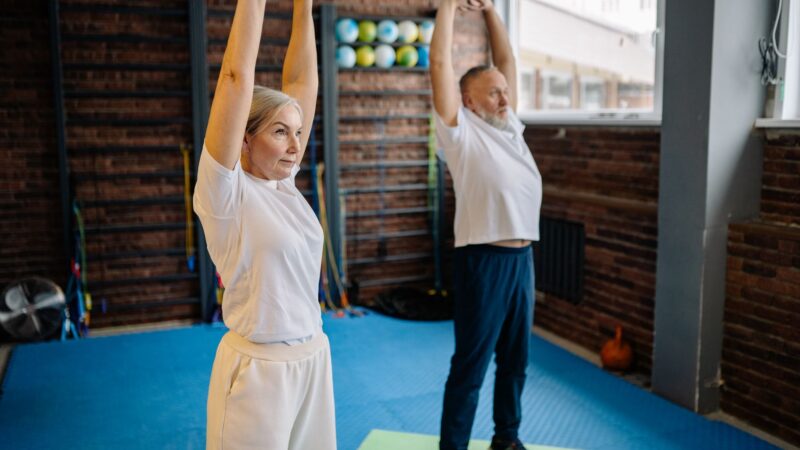
There is a point in midlife when “healthy aging” stops sounding like an abstract idea and starts becoming practical. You notice which chairs are harder to rise from. A long day on your feet takes a little more out of you. Sleep matters more than it used to. The people you spend time with, the way you eat, and how often you move begin to shape not only how you feel today, but how much freedom you are likely to have ten or twenty years from now.
That is the useful way to think about healthy aging after 50. It is not a race against age, and it is not a promise that good habits can prevent every illness. It is the quieter work of protecting function: keeping enough strength to carry your own bags, enough balance to trust your footing, enough stamina to enjoy a full day, and enough social and mental engagement to remain connected to your life.
This guide is built around that idea. It is less a checklist of “anti-ageing” rules than a practical framework for the parts of ageing you can influence. The strongest evidence still points to ordinary things done consistently: move often, challenge your muscles, eat a varied diet, protect your sleep, keep meaningful relationships, and make your environment easier to live in rather than harder. For the wider picture, see our guides to brain health and metabolic health. That emphasis on maintaining function closely matches WHO Europe’s approach to healthy ageing, which focuses on preserving the abilities that support well-being and independence later in life.
Healthy Aging After 50: Start with the Abilities You Want to Keep
Most people do not actually care about strength, balance, or cardiovascular fitness as isolated measurements. They care about what those qualities make possible. They want to climb stairs without hesitation, travel without feeling fragile, play with grandchildren, tend a garden, walk through an airport, kneel down and get back up, or spend an afternoon out without needing the next day to recover.
That is why the most useful healthy-ageing plan begins with function rather than appearance. Ask what you want to keep doing comfortably. Then work backward.
If independence matters to you, strength deserves a place in the week. The NHS physical activity guidance for older adults puts numbers on that: 150 minutes of moderate activity across the week, or 75 minutes of vigorous activity, plus work on strength, balance and flexibility on at least two days. The CDC gives the same weekly totals for adults over 65. Those figures describe a destination rather than a starting line, and they can be assembled from short sessions rather than long ones, but the principle behind them matters: walking alone is valuable, yet it does not fully replace strength work, and strength work does not replace the endurance and coordination that come from moving regularly. If you want a way to judge moderate intensity without relying on a heart-rate monitor, our guide to Zone 2 cardio for beginners explains the talk test in practical terms.
At home, this can be far less complicated than it sounds. A controlled sit-to-stand from a chair trains a movement you use every day. A wall or counter push-up builds upper-body strength without requiring a gym. Resistance-band rows, light carries, and low step-ups can cover much of the rest. If you are new to this kind of exercise, the purpose is not to prove anything in the first week. It is to establish a level you can recover from and repeat.
Our beginner strength-training guide after 50 goes into the exercises in more detail, but the larger point is simple: muscle responds to use. Strength can improve later in life, and those improvements often matter most in the ordinary moments that never look like exercise.
Move enough that your body does not forget how
Exercise plans often fail because they are designed around ideal weeks. Real life is messier. There are deadlines, family responsibilities, hot weather, travel, tired mornings and stretches when motivation is nowhere to be found. A good plan has to survive those conditions.
That usually means separating structured exercise from daily movement. You may strength-train twice a week, but you still need reasons to stand, walk, carry, reach and change position on the other days. A ten-minute walk after lunch, a trip to the market on foot, gardening, dancing, errands, household work and deliberate movement breaks can all contribute to a more active week. Those short walks are not only a way of accumulating minutes: our guide to how exercise lowers blood sugar explains why movement taken soon after a meal has an effect out of proportion to its length.
The mistake is assuming that only workouts count. For healthy aging, the body benefits from being used throughout the day. Long stretches of sitting can leave hips and ankles stiff, make the first few steps feel awkward and reduce the total amount of activity you accumulate without noticing. Breaking up that pattern is not glamorous, but it is useful.
Balance deserves the same practical treatment. You do not need circus-like drills. Standing near a stable counter while narrowing your stance, shifting weight from one leg to the other, stepping sideways or practicing a controlled single-leg stand can be enough to challenge balance. WHO advises adults over 65 to include varied activity emphasising functional balance and strength on three or more days a week, which sounds demanding until you notice how much of it can be attached to something you already do. Our fall-prevention guide covers this more fully, including the role of footwear, vision, home hazards and leg strength.
Mobility fits here too. It should not be confused with chasing extreme flexibility. What matters is having enough comfortable range at the ankles, hips, shoulders and spine to handle daily tasks. If reaching overhead, turning to look behind you or getting down toward the floor has become difficult, a few minutes of gentle, controlled movement several times a week can be more useful than one punishing stretching session. Our ten-minute routine for stiff hips is a reasonable place to start.
Eat for steadiness, strength and recovery
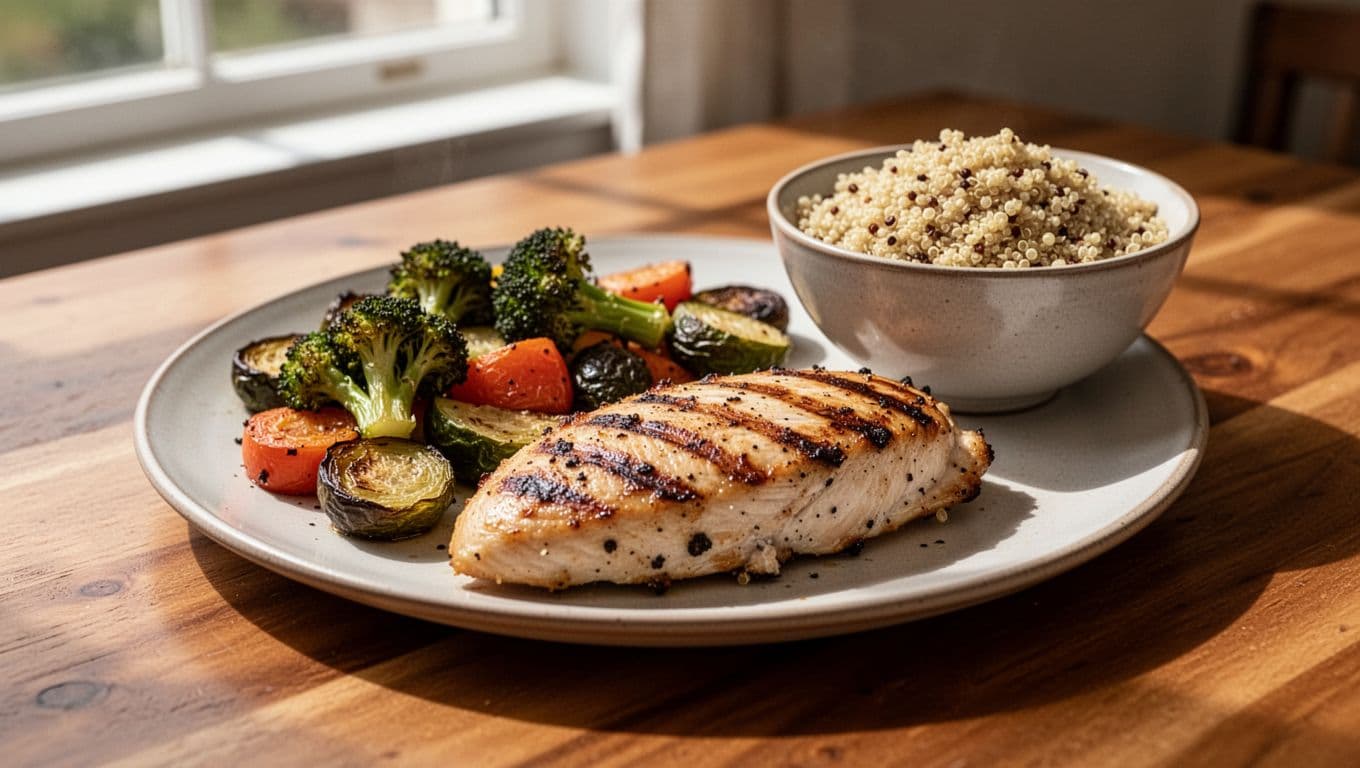
Nutrition becomes noisier as people get older because the marketing gets louder. There are powders for longevity, supplements for muscle, drinks for energy and diets that promise to “reset” metabolism. Most people need far less novelty than the market suggests.
A strong foundation still looks like recognizable food eaten in reasonable patterns: vegetables, fruit, beans, lentils, whole grains, nuts, seeds, fish, eggs, poultry, dairy or suitable alternatives, and enough fluid. Where the line actually falls between ordinary packaged food and the products worth limiting is covered in our guide to ultra-processed foods. The National Institute on Aging emphasises variety across food groups rather than a single “perfect” food.
Protein is worth paying more attention to after 50, especially if you are exercising, losing weight or trying to preserve muscle. That does not mean every meal needs to look like a bodybuilding menu. It means a breakfast of only toast and tea may not support the same goals as one that includes eggs, yoghurt, beans or another meaningful protein source. The same principle applies at lunch and dinner.
It helps to have a rough figure to aim at. The general adult minimum is 0.8 grams of protein per kilogram of body weight per day, but expert groups working specifically on ageing, including the PROT-AGE study group, recommend 1.0 to 1.2 grams per kilogram for healthy older adults. For someone weighing 70 kilograms that is roughly 70 to 85 grams a day, and it is far easier to reach when it is spread across three meals than when most of it arrives at dinner. Anyone with reduced kidney function should get an individual target from their clinician rather than raising protein on general advice.
Our guide to protein after 50 explains how to build it into ordinary meals without obsessing over numbers. The broad idea is to spread useful amounts through the day, pair protein with plant foods and fibre, and let the overall meal pattern do the work.
Fibre matters for similar reasons. It supports bowel regularity, feeds the gut microbiome and often improves the quality of the foods around it. Beans, oats, vegetables, fruit and whole grains do not need a wellness label to be effective. They simply need to appear often enough.
Hydration also becomes more important because thirst can be a less reliable signal with age. Rather than chasing a universal litre target, build drinking into the day: water with meals, a glass after walking, fluids during hot weather and extra attention when illness or travel changes your routine. People with heart, kidney or other conditions that affect fluid needs should follow individualized medical advice rather than a generic hydration rule.
Sleep is not passive time
There is a temptation to treat sleep as the first thing to sacrifice when the day is busy. That trade becomes increasingly expensive with age. Poor sleep affects energy, appetite, mood, concentration and recovery from exercise. It can also make healthy choices feel disproportionately hard the following day.
Sleep patterns do change over time. Many older adults wake more during the night or find that sleep becomes lighter. That does not mean poor sleep should simply be accepted. The National Institute on Aging recommends consistent sleep habits and notes that persistent problems such as severe daytime sleepiness, loud snoring or breathing pauses deserve medical attention.
The practical part is fairly ordinary: keep your wake time reasonably stable, reduce stimulation before bed, notice whether late caffeine or alcohol disrupts your sleep, keep the room comfortable and dark, and give yourself enough time to wind down. Exercise generally supports sleep, but hard sessions very late at night can leave some people too alert to settle quickly.
Recovery extends beyond sleep. A well-designed exercise routine should leave you capable of living the rest of your life. If every workout produces severe soreness, drains your energy for days or aggravates your joints, the programme is not more effective because it is harder. It is simply harder.
The social side of ageing is part of health
People often build healthy-ageing plans around food and exercise while treating relationships as something separate. That is a mistake. Social connection affects how people eat, move, cope with stress and experience daily life. It also changes dramatically with retirement, bereavement, relocation, hearing loss, mobility changes and the shrinking of workplace networks.
The National Institute on Aging identifies older adults as being at greater risk of social isolation for exactly these reasons. The answer is not to become relentlessly social. It is to protect a few dependable forms of connection.
That might be a weekly call with a sibling, a faith community, a walking partner, a volunteer role, a regular meal with friends or a class that gives you somewhere to be at the same time each week. These structures matter because connection rarely maintains itself automatically once the routines of work and family life change.
Our article on social connection and longevity looks more closely at the evidence, but the practical message is straightforward: relationships are not an optional extra attached to a health plan. They are part of the plan.
The toolkit
Everything above is the argument. This part is the reference. Three tables: what the guidelines actually ask for, where to start based on where your week currently is, and how to check in once a month without turning your life into a spreadsheet.
1. What the guidelines actually ask for
These are destinations, not entry requirements. If your current week looks nothing like this, the next table is the more useful one.
| What | How much | Who says so |
|---|---|---|
| Moderate aerobic activity | 150 minutes a week, or 75 minutes of vigorous activity, or a mix of the two | NHS, CDC |
| Muscle strengthening | At least 2 days a week, covering the major muscle groups | NHS, CDC |
| Balance and functional strength (65 and over) | 3 or more days a week, at moderate intensity or greater | WHO |
| Protein | 1.0 to 1.2 g per kilogram of body weight a day for healthy older adults, spread across meals | PROT-AGE and ESPEN expert groups |
| Sitting | Break up long stretches. No fixed number, but less is better | NHS |
2. Where to start, based on where you are now
Find the row that describes your current week rather than the one you would like to describe it. Starting below your ability is recoverable. Starting above it is how people stop.
| If your week currently looks like | A realistic next step | The first thing to add |
|---|---|---|
| Very little planned activity, mostly sitting | 10 to 15 minutes of walking on most days, plus one short strength session | Sit-to-stand from a dining chair, 2 sets of 5 to 8, using your hands if you need them |
| Regular walking, no strength work | Keep the walking exactly as it is. Add two 20-minute strength sessions | Sit-to-stand, wall push-up and a resistance-band row, 2 sets each |
| Walking plus occasional strength work | Make strength twice a week non-negotiable, then start adding balance | A single-leg stand at the kitchen counter, held while the kettle boils |
| Already meeting the guidelines | Protect what you have. Change the challenge rather than the volume | A slower lowering phase, a higher step, or a longer carry |
3. The monthly review
You do not need an elaborate tracker. Once a month, look back at the areas that most affect your day-to-day function and ask what actually happened rather than what you intended to do.
| Area | Question to ask |
|---|---|
| Movement | Did I move on most days, even when I did not formally exercise? |
| Strength | Did I challenge my major muscle groups at least once or twice most weeks? |
| Balance and mobility | Did I practice the movements I want to keep? |
| Food | Were most of my meals built around recognizable, varied foods with enough protein and fibre? |
| Sleep | Was my sleep routine reasonably consistent, and did I feel restored often enough? |
| Connection | Did I spend meaningful time with people rather than only communicating through screens? |
The value of this review is not the score. It is the pattern. If strength training repeatedly disappears, the answer may be to shorten the sessions rather than buy more equipment. If meals fall apart on busy days, preparing one reliable breakfast may help more than redesigning your entire diet. If loneliness is creeping in, put a recurring social plan on the calendar instead of waiting to feel more motivated.
Healthy aging is rarely transformed by one dramatic decision. It is shaped by the environment you create around ordinary decisions. For related reading, see everyday habits that shorten your life and our guide to exercises for longevity.
What progress should feel like
Some of the best signs of progress do not appear on a smartwatch or bathroom scale. You notice that you rise from a chair without thinking about it. Stairs stop feeling like a negotiation. You carry more of your own shopping. A long walk no longer ruins the afternoon. You recover from travel more easily. You feel confident enough to say yes to plans that once sounded tiring.
Those changes matter because they reflect the central goal: preserving choices.
Healthy aging after 50 is not about pretending age does not matter. It is about recognising that function is partly trainable, routines are adjustable and many of the habits with the best evidence are still available to ordinary people without expensive programmes or products.
If you want the broader science behind these changes, continue with Healthy Aging Explained and Longevity: What Actually Helps You Live Longer and Better. Then choose one part of this guide that would make your own week easier to live. That is a better place to start than trying to become a new person by Monday.