

Ask ten people what “gut health” means and you will get ten answers. Probiotics. Bloating. Fibre. A yoghurt advert from 2009. Something vague about bacteria. That vagueness is the reason the subject is so easy to sell into: if nobody can define the thing, nobody can tell whether a product improved it.
So this guide starts with the definition, then works outward: what your gut actually does, what visibly disrupts it, and which changes have evidence behind them. The short version is that gut health responds to ordinary habits far more than to anything you can buy.
- What the gut microbiome actually is
- Why gut health affects more than your stomach
- Signs your gut may need more support
- What works against gut health
- Feed your microbes more variety
- Water, sleep, stress, and movement all count
- How strong is the evidence, claim by claim
- When symptoms shouldn't be brushed off
- What to remember
- FAQ
What the gut microbiome actually is
The gut microbiome is the collection of microbes living mostly in your intestines. That includes bacteria, plus smaller amounts of fungi, viruses, and other organisms. This ecosystem isn’t something to fear. A lot of it helps you.
Think of it like a garden, not a single plant. When the garden has enough variety and the conditions are right, it tends to stay more stable. When it gets neglected, stripped down, or constantly disturbed, problems show up faster.
These microbes help break down parts of food your body can’t fully digest on its own, especially fibre. They also help make certain vitamins, including vitamin K and some B vitamins. On top of that, they compete with less helpful germs and help train your immune system so it doesn’t overreact to every little thing. Cleveland Clinic’s guide to the gut microbiome names B1, B9, B12 and K among the vitamins these microbes help synthesize, and puts the immune job the same way, helpful microbes teaching your defences to tell them apart from the harmful types.
A “healthy” microbiome doesn’t mean having perfect digestion every day. It usually means you have a good mix of microbes, enough helpful diversity, and habits that keep feeding them well.
It also isn’t fixed for life. Your microbiome changes with what you eat, how you sleep, your stress level, your activity, your age, illnesses, and medications. Antibiotics can change it quickly. Travel can change it. Even a stretch of low-fibre eating can change it.
That’s why gut health is less about finding one miracle food and more about the pattern of your days. What you do often matters more than what you do once.
Why gut health affects more than your stomach
Most people first think about digestion, and that makes sense. Your gut microbiome influences how you break down food, how often you go, and how comfortable your belly feels afterward. But it doesn’t stop there.
When gut microbes ferment fibre, they produce short-chain fatty acids. Those compounds help support the cells lining the colon and help keep the gut environment in better shape. That is one reason fibre matters so much. Harvard’s Nutrition Source page on the microbiome describes the same step, the fermentation of indigestible fibres producing short-chain fatty acids the body can use as a nutrient source, with a likely role in muscle function and in the prevention of some chronic diseases.
A lot of immune activity also happens in and around the gut. Your immune system is constantly deciding what is harmless, what is food, and what might be a threat. A balanced microbiome helps with that sorting job.
There’s also the gut-brain connection. Your gut and brain are in constant contact through nerves, hormones, and immune signals. For the wider context around memory, mood and cognitive function, see our brain health guide. That doesn’t mean every bad mood starts in the gut, or that yoghurt fixes anxiety. It does mean digestion, stress, sleep, and mental well-being often pull on the same rope. For the detail on how that signalling works, see the gut-brain connection.
Your skin can be part of the picture too, which is why some people notice flare-ups when digestion is unsettled. That connection is covered in can poor gut health show up on your skin.
Research keeps linking shifts in the microbiome with conditions such as inflammatory bowel disease, allergies, a review of obesity and the gut microbiome, and type 2 diabetes. Still, this is where people get carried away. A link is not the same as proof that gut bacteria caused the problem.
Age matters here too. As people get older, the microbiome can change because of medication use, lower food variety, illness, slower digestion, and less movement. That doesn’t mean decline is automatic. It means the basics become more important, not less.
Your gut isn’t a side issue. It’s one of the body’s busiest control centres.
Signs your gut may need more support
Your gut usually gives you clues before it gives you a big problem. The trick is learning which signals are normal after a heavy meal and which ones keep showing up for no clear reason.
- Irregular stools that swing between constipation and loose stools
- Frequent bloating after meals, especially the same meals over and over
- Feeling overly full even when you didn’t eat much
- Gas and cramping that keep coming back
- Heartburn or nausea that shows up more than once in a while
A few of these every now and then can happen to anyone. When they become a pattern, that’s worth paying attention to. The full breakdown is in gut health signs worth paying attention to.

What works against gut health
Some gut problems start with what looks like normal daily eating. Not one big splurge, but the same habits repeated over and over, until fibre drops, meals get rushed, and digestion has less to work with.
Ultra-processed foods crowd out better choices
Ultra-processed foods are easy to reach for, but they often push better options off the menu. If a snack or meal comes from a bag, box, or drive-thru window most days, it usually leaves less room for fibre-rich foods like beans, vegetables, fruit, oats, and whole grains.
That matters because gut bacteria do better when they get steady fibre. It does not mean every packaged food is off-limits. It means the balance matters. If most of your plate comes from processed foods, your gut gets less variety, and variety is what helps feed a broader mix of microbes.
Everyday patterns that throw digestion off
- Skipping meals can lead to overeating later, which may leave you bloated or uncomfortably full.
- Eating too fast gives your stomach less time to register fullness, and you may swallow more air along the way.
- Relying on sugary drinks can crowd out water and fibre-rich foods.
- Going days with little fibre leaves gut bacteria without enough fuel, which can slow things down.
Antibiotics deserve a careful mention too. They can be life-saving, and sometimes you truly need them. But they can also wipe out helpful bacteria along with harmful ones. Use them when they’re medically needed, not “just in case,” and follow your prescriber’s instructions.
Feed your microbes more variety
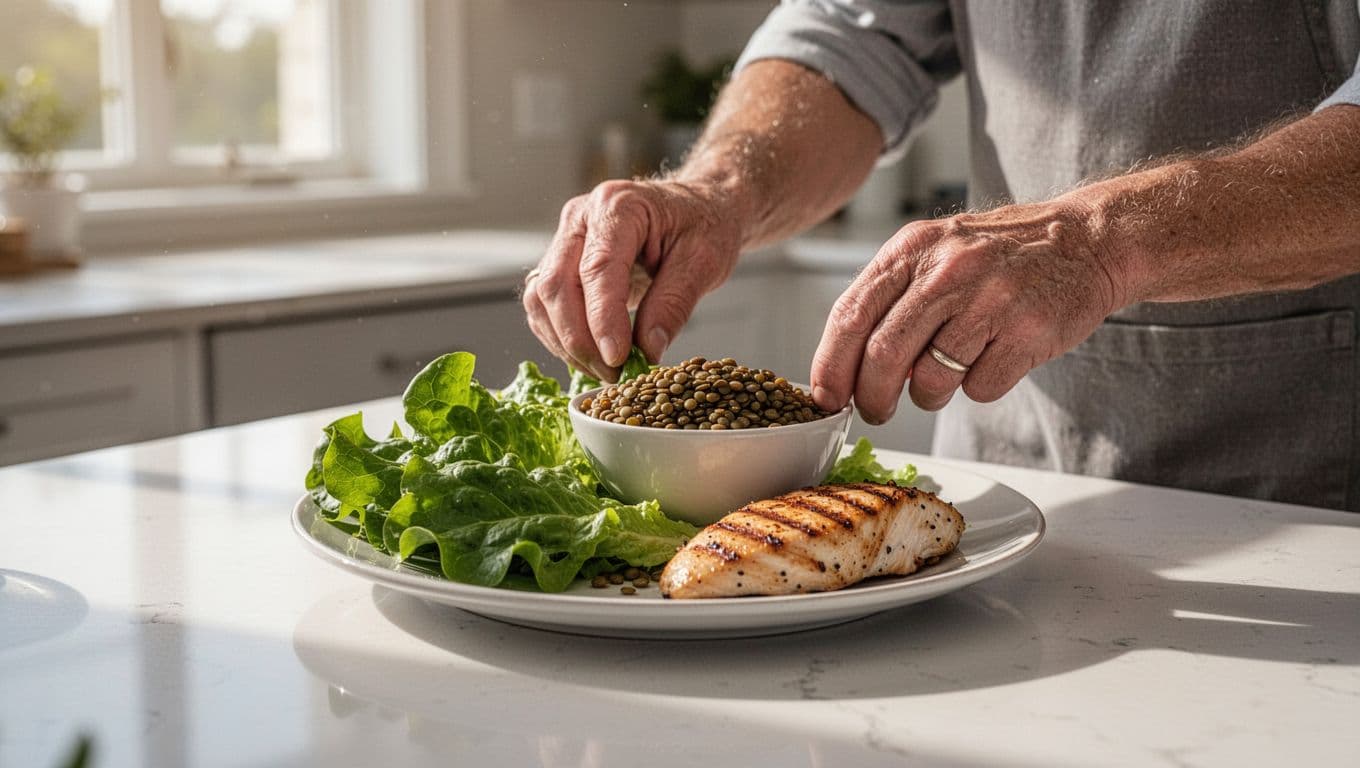
If you want better gut health, start with fibre and variety. Helpful gut microbes like plant foods, especially the kinds rich in fibres and natural compounds your body doesn’t fully absorb. That means beans, lentils, oats, berries, apples, leafy greens, onions, nuts, seeds, and whole grains all bring something useful to the table. If that means more raw produce than you are used to, our guide to washing fruit and vegetables safely covers what rinsing does and does not remove.
Variety matters because different microbes prefer different foods. If you eat the same three “healthy” foods on repeat, you’re feeding a narrower group. A wider mix tends to support a wider mix of microbes. For the specific foods worth prioritising, see best foods for a healthy gut microbiome.
Fibre is the single biggest lever here, and it does two jobs at once: it keeps digestion moving, and it gives your microbes the material they need. If your diet has been low in fibre, increase it gradually, since jumping too fast can leave you bloated and uncomfortable. Harvard’s Nutrition Source page on fibre gives the same advice and the reason behind it, a sudden jump in fibre brings on bloating and cramping, and drinking more fluids alongside it takes the edge off. Fiber for gut health covers how much and which types.
Prebiotics, probiotics, and fermented foods
These three get mixed up constantly. Prebiotics are plant fibres that feed the bacteria already living in you: onions, garlic, leeks, asparagus, bananas, oats, and cooked-and-cooled potatoes. Probiotics are live microbes you take in. Fermented foods often supply both. If the distinction still feels fuzzy, prebiotics vs probiotics lays it out.
Foods like yoghurt with live cultures, kefir, kimchi, sauerkraut, miso, and tempeh can add beneficial microbes or support a better gut environment. For some people, these foods fit well. For others, especially people with bloating or sensitivity to certain foods, too much too fast can backfire. Start small and pay attention. There is also research linking fermented foods to microbiome diversity worth reading if you want the evidence.
Supplements get more attention than they deserve. Some probiotic products may help in certain situations, but they aren’t all the same, and they don’t all do the same thing. Brand, strain, dose, and the reason you’re taking it all matter. Food-first is usually the simpler place to begin.
Water, sleep, stress, and movement all count
This is where people often miss the plot. Gut health is not only about food.
Water helps digestion in a very basic way. It softens stool, keeps waste moving, and makes bowel movements easier to pass. When you are not drinking enough, stool can become dry and hard, which is where constipation starts to creep in. You don’t need to track every sip, just make water easy to reach.
Regular movement helps digestion and may support a healthier microbiome too. That doesn’t have to mean hard workouts. Walking after meals, gardening, cycling, or a steady strength routine all help, and ten or fifteen minutes still counts.
Sleep matters because your gut runs on rhythms, just like the rest of your body. When sleep is poor for weeks, digestion often gets weird right along with energy, appetite, and mood.
Stress can also stir things up. Ever had a nervous stomach before a big event? Exactly. Chronic stress doesn’t help. A short walk, slower meals, deep breathing, time outside, and better sleep habits aren’t glamorous, but they often make a real difference.
Better gut health usually comes from boring consistency, not a dramatic reset.
That also means skipping detox teas, extreme cleanses, and expensive gut “fixes” that promise too much. Your microbiome doesn’t need punishment. It needs steadier support. If you would rather follow a structured plan than assemble one yourself, a 30-day gut health reset gives you a sequence to work through.
How strong is the evidence, claim by claim
Gut health coverage tends to flatten everything into one confidence level, so a well-replicated finding and a single mouse study end up sounding equally certain. They are not. Here is how the common claims actually stack up.
| Claim | How solid is it |
|---|---|
| Dietary fibre feeds gut bacteria and supports diversity | Well established. Consistent across human trials and the least controversial thing on this list |
| Antibiotics reduce microbial diversity | Well established. Recovery timelines vary between people, but the effect itself is not disputed |
| Fermented foods can increase microbial diversity | Reasonable human evidence. Demonstrated in controlled trials, though effect sizes and who benefits most are still being worked out |
| The gut and brain communicate constantly | Established mechanism, uncertain implications. The signalling is real; what it means for treating mood conditions is not settled |
| Specific probiotic strains treat specific conditions | Mixed and strain-specific. Some clinical uses have decent support. Most retail products do not name a strain studied for what you are buying it for |
| Microbiome testing kits can guide your diet | Weak. Results vary between labs and over time, and no consensus exists on what an “optimal” profile looks like |
| Gut health explains fatigue, mood, or skin issues generally | Overstated. Associations exist. Cause is rarely demonstrated, and these symptoms have many other explanations |
Notice the shape of it. The strongest evidence sits behind the cheapest, least exciting interventions, and confidence drops steadily as the price and the promise go up. That is not a coincidence, and it is a useful filter the next time something is marketed to you.
When symptoms shouldn’t be brushed off
Some stomach issues pass. Others keep coming back because something more is going on.
Talk with a qualified healthcare professional if you notice any of these:
- Unexplained weight loss
- Blood in the stool
- Ongoing belly pain, or symptoms that wake you at night
- Trouble swallowing or persistent fever
- Food intolerances that seem new or severe
- Constipation, diarrhoea, or bloating that doesn’t improve

Gut health is personal. One person’s high-fibre smoothie is another person’s cramping and gas. Lactose, gluten, artificial sweeteners, large portions of beans, or certain fermentable carbs can bother some people more than others. That’s why blanket advice only goes so far.
A food and symptom log can help you spot patterns, but it shouldn’t replace medical care when symptoms persist. A doctor or registered dietitian can help figure out whether you’re dealing with IBS, reflux, coeliac disease, inflammatory bowel disease, medication effects, or something else entirely.
What to remember
Your microbiome is a living part of you, not a trend. It helps with digestion, supports immune function, and responds to how you eat, sleep, move, and manage stress.
The strongest path to gut health is still the least flashy one: more plant variety, enough fibre, some fermented foods if they suit you, regular movement, decent sleep, and sensible antibiotic use. The goal isn’t a “perfect gut.” It’s understanding what your body tolerates and when symptoms need a closer look.
FAQ
How long does it take to improve gut health?
Your microbiome can start shifting within days of a diet change, but noticeable improvements in bloating, regularity, and comfort usually take a few weeks of consistency. Bigger changes in microbial diversity take longer.
Do I need a probiotic supplement?
Most people don’t. Strains, doses, and reasons for taking them vary a lot, and the evidence is stronger for specific situations than for general use. Food variety and fibre do more for most people than a daily capsule.
Can antibiotics permanently damage the gut microbiome?
Antibiotics reduce microbial diversity, and recovery can take weeks to months. For most people it does rebound, especially with a fibre-rich diet afterward. That said, repeated unnecessary courses are worth avoiding, which is why prescribers are careful about when they’re truly needed.
Why does more fibre sometimes make bloating worse?
Increasing fibre too quickly gives gut bacteria more to ferment than they’re used to, which produces gas. Adding it gradually over a few weeks, and drinking enough water alongside it, usually settles this.
Is a gut cleanse or detox worth doing?
No. Your liver, kidneys, and gut already handle this. Cleanses and detox teas can disrupt normal digestion and, in some cases, cause dehydration or electrolyte problems. Steady habits do more.
If you have persistent digestive symptoms, food intolerances, IBS, IBD, or another medical condition, speak with a qualified healthcare professional before making significant changes.