
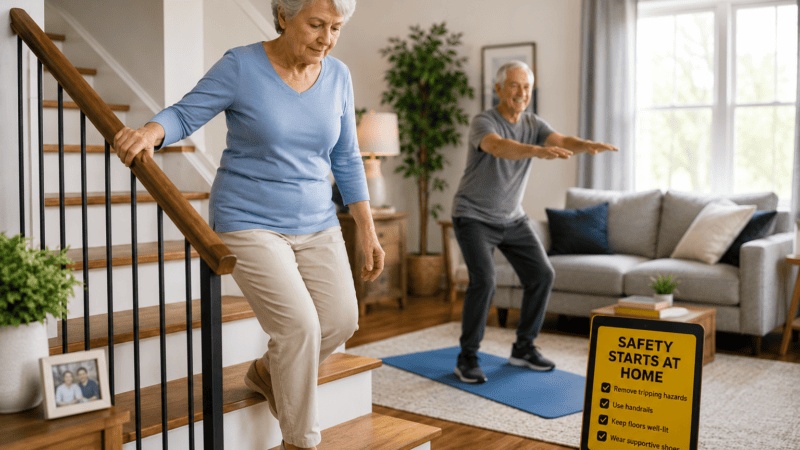
Fall prevention starts long before an actual fall happens. A lot of falls don’t come out of nowhere. They build from small things, a weaker leg, a dim hallway, a rushed trip to the bathroom, a medicine that leaves you lightheaded. The good news is that fall prevention for seniors doesn’t mean wrapping life in bubble wrap. It means keeping your body strong, your home easier to move through, and your habits steady enough to protect your independence.
- Why falls get more common, and why that doesn't mean you have to expect them
- Fall Prevention for Seniors: Build Strength and Balance
- Make your home easier to move through
- Shoes, feet, and walking aids can change everything
- Review medicines, vision, hearing, and blood pressure
- Stay mobile outdoors without feeling exposed
- Know when a stumble needs professional help
- Conclusion
Why falls get more common, and why that doesn’t mean you have to expect them
Growing older changes the body, but it doesn’t cancel your ability to move well. Muscles shrink if you don’t use them. Reaction time gets slower. Vision can change, especially in low light. Your feet may not feel the floor the way they used to. Put those together, and a small misstep can turn into a real problem. The CDC’s fall statistics for older adults put the scale plainly, more than one in four adults over 65 falls each year, fewer than half of them tell a doctor about it, and falling once roughly doubles the odds of falling again.
That said, age alone isn’t usually the whole story. Most falls happen because a few things stack up at once. Maybe you slept poorly, got up too fast, and walked across a dark room in slippery slippers. Maybe your knee hurts, so you shuffle more than you step. Maybe a blood pressure pill or sleep aid makes you unsteady.
Poor sleep matters more than many people think. If you’re groggy at night or wake often, those bathroom trips become riskier. It’s worth understanding how sleep quality shapes health and energy as you age, because grogginess shows up in your footing before it shows up anywhere else. Mobility also ties back to strength. When leg muscles weaken, every curb, stair, and uneven patch of ground asks more from you.
A fall isn’t “just part of getting older.” It’s a sign to look for the reason.
That’s where hope lives. If a problem has a reason, it usually has a fix, or at least a better plan. The Mayo Clinic’s fall prevention tips highlight the basics that matter most: exercise, safer surroundings, good footwear, and regular health checks. None of that is fancy. It works because it targets the real causes.
Fall Prevention for Seniors: Build Strength and Balance
Mobility is a “use it or lose it” skill. If you stop challenging your legs and balance, your world gets smaller. Chairs feel lower. Stairs feel steeper. Sidewalk cracks start to look like traps.
The fix doesn’t have to be dramatic. Ten to 15 minutes most days can help. The goal is simple: stronger legs, better balance, and more confidence when your body has to react fast.
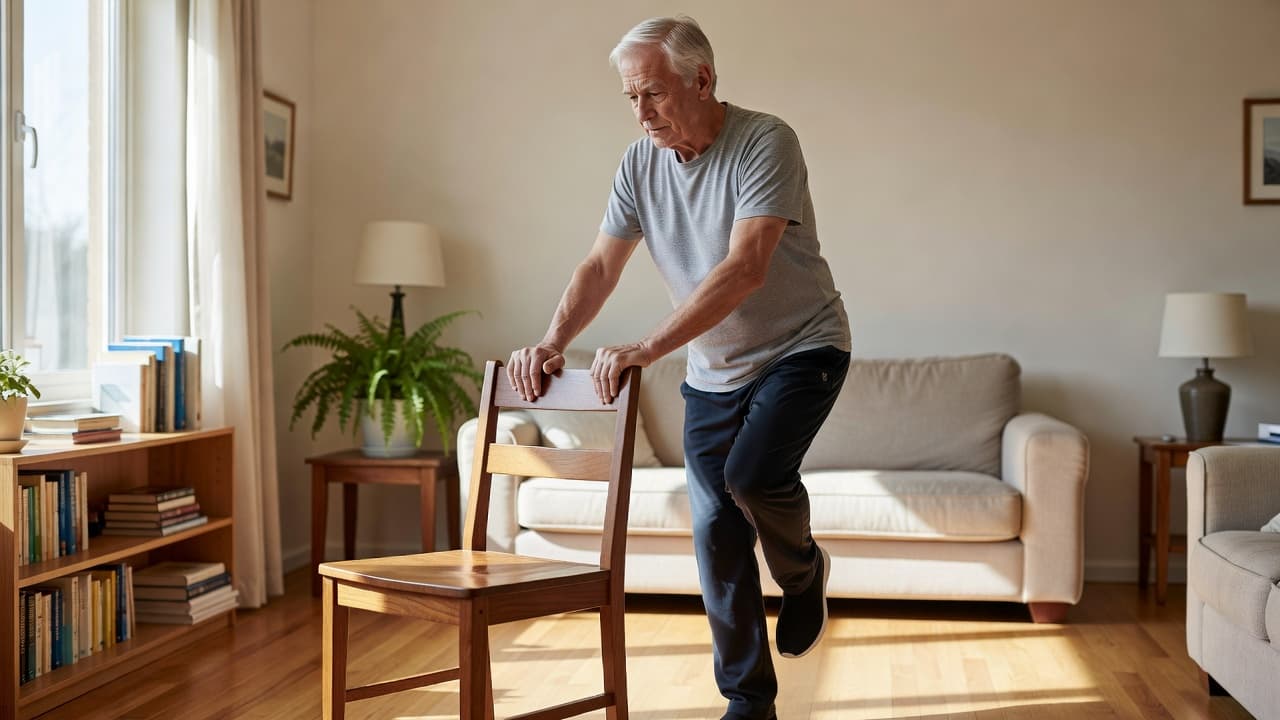
Start with moves that match real life. Standing up from a chair builds the muscles you use every time you get out of bed or rise from the sofa. Heel raises help with push-off when walking. Marching in place improves weight shifting. Side steps wake up the hips, which matter more for balance than most people realise. If tight hips are shortening your stride, a few mobility exercises for stiff hips can help you walk with a fuller, steadier step.
A simple at-home routine might include:
- Sitting down and standing up from a sturdy chair, as many times as feels comfortable and controlled.
- Standing behind a chair and lifting your heels, then lowering slowly.
- Marching in place for 30 to 60 seconds.
- Standing on one leg while lightly holding a counter or chair.
If that’s easy, good. If it’s hard, that’s useful information, not a failure. Balance is a little like savings. You build it bit by bit, then draw on it when you trip on a doorstep or turn too quickly in the kitchen.
Walking still counts. So does gardening, dancing, tai chi, and climbing stairs with a hand on the rail. The CDC’s STEADI brochure for older adults builds its whole plan around four steps, talk openly with your provider about fall risk, exercise to improve balance and strength, have your eyes and feet checked each year, and make the home safer, and it names tai chi as one of the activities worth trying. What matters is consistency. If you have arthritis, neuropathy, Parkinson’s disease, dizziness, or a recent fall, ask your clinician or a physical therapist which exercises fit your body best.
Make your home easier to move through
Your home should help you, not test you. Yet many falls happen in familiar rooms, precisely because they feel familiar. You stop paying attention. The loose rug stays. The dim hallway bulb stays. The pile of shoes by the door stays.
Bathrooms deserve the most scrutiny. Wet floors, low toilets, high tub walls, and quick turns all raise risk. Bedrooms come next, mostly because of nighttime trips. Then stairs, where one missed step has bigger consequences.
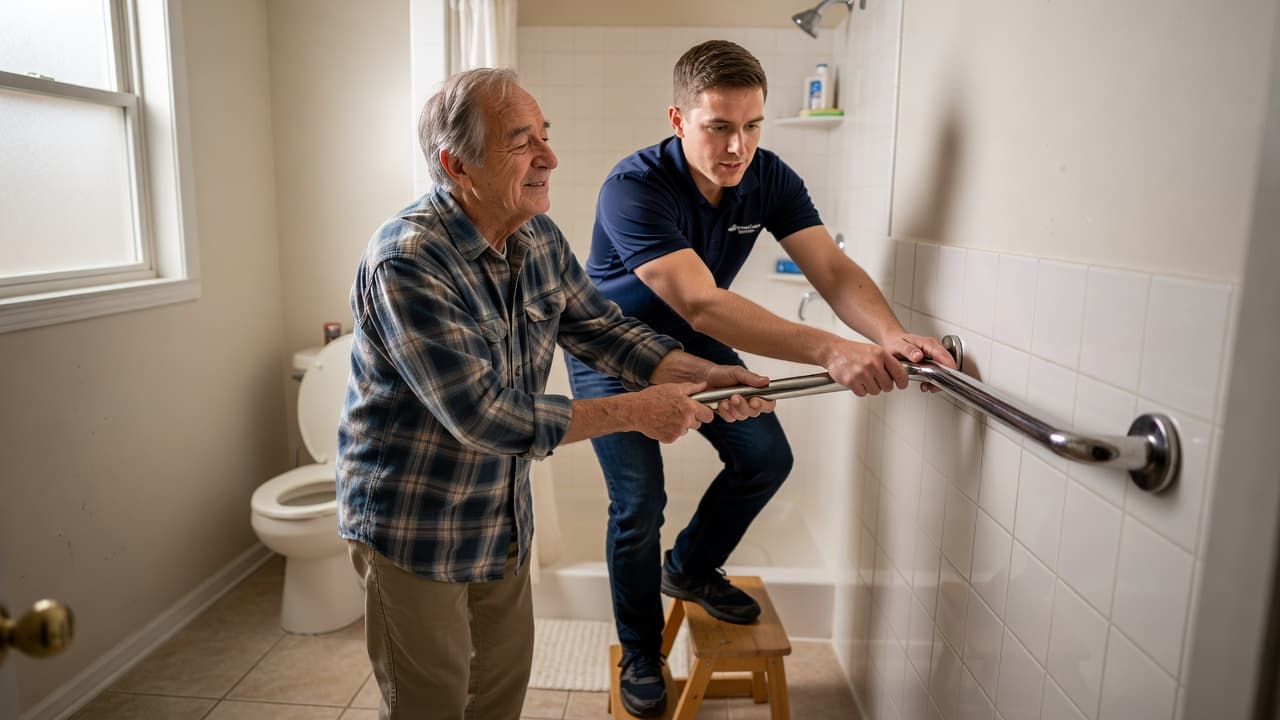
This quick home check can help you spot the big trouble areas.
| Area | Common problem | Easier fix |
|---|---|---|
| Bedroom | Dark path to the bathroom | Add a night-light and clear the walkway |
| Bathroom | Wet surfaces and nothing to hold | Install grab bars and use a non-slip mat |
| Hallways | Cords, clutter, or loose rugs | Remove obstacles and secure rugs |
| Stairs | Poor lighting or weak railings | Improve lighting and use sturdy handrails |
Small changes go a long way. Put everyday items within easy reach so you don’t climb on stools. Choose brighter bulbs where shadows hide edges. Keep a lamp, glasses, and phone within reach of the bed. If you wear bifocals, take extra care on stairs, since lens changes can affect depth perception.
The Health in Ageing Foundation’s tip sheet on preventing falls, published by the American Geriatrics Society, also recommends making a falls plan with your healthcare provider, along with exercising at least three times a week and going through your home for hazards. That’s smart, especially if you’ve had a near-fall and brushed it off. Near-falls are useful warnings. Listen to them.
Shoes, feet, and walking aids can change everything
Bad shoes cause more trouble than people admit. Soft slippers with no back, slick soles, floppy sandals, and socks on hardwood floors are all invitations to slip. The best everyday shoe has a closed back, a non-slip sole, and enough room for your toes. Low heels are usually safer than anything high or unstable.
Foot pain matters too. Bunions, numbness, toenail problems, and poorly fitted shoes can change how you walk. Then your body starts compensating. Shorter steps. Less push-off. More grabbing at furniture. That’s how balance starts to fray.
Walking aids deserve a different attitude. A cane or walker isn’t a sign that you’ve given up. It’s a tool that helps you keep doing what you want to do. Used well, it can give you a steadier stride, better posture, and more confidence outside the house.
The National Institute on Aging’s guide to falls and fractures points out that canes and walkers can lower risk when they’re fitted and used correctly. That last part matters. A cane that’s too short, a walker that’s set too low, or a rollator used without the brakes can create new problems.
If you catch yourself holding onto walls, avoiding longer walks, or feeling nervous in the shower, don’t wait for a bigger incident. Ask a clinician, physical therapist, or occupational therapist to check your gait and equipment. And if small bumps are leaving more bruises or skin tears than they used to, pay attention to that too. The body changes in clusters, not one issue at a time.
Review medicines, vision, hearing, and blood pressure
Sometimes the problem isn’t weakness or clutter. It’s chemistry. Medicines for sleep, pain, anxiety, blood pressure, allergies, or bladder symptoms can affect balance. So can mixing several drugs together, even when each one makes sense on its own.
A medication review can uncover a lot. Bring every prescription, over-the-counter medicine, and supplement to your visit, or bring a current list. Ask one plain question: “Could any of these make me dizzy, sleepy, or unsteady?” Keep asking until you get a clear answer.
Vision and hearing also shape balance. If you can’t see the edge of a rug, the step in a parking lot, or the glare on a wet floor, you’re at a disadvantage. The CDC’s page on vision impairment and older adult falls recommends a yearly dilated eye exam so your prescription stays current, and notes that vision trouble often travels with other fall risks, chronic conditions and medications that cause dizziness among them. If hearing changes, the brain gets less input about what’s happening around you. That can affect orientation and confidence.
Then there’s blood pressure. Some people feel fine sitting down but get woozy when they stand. If that’s you, slow down the transition. Sit at the edge of the bed for a moment. Stand, pause, then walk. Rushing those first few seconds is a common setup for a fall.
Don’t keep quiet about dizziness, blackouts, balance problems, or repeated stumbles. Tell your clinician. Repeated falls are never something to “monitor” forever on your own. They need a closer look, especially if you also have diabetes, neuropathy, heart disease, inner ear trouble, or memory changes.
Stay mobile outdoors without feeling exposed
One of the saddest patterns after a fall is self-shrinking. A person stops walking to the mailbox. Then stops visiting friends. Then stops going out unless someone comes along. The body gets weaker, confidence drops, and the risk often goes up, not down. There’s biology behind that loop, since muscle mass and strength fade faster with age when the legs stop getting regular work.
So keep going outside, but make it easier on yourself. Pick routes with even sidewalks and places to sit. Walk in daylight when you can. Watch for wet leaves, gravel, cracked pavement, and icy spots. Use the handrail on every stair, even if you’ve used those stairs for years.
A few habits help a lot. Wear the same supportive shoes you trust indoors. Carry a phone. If you use a cane or walker at home, use it outdoors too. Give yourself more time at curbs and crosswalks. Big crowds and rushed settings can throw off balance, so there’s no prize for hurrying.
If you’re rebuilding confidence, go with a walking partner. That may be a spouse, friend, caregiver, or local walking group. You don’t need someone to rescue you. You may only need company for the first few weeks, while your brain learns that moving outside still feels normal and safe.
Safe mobility isn’t about living a smaller life. It’s about moving with enough margin that a surprise doesn’t knock the whole day sideways.
Know when a stumble needs professional help
Not every slip means disaster. But every fall deserves attention. Even a “minor” one can tell you something changed, your strength, your blood pressure, your vision, your reaction time, or your surroundings.
If you fall, take a breath and check in with your body. Did you hit your head? Are you in new pain? Can you stand and bear weight? Did you black out, feel chest pain, or get confused? Those are signs to get urgent medical help.
Call a healthcare professional soon if any of these sound familiar:
- You’ve fallen more than once in the past year.
- You often feel dizzy when you stand.
- You trip because your foot drags or feels numb.
- You avoid walking because you’re afraid you’ll fall.
- Family members notice you’re less steady than before.
A good next step may be a physical therapy evaluation, a vision exam, a hearing check, or a medication review. Once a clinician says you’re clear to exercise, a beginner-safe home strength plan for people over 50 gives you something steady to build on between visits. Some people also benefit from an occupational therapy home assessment, which looks at how you move through your actual space, not a clinic hallway.
Don’t wait until confidence collapses. Early changes are easier to fix than late ones. The same goes for recovery. The sooner you understand why a fall happened, the better your chances of staying active and independent.
Conclusion
Staying on your feet rarely comes down to one big decision. It’s usually the result of small, repeatable choices, stronger legs, better lighting, steadier shoes, slower transitions, and a willingness to ask for help when something feels off.
That’s the heart of mobility as you age. Protect it early, and you protect a lot more than balance. You protect your routines, your confidence, and the freedom to keep living life on your own terms.