
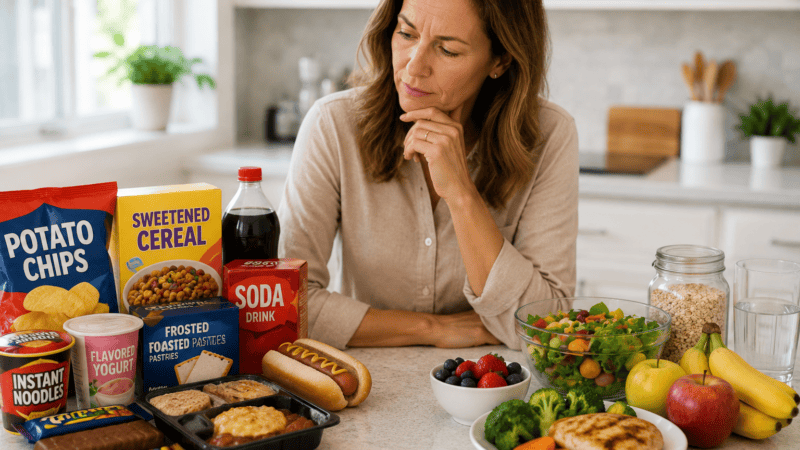
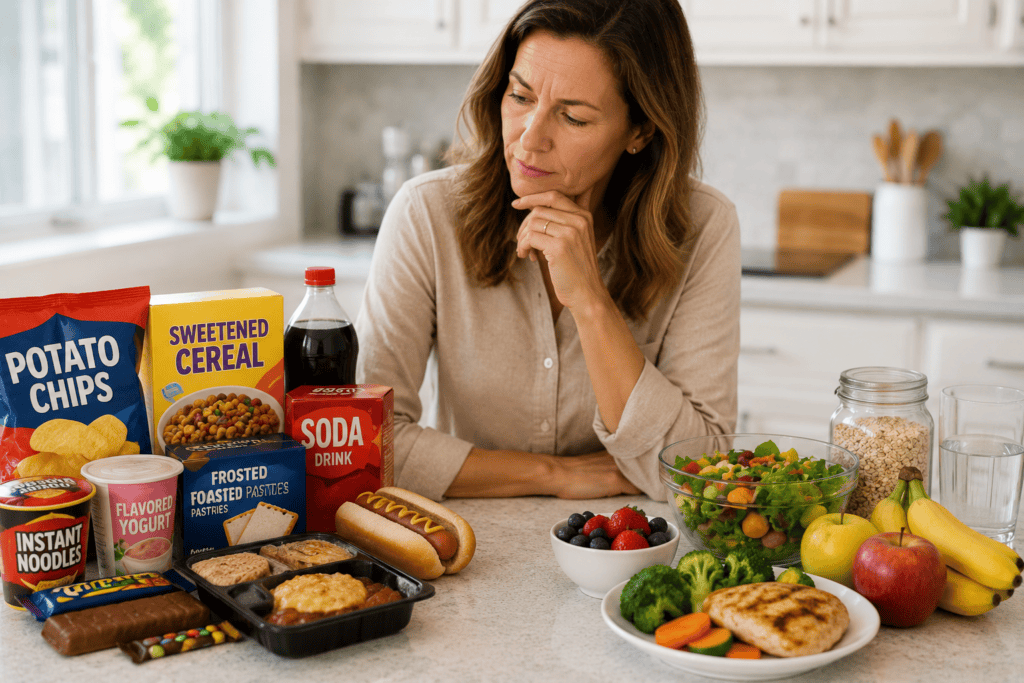
A packaged food is not automatically unhealthy, and a homemade meal is not automatically balanced. The most useful question is where a product fits on the spectrum of ultra-processed foods, what ingredients it contains, and how often you consume it. A healthy diet often relies on a mix of unprocessed foods and convenient pantry staples.
Having an ultra-processed foods list can help you spot common products that are easy to overeat, but it should not turn your weekly grocery shopping trip into a purity test. Some convenient items support a nutritious diet, while others are best kept as occasional treats.
- What counts as an ultra-processed food?
- Ultra-processed foods to limit at the supermarket
- Packaged foods that can fit a healthy diet
- How to spot ultra-processed foods on a label
- What does the research say about ultra-processed foods?
- A simple grocery strategy that works
- Conclusion: Use the list without fearing food
- Frequently Asked Questions
What counts as an ultra-processed food?
The term originates primarily from the NOVA classification system, which categorises items based on the extent and purpose of industrial processing rather than focusing solely on calories, sugar, or fat content.
The NOVA classification system identifies four broad groups. The first consists of unprocessed foods, such as fresh fruit, vegetables, and eggs, alongside minimally processed foods like plain milk or dried beans. The second group covers processed culinary ingredients like olive oil, flour, salt, and sugar. The third includes processed foods, such as canned vegetables, cheese, and simple breads.
Ultra-processed foods are distinct because they are typically manufactured through complex industrial formulations. These products often contain combinations of ingredients designed to enhance flavour, texture, colour, or shelf life. To achieve these goals, manufacturers frequently incorporate food additives, such as sweeteners, emulsifiers, modified starches, protein isolates, and hydrogenated oils. These processed ingredients are rarely found in a home kitchen.
While this framework is helpful, it has limitations. A food’s category does not reveal everything about its nutritional value. For instance, whole-grain bread containing emulsifiers might be classified differently than a loaf made with basic staples, even if both provide fibre and similar vitamins.
The ingredient list provides important clues, but it is not a complete verdict on health. Some food additives are used in tiny amounts and have been assessed for safety. Furthermore, a long list of ingredients can sometimes describe a product that helps you consume more vegetables or whole grains.
Processing is a description of how food was made. It is not a complete judgment about whether ultra-processed foods belong in your diet.
Ultra-processed foods to limit at the supermarket
When navigating the grocery store, you will notice that certain items appear repeatedly on an ultra-processed foods list because they are typically high in added sugar, sodium, or refined starch. A 2024 formative research study mapping ultra-processed foods in India found much the same categories crowding store shelves there, though its findings describe that market rather than shoppers everywhere. Many of these products are designed for convenience, which can make it easy to consume larger portions than intended.
Sugary drinks and sweetened beverages
Soda, sweetened iced tea, fruit-flavoured drinks, energy drinks, and many sweetened coffee beverages are common examples. These drinks can deliver a large amount of added sugar without providing much fibre or the satiety that comes from chewing.
Diet sodas and drinks with non-sugar sweeteners are also often classified as ultra-processed. That classification does not mean they affect health in exactly the same way as sugar-sweetened drinks. For most people, water, sparkling water, unsweetened tea, and plain coffee remain the best everyday choices.
Packaged sweets and baked snacks
Cookies, snack cakes, doughnuts, packaged pastries, candy, and many filled wafers often combine refined flour, sugar, oils, flavourings, and emulsifiers. These foods can fit into an enjoyable diet, but they are not ideal substitutes for nutrient-dense meals.
Breakfast pastries and granola bars deserve a closer look. Some contain oats, nuts, and dried fruit with minimal sugar, while others are essentially candy bars in disguise. When evaluating these snacks, check the label for artificial colours, as these are frequently added to enhance appeal in highly processed items.
Processed meats to limit
Hot dogs, some sausages, bacon, salami, pepperoni, luncheon meats, and reconstituted meat products are commonly included among ultra-processed foods. These items can contain substantial amounts of sodium and saturated fat.
The health evidence varies for every product. A sliced turkey breast with a short, simple ingredient list differs significantly from a highly formulated meat snack, but both should be considered occasional choices rather than your primary source of protein.
Ready-to-eat and ready-to-heat meals
Frozen pizza, breaded chicken products, instant noodles, boxed macaroni and cheese, microwave pasta meals, and many frozen dinners frequently fall into the ultra-processed category. The main concerns are often high sodium content, low fibre, minimal vegetable servings, and calories that do not provide lasting fullness.
That does not make them forbidden. A frozen meal featuring vegetables and beans may be a useful tool on a busy evening. Pairing it with a bagged salad, extra frozen vegetables, or a side of fruit can improve the nutritional profile of the meal without requiring an extensive cooking project.
Sweetened breakfast cereals and snack foods
Many brightly coloured breakfast cereals, sweetened oat products, cheese-flavoured crackers, chips, and extruded corn snacks fall into this category. Even if some products provide whole grains, the overall food may still be high in sugar or low in fibre.
Always look beyond the front of the box. Marketing claims such as “made with whole grains” do not tell you how much whole grain is actually present or how much added sugar is hidden in a single serving.
Packaged foods that can fit a healthy diet
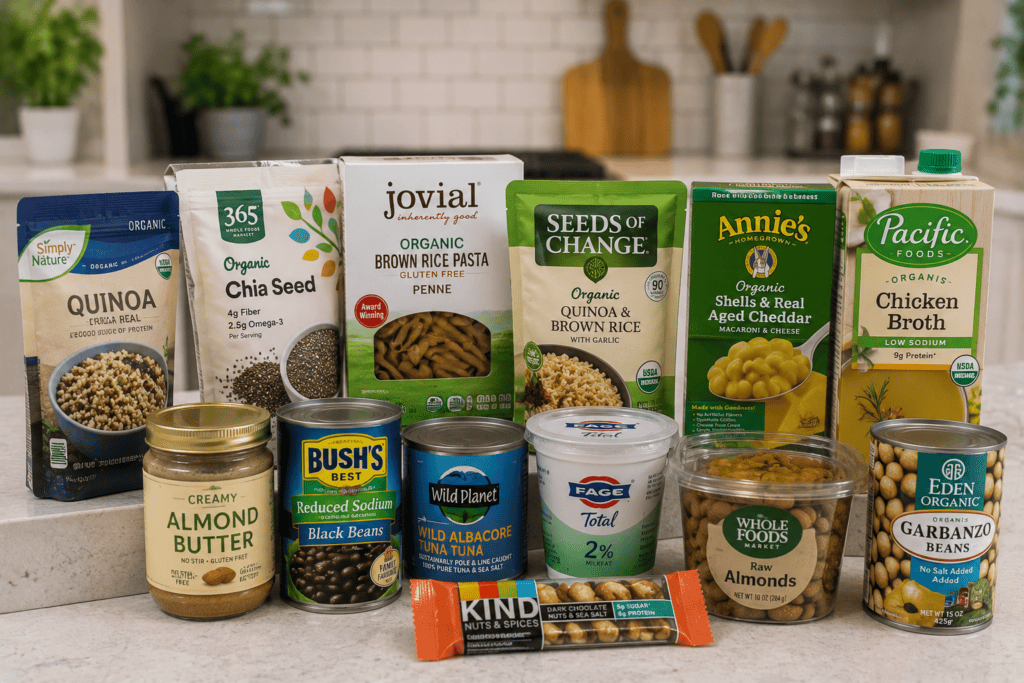
A food can be packaged, preserved, or altered and still be a practical part of balanced eating. Processing often makes nutritious food more affordable, safer, easier to store, or faster to prepare.
Frozen fruits and vegetables
Plain frozen vegetables are excellent examples of minimally processed foods. They are washed, cut, and frozen, often without any added ingredients. Frozen berries, mango, spinach, peas, and broccoli can help fill nutritional gaps when fresh, unprocessed foods are expensive or out of season.
Choose versions without creamy sauces, sugary syrups, or large amounts of added salt when possible. Steam them, microwave them, or add them to soups, omelets, grain bowls, and pasta.
Canned beans, lentils, and fish
Canned beans and lentils are convenient sources of protein and fibre. Rinsing canned beans can remove some of the surface sodium, although it does not remove all of it.
Canned salmon, tuna, sardines, and mackerel can also fit into a nutritious diet, especially if you are following a Mediterranean diet. Compare labels for sodium, choose products packed in water or oil according to your preference, and vary the types of seafood you eat.
Plain oats and simple whole-grain foods
Rolled oats, steel-cut oats, brown rice, barley, bulgur, and plain popcorn are processed in some way, but they retain much of the food’s original structure. Instant oats can also be a sensible choice when they are plain.
Bread requires more judgment. A loaf made from whole-wheat flour, water, yeast, salt, and a few standard ingredients is different from mass-produced bread that relies on ultra-processed additives. Still, the presence of these additives alone does not necessarily make bread a poor choice for your overall health.
Yoghurt, milk, cheese, and tofu
Plain yoghurt may contain milk and live cultures. Cheese may contain milk, salt, cultures, and enzymes. Tofu is made by processing soybeans into a nutrient-rich food. These items are processed, but they are not automatically ultra-processed.
Flavoured yoghurt, cheese spreads, sweetened plant-based drinks, and dessert-style products deserve a label check. Choose options that provide protein and keep added sugar reasonable to maintain the quality of your whole foods.
Nut butter and hummus
Peanut butter made with peanuts and salt is a simple option. Some brands add sugar, palm oil, or stabilisers. Those ingredients do not automatically make the product harmful, but a short ingredient list may match your preference.
Hummus made from chickpeas, tahini, oil, lemon, garlic, and salt is another useful convenience food. Compare sodium if you eat it often, and use it with vegetables, whole-grain bread, or beans.
A food does not need to be homemade to be worthwhile. A balanced eating pattern is built around vegetables, fruits, grains, protein foods, and dairy or fortified alternatives, and packaged foods can contribute to every one of those groups.
How to spot ultra-processed foods on a label
The ingredient list is usually the fastest way to identify a highly formulated product. You do not need to recognise every chemical name to identify ultra-processed foods. Instead, look for the overall pattern of the components listed on food labels.
Ingredients such as protein isolates, modified starches, maltodextrin, hydrogenated oils, artificial or natural flavours, intense sweeteners, and several emulsifiers may suggest an ultra-processed formulation. While finding one of these food additives does not automatically make a food unhealthy, the combination and purpose of these processed ingredients are what ultimately matter.
The Nutrition Facts label on food labels can answer different questions about the nutritional value of a product. Use it to check:
- Added sugar, especially in drinks, cereals, sauces, and snacks
- Sodium levels, which can be high in soups, frozen meals, meats, and savoury snacks
- Fibre, which is often low in refined snack foods
- Protein, which can help a meal feel more satisfying
- Saturated fat, particularly in processed meats, pastries, and creamy packaged foods
- Serving size, since one package may contain several servings
The FDA‘s guide to the Nutrition Facts label explains how to read serving sizes, nutrients, and percent Daily Values.
Front-of-package claims need context. Terms like “natural,” “multigrain,” “low-fat,” and “made with real fruit” do not always indicate that the product is high in fibre, low in sugar, or minimally processed. To identify ultra-processed foods, look past the marketing and focus on the back of the package.
A practical test is to ask three questions: What is the main food here? What nutrients does it provide? What would I pair with it? A sweetened cereal may provide some iron, but adding fruit and plain yoghurt creates a more complete meal than eating a large bowl alone.
What does the research say about ultra-processed foods?
Observational studies link eating more ultra-processed foods with poorer health outcomes, but they cannot establish cause and effect. A 2024 BMJ umbrella review analysed findings from multiple reviews and reported significant associations between greater ultra-processed foods exposure and several adverse health events, including risks related to cardiovascular disease and heart health.
These observational studies provide valuable insights, but they cannot definitively prove that one specific ingredient or packaged item directly causes a disease. Individuals who consume more ultra-processed foods may also experience lifestyle factors like less sleep, lower physical activity levels, or reduced access to fresh produce, all of which influence the development of various chronic conditions. Our guide to metabolic health explains how diet, sleep and activity work together on those risks.
A controlled trial published in Cell Metabolism compared diets high in ultra-processed foods against those centered on unprocessed foods. Participants consumed more calories and gained weight during the ultra-processed diet phase, even when the meals were matched for basic nutritional profiles. While the trial was short, it suggests that the texture, energy density, and food formulation of these items may drive higher intake. A 2026 conceptual analysis in Frontiers in Nutrition works through the same idea, examining how the properties of ultra-processed foods interact with the mechanisms that normally regulate food intake.
The main lesson is proportion, not panic. Eating a frozen pizza or a packaged cookie occasionally does not determine your long term health. A diet built mostly around vegetables, fruit, legumes, whole grains, nuts, seeds, fish, and eggs can still include convenient products without compromising your well being. Many of those same staples are also the foods that feed a healthy gut microbiome.
If you have diabetes, kidney disease, high blood pressure, food allergies, or another medical condition, your dietary needs may require more personal guidance. A registered dietitian can help you interpret food labels and create a sustainable plan without relying on broad or restrictive rules.
A simple grocery strategy that works
You do not need to inspect every ingredient in the supermarket. Start by focusing on the foods you eat most often and prioritise home cooking to take control of your nutrition.
Build meals around one or two minimally processed foods, then use packaged items for convenience. For example, add canned chickpeas to a bagged salad, frozen vegetables to a microwave rice bowl, or plain yoghurt to oats and berries. By making home cooking the foundation of your routine, you can easily shift your diet toward whole foods that provide better satiety.
When comparing similar products, choose the option with more fibre and protein and less added sugar or sodium. You do not need the lowest number in every category. A slightly higher sodium food may be reasonable if it helps you eat a meal instead of skipping one.
Keep a few reliable staples at home:
- Plain frozen vegetables and fruit
- Canned beans, lentils, and fish
- Oats, brown rice, and whole-grain bread
- Eggs, plain yoghurt, tofu, or cheese
- Unsalted nuts and seeds
- Low-sodium soups or simple frozen meals
Use the 80/20 idea as a flexible guide rather than a strict formula. Most of your meals can emphasise unprocessed foods, while snacks, restaurant meals, desserts, and occasional ultra-processed foods remain part of normal life.
The best choice is often the one you can afford, store, prepare, and enjoy. A nutritious meal that takes five minutes is more useful than an ideal meal you never make.
Conclusion: Use the list without fearing food
An ultra-processed foods list is most useful as a helpful shopping aid rather than a strict set of forbidden items. While it is wise to limit sugary drinks, packaged sweets, highly processed meats, and ready-to-eat products that are high in sodium, added sugar, or refined starch, you do not need to eliminate convenience entirely.
At the same time, keep frozen vegetables, canned beans, plain yoghurt, oats, and other practical packaged options in your routine. These can easily complement a diet centered around whole foods. Remember that your overall diet quality matters far more than the label on a single item. By focusing on balance, you can incorporate ultra-processed foods into your lifestyle without stress, ensuring that your long-term relationship with nutrition remains sustainable and positive.
Frequently Asked Questions
Are all processed foods unhealthy?
No. Processing includes freezing, cooking, fermenting, drying, pasteurising, and canning. Items like frozen vegetables, canned beans, plain yoghurt, and cheese are examples of minimally processed or unprocessed foods that fit well into a nutritious diet. Ultra-processed foods represent only one category within the broader spectrum of food processing, and they are distinct from basic kitchen staples.
Should I avoid ultra-processed foods completely?
Most people do not need to eliminate these items entirely to meet their health goals. According to general dietary recommendations, a better approach is to reduce products that are low in fibre or protein, such as sugary drinks and breakfast cereals. Focusing on your overall eating pattern is more sustainable than complete avoidance.
Is whole-wheat bread ultra-processed?
It depends on the specific ingredients and the classification system used. While some versions offer fibre, mass-produced bread containing dough conditioners or extra preservatives may be classified as ultra-processed. Rather than judging the item by its category alone, check the ingredient list for added sugar and fibre content to determine if it fits your needs.
Are protein bars and protein shakes ultra-processed?
Many are, as they often contain protein isolates, emulsifiers, flavours, and various sweeteners. However, that does not make every bar or shake a poor choice. Use them when they solve a practical problem, but look closely at the label for food additives, sodium, and saturated fat levels before making a purchase.
Can I lose weight while eating ultra-processed foods?
Yes. Weight change is influenced by overall calorie intake, activity levels, sleep, and medical factors. Reducing your intake of highly palatable ultra-processed foods may help some people consume fewer calories, but successful weight management does not require a perfect diet or the total elimination of packaged items.