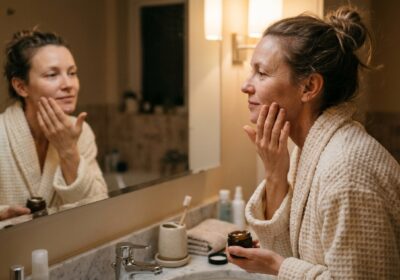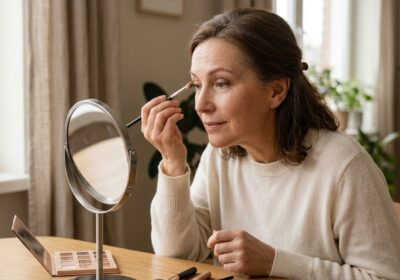
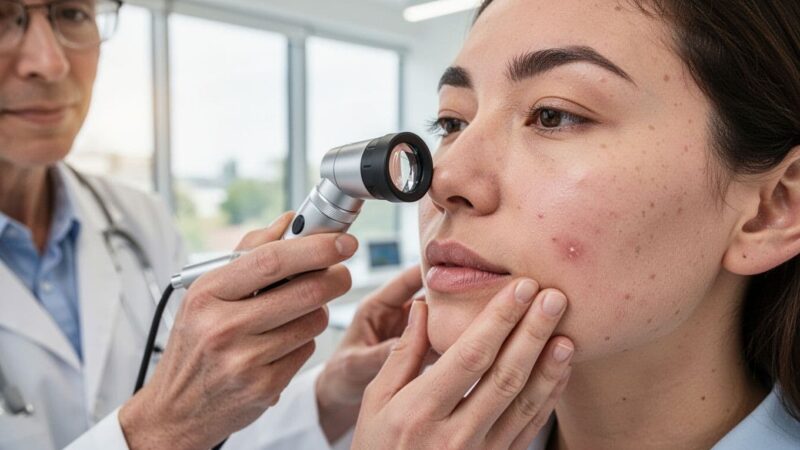
Microbiome skincare for sensitive skin is replacing harsh routines with balance-focused care. Here’s what the evidence behind it actually supports, and where the marketing runs well ahead of it.
Your skin is home to tiny organisms that live on the surface and help keep things steady. When that balance gets thrown off, skin can look dull, feel tight, sting more easily, or break out for no obvious reason.
Microbiome skincare means using gentle products that protect the skin barrier and the helpful microbes living on it, rather than stripping the skin with harsh cleansers and too many actives. The principle is sound, especially for sensitive, dry and ageing skin, but claims for specific prebiotic, probiotic and postbiotic ingredients rest on small, short studies. A simple routine of gentle cleanser, fragrance-free moisturiser with ceramides, and sunscreen does most of the work.
- What is microbiome skincare?
- How your skin microbiome changes after 40 and through menopause
- Who microbiome skincare suits best
- Does microbiome skincare actually work?
- How to build a microbiome-friendly routine without overdoing it
- Myths and buying mistakes to avoid
- How to read a "microbiome friendly" label
- Questions people ask
- A simple test before you buy anything
- Sources
What is microbiome skincare?
Microbiome skincare is a gentle way of caring for skin that supports the helpful microbes living on it. The goal is not to sterilise your face. It is to protect the barrier, reduce irritation, and keep skin calm enough to do its job well.
At its core, microbiome skincare is about balance. Your skin barrier keeps water in and irritants out, and your skin microbes live right on top of that barrier. When both are happy, skin tends to feel smoother, calmer, and less reactive.
When the barrier gets stressed, moisture escapes more easily. That dry, irritated surface can make the microbiome less stable, which can feed more redness, more stinging, and more breakouts. The link runs both ways: a 2023 review of skin microbiome research reports that colonising skin with human commensal microbes lowers water loss through the barrier and raises the activity of barrier genes. It is a loop, and many people get stuck in it without realising why.
Dermatologists like this idea because it fits how skin actually behaves. A routine that respects the barrier usually works better than one that keeps pushing it. For sensitive skin especially, what you stop doing tends to matter more than what you start.
The skin’s good microbes, explained simply
Not every microbe on your skin is a problem. Some bacteria and fungi are part of a normal, healthy surface ecosystem. They help keep bad actors from taking over and can play a role in how skin handles inflammation. That same review of the human skin microbiome describes resident microbes as a first line of defence that crowds out pathogens by direct competition, helped along by the skin’s naturally acidic surface.
The goal is not to wipe those microbes out. It is to keep them in a stable environment where they can do their job. Think of it like a garden, not a war zone. Harsh cleansers, heavy fragrance, and too much exfoliation can make that garden harder to maintain.
How a weak barrier and an off balance microbiome show up on your face
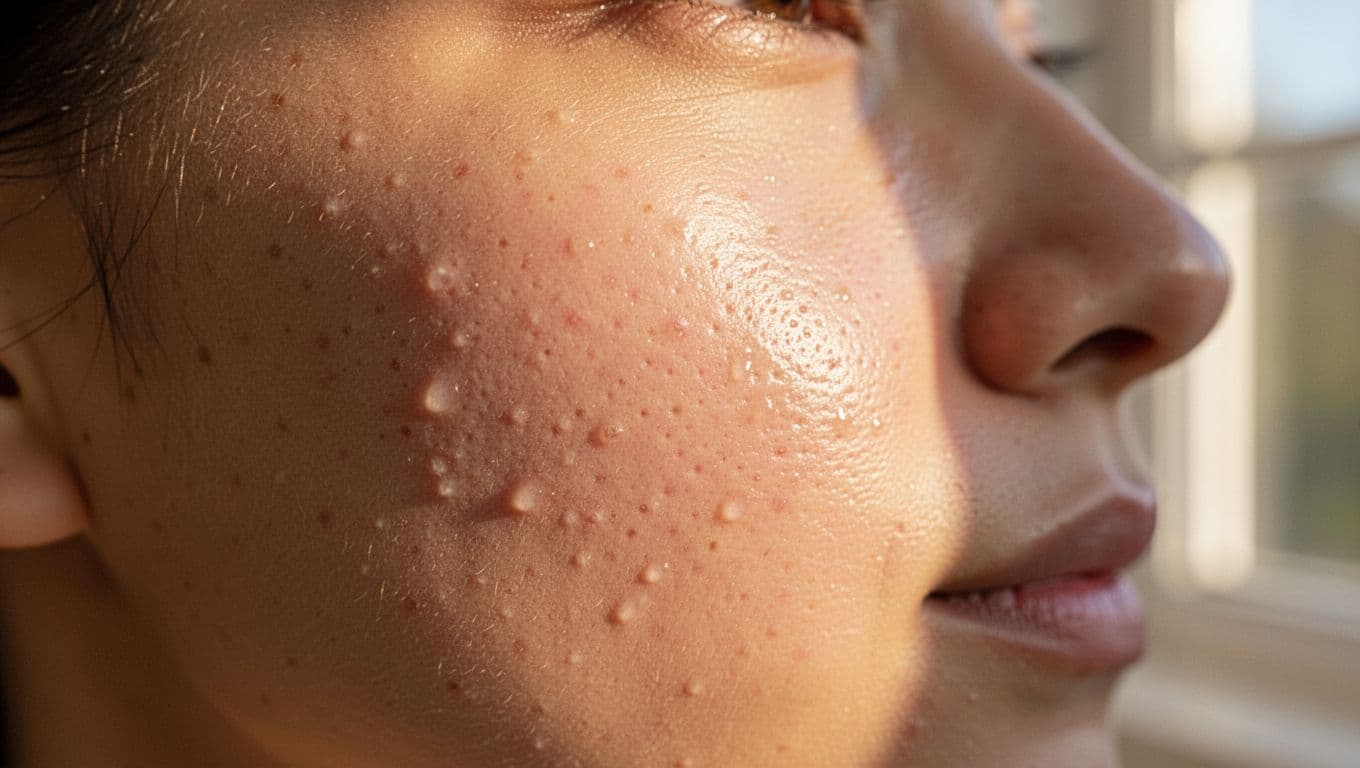
When skin is struggling, it usually tells you. Dry patches, tightness after washing, burning when you apply products, a rough texture, and random redness are all common signs.
Breakouts can show up too, especially when the skin gets irritated and overcorrects with oil. If you suspect diet or digestion is part of the picture, our look at gut health and skin separates what the research supports from what is being sold. Eczema and rosacea may also overlap with barrier stress, which is why microbiome skincare often gets talked about alongside sensitive-skin care. It is promising, but it is not a magic fix. A 2025 narrative review of topical probiotics for chronic skin conditions calls the approach promising and then lists what holds it back: small sample sizes, study designs that vary from paper to paper, no standard dosing, and thin long-term safety data. Larger randomised trials are still needed, so expectations should stay realistic.
Why dermatologists are paying attention now
This trend has staying power because it matches a simple truth. Skin often does better when you stop overworking it. A gentler routine can lower irritation, which gives the barrier and the microbiome a better chance to settle down.
For a closer look at the clinical side, Cleveland Clinic’s explainer on probiotic skin care products is a fair read. It shows why many skin doctors like this direction while staying careful about product claims, and it makes a blunt point about the shelf: only some products on the market have been through scientific testing at all, and only a few of those were tested on human skin.
How your skin microbiome changes after 40 and through menopause
The microbes on your skin are not fixed for life. A 2023 review in Biochemical Society Transactions describes how the skin microbiome changes across the lifespan, driven partly by hormones and the immune system. Three of the changes it describes matter for anyone in midlife:
- Less oil, fewer oil-loving microbes. Cutibacterium, a common skin bacterium that thrives on sebum, tends to fall as oil production drops. The review notes that lower sebum after menopause in women correlates with the loss of Cutibacterium, while men’s oil production declines more slowly.
- A broader, more mixed community. Overall microbial diversity on the skin broadly increases with age, as the surface becomes drier and less dominated by oil-loving species.
- A barrier that holds water less well. As the barrier changes with age, it can lose some of its ability to keep water in, which is part of why skin feels drier and reacts more easily from midlife.
No product can turn these changes back, and research has not yet shown that “rebalancing” an older skin microbiome reduces wrinkles. The practical message is simpler. Skin over 40 usually does better with a gentler cleanser, a richer moisturiser containing ceramides or glycerin, and fewer harsh actives used at once. Our guides to choosing a ceramide moisturiser and repairing a damaged skin barrier go into detail.
Who microbiome skincare suits best
People with sensitive skin often notice the difference first. So do those who have over-exfoliated, stacked too many actives, or used strong acne products for too long.
Dry skin and eczema-prone skin can also benefit from calmer routines. Acne-prone skin may like it too, especially when the skin barrier is irritated. Still, microbiome-friendly products are not a cure-all. Results vary, and the best products for one face may do little for another.
Does microbiome skincare actually work?
The science is encouraging, but it is not settled. Some studies point to better barrier support and calmer skin when routines are gentler and ingredients are chosen well. Others are small or early, so they do not prove every claim on a bottle.
A 2026 review of prebiotics, probiotics, and postbiotics in skincare shows where the field is heading, and it is honest about the gap: many supporting studies are small, short, and built on lab measurements rather than real-world results, which makes cosmetic claims hard to substantiate. The smart move is to look for a formula that makes sense, not a miracle label. If a product is full of fragrance, acids, and flashy promises, the front of the bottle may be louder than the formula.

Common microbiome skincare ingredients and what they actually do
Most microbiome-friendly products do not work by adding live bacteria to your face. That is hard to keep stable in a jar, and that review of biotic skincare ingredients spells out why: live probiotics in a cosmetic formula run into problems with viability, moisture, and preservative compatibility. Instead, they use ingredients that feed the skin, calm irritation, or support the barrier so the surface environment stays more balanced.
Prebiotics, probiotics, postbiotics, ceramides, and humectants like glycerin often show up here. Some brands also use niacinamide, panthenol, and squalane, which are not microbiome ingredients in the strict sense, but they help skin act less stressed.
Prebiotics, probiotics, and postbiotics without the hype
Prebiotics are ingredients that help support the helpful microbes already on your skin. Probiotic labels are trickier. In many topical products, that word points to ferment extracts, lysates, or probiotic-derived ingredients rather than live bacteria, which the same review of prebiotic and probiotic cosmetics says are more accurately called postbiotics.
Postbiotics are the byproducts or fragments that can support skin comfort. The label on the front matters less than the full ingredient list. If the formula is gentle, stable, and made for your skin type, that usually tells you more than the buzzword does.
Barrier helpers that pair well with microbiome-friendly routines
Ceramides help reinforce the outer layer of skin, which is why they show up in so many barrier repair products. Glycerin pulls water into the skin. Squalane adds softness without much fuss. Panthenol helps soothe.
Niacinamide is another useful one, and it deserves the attention it gets. These ingredients may not sound exciting, but they reduce the dryness and irritation that can throw skin off balance in the first place. For many people, that is the whole point.
How to build a microbiome-friendly routine without overdoing it
Less is often more here. If your skin is reactive, the goal is not to collect more products. It is to stop poking the skin barrier every day and give it room to recover.
A simple routine can look boring on paper and still work well. In fact, that is usually the point. If you already use retinoids, acids, or a vitamin C serum, keep the rest of the routine calm and predictable.
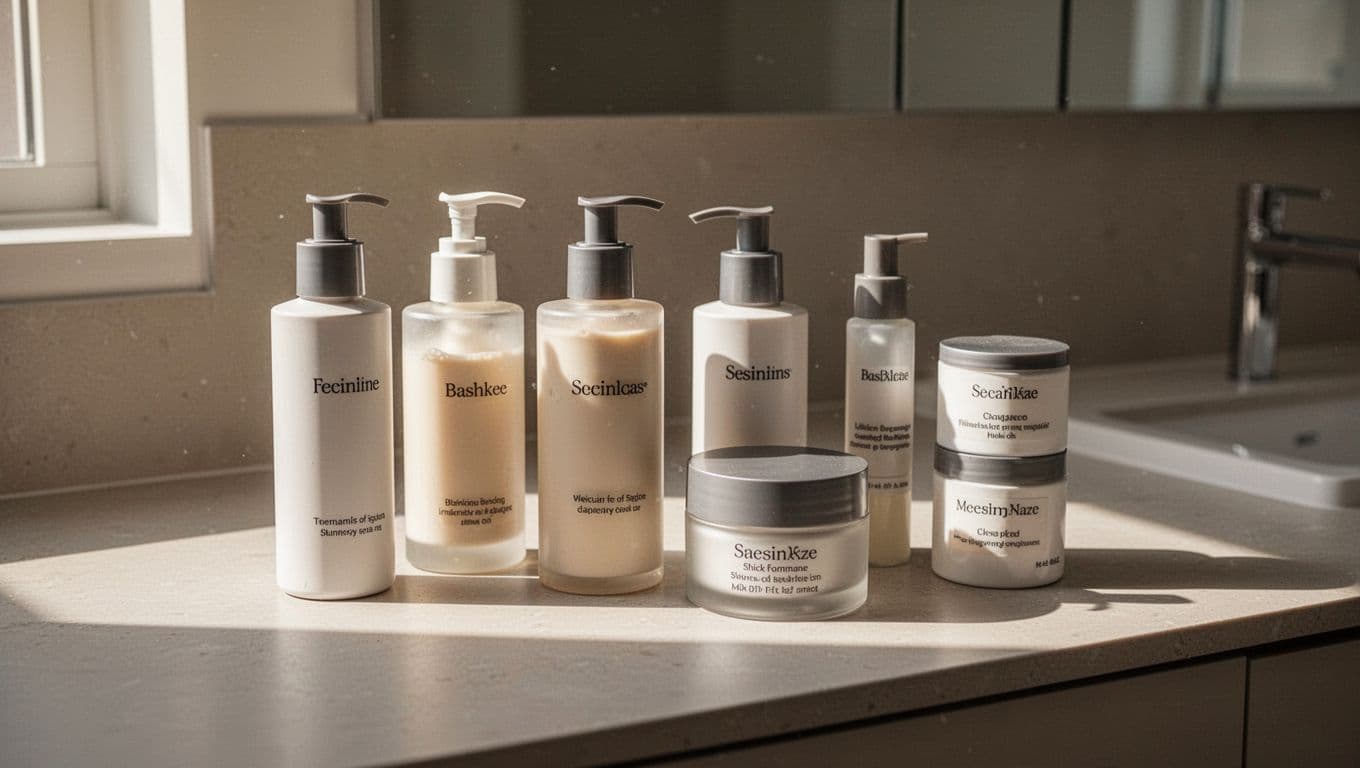
A simple morning and night routine that keeps skin calm
In the morning, use a gentle cleanser only if you need it. The American Academy of Dermatology’s face washing guidance is about as plain as it gets: lukewarm water, a gentle non-abrasive cleanser without alcohol, fingertips instead of scrubbing, and no more than twice a day plus after sweating. Follow with a hydrating serum or essence if your skin likes that, then a barrier-supporting moisturiser. Finish with sunscreen.
At night, keep it just as plain. Cleanse, use one treatment if your skin tolerates it, then moisturise. If your face feels dry, tight, or hot after cleansing, that cleanser may be too strong. A stripped face is not a clean face, it is irritated skin.
How to introduce new products without triggering irritation
Patch test new products when you can. The AAD’s method for testing a skin care product is a quarter-sized spot somewhere the product will not be rubbed or washed off, applied twice daily for seven to 10 days while you watch for redness, itching, or swelling. Add one product at a time so you know what is helping and what is causing trouble. Give your skin a few weeks before you judge the result.
Burning, worsening redness, flaky patches, and tightness are not signs to push through. They are signs to step back. Too many actives can work against microbiome skincare fast, especially when you mix exfoliating acids, retinoids, and strong acne treatments all at once.
Myths and buying mistakes to avoid
One big myth is that anything labelled “microbiome” is automatically gentle or effective. It is not. Some products use the word because it sounds scientific, even when the formula is loaded with fragrance or harsh extras.
Another mistake is treating expensive as the same thing as better. What matters more is the ingredient list, how the product feels on your skin, and whether it fits your current routine. If the bottle promises instant repair, total balance, or overnight transformation, keep your wallet closed for a second.
Signs a product is more marketing than science
Be careful with vague claims and no clear ingredient explanation. Watch for heavy fragrance if your skin gets irritated easily. Be cautious with strong exfoliants if your main goal is calm, steady skin.
A formula made for sensitive skin, with a clear focus on moisture and barrier support, is usually a safer bet. If the marketing sounds bigger than the product itself, it probably is.
When microbiome skincare is not the right first move
If your skin is burning, very inflamed, or breaking out hard, simplify first. A stripped-down routine often helps more than adding another trend product.
People with persistent eczema, rosacea, or other medical skin conditions should talk to a dermatologist. Sometimes the answer is not a new serum. Sometimes it is less cleanser, less exfoliation, and a better plan.
How to read a “microbiome friendly” label
“Microbiome friendly”, “biome balancing” and similar phrases are marketing claims rather than a single legal standard, so two products with the same words on the front can be very different inside. Turn the bottle over and check four things:
- Fragrance. “Parfum”, “fragrance” or a long list of essential oils is the most common reason a so-called gentle product stings.
- Harsh cleansing agents. A cleanser that leaves your face squeaky and tight is stripping more than dirt, whatever the label says.
- Barrier ingredients. Ceramides, glycerin, panthenol, niacinamide and squalane do the quiet work that keeps skin calm.
- “Probiotic” wording. Look for words such as “ferment”, “lysate” or a bacterial name followed by “ferment filtrate”. These are usually inactivated microbes or their by-products, not live bacteria.
Some brands also show logos from private testing schemes. These can tell you a product was tested in a lab against certain skin microbes, but they are not the same as proof that it improves skin in real people.
Questions people ask
Does microbiome skincare really work?
The principle behind it, being gentle with the skin barrier, is well supported. The specific claims for prebiotic, probiotic and postbiotic ingredients rest on small, short studies so far. Expect calmer, less reactive skin from a gentle routine, not a transformation from one product.
Can what I eat change my skin microbiome?
Diet clearly shapes the gut microbiome, but the link from diet to the microbes on your skin is much less clear. Our article on gut health and skin looks at what the evidence does and does not show.
Is microbiome skincare good for acne?
It can be, especially if your acne worsens when your skin gets irritated. A calmer barrier may help your skin handle treatment better.
Can it help sensitive skin?
Often, yes. Sensitive skin usually likes fewer irritants, more hydration, and fewer harsh scrubs or acids.
Do I need probiotic skincare?
Not necessarily. Many people do fine with simple barrier-supporting products that are not marketed as probiotic at all.
Are live probiotics used in face products?
Usually not. Most topical products use probiotic-derived ingredients, ferments, or postbiotics instead.
What ingredients should I look for first?
Ceramides, glycerin, niacinamide, panthenol, and squalane are all good places to start.
Can I use retinol with microbiome skincare?
Yes, if your skin tolerates it. Keep the rest of the routine gentle and do not stack too many strong actives.
Is fragrance a problem?
For reactive skin, it often is. Fragrance can make a calm routine feel irritating fast, and DermNet’s page on fragrance allergy puts fragrance chemicals second only to nickel as a cause of allergic contact dermatitis.
How long does it take to see results?
There is no fixed timeline. Some people notice less tightness within days, while other changes take a few weeks.
A simple test before you buy anything
Before spending money on products labelled microbiome friendly, try a two-week reset with what you already own: a gentle cleanser once a day, a plain moisturiser and sunscreen, and nothing else. If your skin calms down, the improvement came from doing less rather than from a special ingredient, and you can add one active at a time from there. If it does not settle, or you have persistent redness, flaking or stinging, a dermatologist can check for rosacea, eczema or another condition that needs its own treatment.
Sources
- Review of skin microbiome research, 2023 (PubMed Central)
- Narrative review of topical probiotics for chronic skin conditions, 2025 (PubMed Central)
- Cleveland Clinic: What are probiotic skin care products?
- Cosmetics (2026): Review of prebiotics, probiotics and postbiotics in skincare
- American Academy of Dermatology: Face washing 101
- American Academy of Dermatology: How to test skin care products
- DermNet: Fragrance allergy
- Townsend EC, Kalan LR. The dynamic balance of the skin microbiome across the lifespan. Biochemical Society Transactions, 2023
Sources checked 19 November 2026.