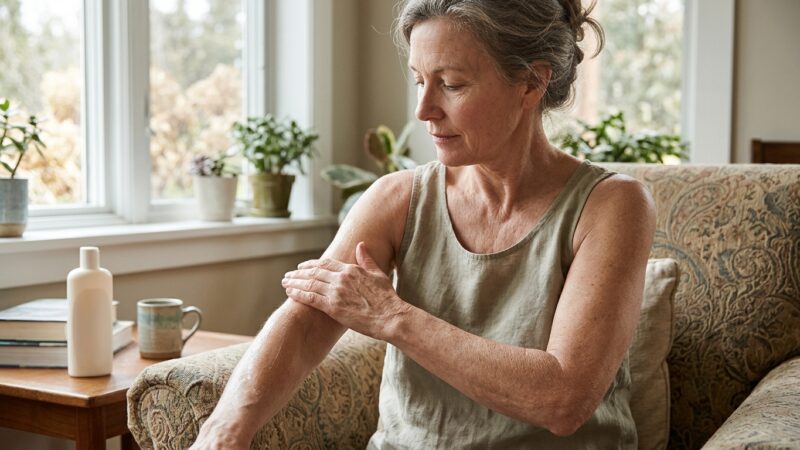
Crepey skin is the fine, crinkled texture that looks like tissue or crepe paper, most noticeable when you bend your arm or turn your head. It tends to appear on the inner and upper arms, the neck, the chest and under the eyes, often from the forties onwards. It is not harmful, but it is one of the most common reasons people in midlife start looking for a new body cream.
This guide explains what causes crepey skin, how it differs from ordinary wrinkles, the home routine with the best reasoning behind it, and what clinic treatments can realistically offer.
What crepey skin is, and how it differs from wrinkles
Wrinkles around the eyes and mouth come mostly from repeated muscle movement: smiling, frowning and squinting fold the skin in the same lines thousands of times. Crepey skin is different. Cleveland Clinic dermatologists describe it as thin, crinkled skin with fine lines that is linked mainly to sun damage and thinning skin rather than to expression. It covers an area rather than forming individual lines, and it looks worse when the skin is dry.
Because it is a texture problem across a wider surface, the approach is different too. You are trying to protect the elastic fibres you still have, keep the surface well hydrated, and encourage the skin to thicken slightly over time.
What causes crepey skin?
| Cause | What happens | Can you change it? |
|---|---|---|
| Sun exposure | UV light breaks down elastin, the fibres that let skin stretch and spring back. Damage builds over decades. | Yes, from today onwards |
| Ageing | Skin makes less oil from the forties, and the protective surface barrier weakens | Partly, with moisturiser |
| Dryness | Dry skin makes fine crinkling far more visible | Yes |
| Large weight changes | Skin that has been stretched and then loses volume may not recoil fully | Gradual change is kinder to skin |
| Some medicines | Long-term oral steroids such as prednisone can thin the skin | Never stop a prescribed medicine on your own; discuss with your doctor |
| Lifestyle | Smoking, sunbeds, poor sleep and heavy drinking are all linked | Yes |
The arms deserve special mention. Forearms and upper arms get years of sun through car windows, gardening and holidays, often without sunscreen. That is a big reason crepey skin on the arms shows up earlier than it does on areas usually covered by clothing.
A home routine for crepey skin
No cream will make crepey skin disappear, and products that promise instant results usually rely on a temporary tightening film. A consistent routine can make it look smoother and stop it getting worse. These are the steps with the best reasoning behind them.
1. Protect from the sun every day
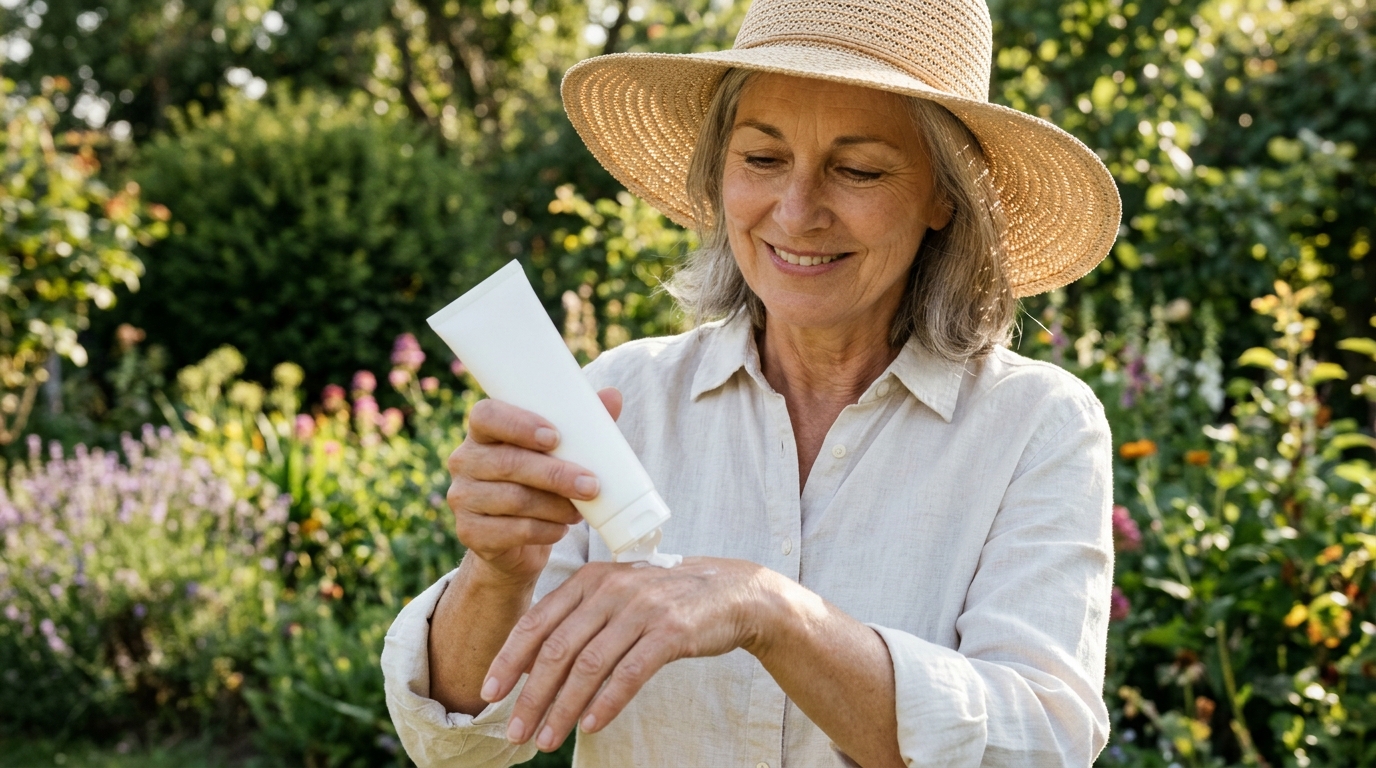
This is the single most useful habit, because ongoing UV damage undoes everything else. The NHS recommends a sunscreen with at least SPF 30 and at least 4-star UVA protection, reapplied regularly when you are outside. Include the backs of the hands, forearms, neck and chest, which are often missed. Long sleeves and a hat help on days you are outdoors for longer.
2. Moisturise while skin is still damp
Dry skin makes crepey texture far more obvious, so good hydration gives the quickest visible improvement. Apply a rich cream straight after a warm, short shower, when skin is still slightly damp. Look for humectants such as glycerin or hyaluronic acid, which draw water in, combined with ingredients like shea butter, ceramides or dimethicone that hold it there.
3. Add a gentle exfoliating moisturiser
Cleveland Clinic lists moisturisers with hydroxy acids, such as lactic, glycolic or salicylic acid, among the at-home options. They loosen dull surface cells and help the skin reflect light more evenly. Body lotions with lactic acid are a common starting point. Use them a few nights a week at first, and expect some sun sensitivity, which is one more reason for step 1. Our guide to salicylic acid for dry skin explains how to choose between these acids if your skin is also dry.
4. Consider a retinoid for the neck and face
Retinoids are the vitamin A family of ingredients, including retinol in shop-bought creams and stronger versions on prescription. Cleveland Clinic notes that retinoids can help thicken collagen and elastin and improve the look of crepey skin, while warning that skin often feels drier and flakier at first. Neck and chest skin is thinner than facial skin, so start with a low-strength retinol two or three nights a week. Our retinol for beginners guide walks through starting slowly.
If your skin is easily irritated, alternating retinoid nights with plain moisturiser nights can help. That idea is the basis of skin cycling for sensitive skin.
5. Be patient, and judge after three months
Hydration shows results within days. Changes in skin texture from exfoliating acids and retinoids take much longer, typically several months of steady use. Taking a photo in the same light before you start makes it easier to judge honestly.
Crepey skin by area
| Area | What tends to help most | Take care with |
|---|---|---|
| Arms | Daily moisturiser, a lactic acid body lotion a few nights a week, sunscreen on forearms | Hard scrubs, which redden without smoothing |
| Neck and chest | Sunscreen, a gentle retinol introduced slowly, a rich cream at night | Strong acids and retinoids together; neck skin is thinner and reacts faster |
| Under the eyes | A plain, fragrance-free eye cream, sunglasses, sleep | Retinoids too close to the lash line, rubbing when removing makeup |
| Legs and knees | Rich body cream after bathing, urea or lactic acid lotions | Hot, long showers that strip oil |
Does diet help crepey skin?
Food will not reverse sun damage, but it supports skin repair. Cleveland Clinic suggests a diet rich in antioxidants, vitamins A, C, D and E, and omega-3 fats. In practice, that means plenty of colourful vegetables and fruit, oily fish, nuts and seeds. Getting enough protein also matters as you age, because skin, like muscle, is built from it. Our guide to protein after 50 covers how much most people need.
Collagen supplements are heavily marketed for crepey skin. The evidence is still developing and results vary between studies, so treat strong claims with caution. A balanced diet with enough protein is a safer first step.
Clinic treatments: what they can and cannot do
If home care is not enough, dermatologists and aesthetic clinics offer several options. Cleveland Clinic lists fractional lasers, which create tiny channels in the skin to stimulate new growth; focused ultrasound, used on the neck, chin and chest to stimulate deeper collagen; radiofrequency tightening, which can be uncomfortable and costly with variable results; and injectable fillers or collagen stimulators. Surgery is reserved for more significant loose skin, such as after major weight loss.
These treatments are rarely available on the NHS for cosmetic reasons, and results vary. If you are considering one, choose a practitioner with recognised medical training, ask how many treatments are usually needed, and ask to see results on skin like yours.
When to see a GP or pharmacist
Crepey skin on its own is cosmetic. It is worth getting advice if your skin has become thin and fragile quickly, bruises or tears easily, or if you have been taking steroid tablets for a long time. A pharmacist or GP can also help if very dry skin is itchy, cracked or not improving with moisturiser, since that can be eczema or another condition that needs treatment.
Questions people ask
Can crepey skin be reversed?
It can be improved rather than fully reversed. Moisturising makes a visible difference quickly, while retinoids, exfoliating acids and clinic treatments can soften texture over months. Daily sun protection stops it getting worse.
At what age does crepey skin start?
It usually becomes noticeable in the forties, but it can appear earlier after a lot of sun exposure or significant weight change.
What is the best cream for crepey skin on arms?
There is no single best product. A rich, fragrance-free body cream used daily, plus a lactic acid lotion a few nights a week, covers the main needs. Expensive creams often contain the same core ingredients as pharmacy brands.
Does drinking more water help crepey skin?
Staying well hydrated supports overall health, but drinking extra water beyond your needs does not noticeably smooth crepey skin. Moisturiser applied to the skin has a far more visible effect.
Sources
- Cleveland Clinic: What’s causing your crepey skin and how can you fix it?
- NHS: Sunscreen and sun safety
Sources checked 4 November 2026.