

Most acne routines fail for one simple reason, they hit skin too hard, too fast, or with too many products at once. Use the first four weeks to build a gentle, consistent routine. Acne treatment often takes longer to show its full effect, so this plan does not promise clear skin in 30 days.
Clearer skin usually starts with boring basics done well. A gentle cleanser, one acne treatment, a lightweight moisturiser, and daily sunscreen can do more than a shelf full of scrubs and serums.
Start with a gentle cleanser, one acne treatment, moisturiser, and broad-spectrum SPF 30 or higher. Add new actives slowly, one at a time, and watch for dryness, stinging, or peeling so you can back off before your skin gets irritated.
Acne gets worse when skin feels attacked. Over-cleansing, harsh scrubs, strong acids, and skipping moisturiser can leave skin inflamed and stressed. Then the face gets tight, red, and flaky, and the next breakout feels even harder to calm.
That is where the skin barrier comes in. Think of it like a brick wall. When the wall is healthy, moisture stays in and irritants stay out. When it gets damaged, skin can look oilier, feel drier, and break out more easily.
This is why gentle care usually wins. Acne routines fail more often from aggression than from neglect. Too many actives at once, too much scrubbing, and too many product swaps all set the barrier back further than the acne itself does.
The American Academy of Dermatology’s tips for managing acne back up that same message: wash gently up to twice a day with a non-abrasive cleanser, skip washcloths and sponges, avoid astringents and toners that dry the skin, and give a treatment weeks to months before judging it.
- The skin barrier, oil production, and breakouts in plain English
- Why too many strong products can make acne worse
- A Basic Routine for Acne Prone Skin: Four Products to Start With
- Choose a gentle cleanser that removes oil without stripping skin
- Pick one acne treatment and stick with it at first
- Moisturiser and sunscreen are not optional
- A simple acne prone skincare routine, morning and night
- Morning
- Night
- Week 1: calm your skin and build the habit
- Week 2: add your acne treatment every other night
- Week 3: increase use if your skin is tolerating it
- Week 4: keep the routine steady and focus on consistency
- Common mistakes that can slow your progress
- How to adjust the routine for oily, dry, and sensitive acne-prone skin
- When home care is not enough, and you should see a dermatologist
- Conclusion
The skin barrier, oil production, and breakouts in plain English
If your skin gets irritated, it can send mixed signals. It may overproduce oil, feel rough, and look shinier by midday. That does not mean your skin is dirty. It means it needs support, not punishment.
Acne-prone skin still needs moisture. Skipping moisturiser can make treatment products feel harsher and make it harder to stay consistent.
Why too many strong products can make acne worse
It is easy to stack everything at once, salicylic acid, benzoyl peroxide, retinoids, scrubs, and exfoliating acids. That often backfires.
One strong product can help. Five strong products can make skin sting, peel, and flare. That can turn a manageable breakout into a mess that lasts longer.

A Basic Routine for Acne Prone Skin: Four Products to Start With
Before you start any 30 day plan, get the base right. You need four things, a cleanser, an acne treatment, a moisturiser, and sunscreen. That is it for now.
Choose products that are non-comedogenic, oil-free, and fragrance-light or fragrance-free if your skin gets reactive. Use one new product at a time, then give it a few days before adding another. Patch testing on a small area is smart, especially if your skin burns easily.
A 2024 review in the International Journal of Research in Dermatology, “Cosmetics and skincare routine in acne prone skin”, sets out the same order many dermatologists recommend, cleanser first, treatment next, moisturiser after, sunscreen in the morning.
Choose a gentle cleanser that removes oil without stripping skin
A good cleanser should remove sweat, sunscreen, and oil without leaving your face squeaky tight. That tight feeling is not a sign of clean skin. It is a sign you went too far.
Harsh foaming cleansers and gritty scrubs can make acne-prone skin more irritated. If your skin is very oily, a salicylic acid cleanser can help some people, but beginners often do better with a plain gentle cleanser first.
Pick one acne treatment and stick with it at first
Start with one treatment only. Salicylic acid helps unclog pores. Benzoyl peroxide helps reduce acne-causing bacteria. Retinoids help keep pores clear over time.
You do not need all three on day one. Pick one, patch test it, and use it slowly. Retinoids are commonly used at night, and benzoyl peroxide can sit in either a morning or an evening slot depending on the product. Check the label, and ask a pharmacist before combining actives, since some do not sit well together.
Moisturiser and sunscreen are not optional
Moisturiser helps your skin stay calm enough to keep going. That matters more than people think. If your face gets dry and angry, you are less likely to stay consistent.
Sunscreen matters too. Acne treatments can make skin more sun-sensitive, and sun can make dark marks hang around longer. Use a broad-spectrum SPF 30 or higher every morning. If those dark marks are already your main complaint once a breakout clears, azelaic acid for post-acne marks and redness is a gentler option than most of the alternatives.
Even dermatologists keep it simple. The AAD’s guidance on moisturiser for acne-prone skin explains why: benzoyl peroxide, salicylic acid, adapalene, and isotretinoin all tend to dry and irritate skin, and daily moisturiser helps your skin tolerate them. Look for labels that say oil-free or non-comedogenic.
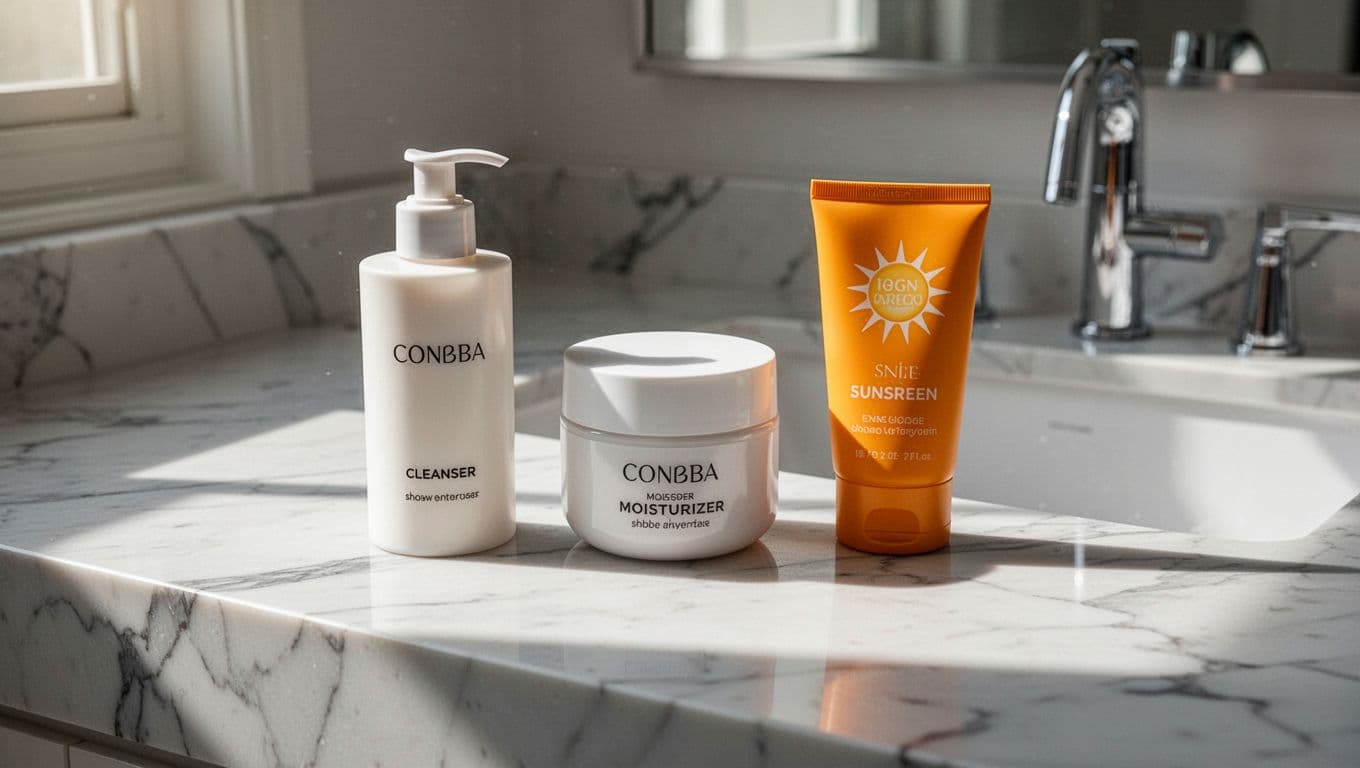
A simple acne prone skincare routine, morning and night
The goal here is not perfection. The goal is a calmer face by the end of the month.
Morning
- Cleanse with a gentle face wash.
- Use your chosen treatment only if your skin can handle morning use.
- Apply a lightweight moisturiser.
- Finish with broad-spectrum SPF 30 or higher.
Night
- Cleanse to remove oil, sweat, and sunscreen.
- Use your acne treatment on the schedule your skin tolerates.
- Finish with moisturiser.
Week 1: calm your skin and build the habit
Keep it basic. Morning cleanse, moisturiser, sunscreen. Night cleanse, moisturiser.
No extra exfoliating. No scrubs. No new serum just because it sounds promising. This week is about letting your skin settle and learning how it reacts.
If your face feels calmer after a few days, good. That is the point.
Week 2: add your acne treatment every other night
Many people bring in their treatment every other night at this stage, since a slower pace tends to reduce dryness, peeling, and stinging.
If you are using a retinoid or benzoyl peroxide, a thin layer is enough. More is not better. If your skin burns, flakes hard, or feels raw, drop back to fewer nights.
Week 3: increase use if your skin is tolerating it
If your skin looks calm, you could try using it on more nights, easing back at the first sign of irritation. If it still feels dry or red, stay at every other night a little longer.
That is not failure. That is your skin talking.
Week 4: keep the routine steady and focus on consistency
By now, the best move is to keep the same plan. Do not start adding random spot treatments or new acids just because you want faster results.
Use sunscreen every morning. Use moisturiser every day. Do not pick at pimples. That one habit can undo a lot of progress.
Common mistakes that can slow your progress
Acne care often goes off track in the small daily stuff. People wash too much, exfoliate too hard, or switch products before anything has time to work.
Other common mistakes are easy to miss. Sleeping in makeup, skipping sunscreen, using greasy hair products, or touching your face all day can keep pores irritated. Dirty makeup brushes and pillowcases do not help either.
Signs you are doing too much
Stinging, tightness, burning, redness, and heavy peeling are not signs to push harder. They are signs to step back.
If your skin feels raw, simplify the routine. Use cleanser, moisturiser, and sunscreen until things calm down.
Habits that can trigger more breakouts
Heavy hair products can slide onto the forehead and temples. Makeup left on overnight can clog pores. Constant face-touching spreads oil and bacteria. None of these are glamorous problems, but they matter, and the AAD’s list of 10 skin care habits that can worsen acne covers most of them, including over-washing, scrubbing, sleeping in makeup, and swapping treatments every week. Diet plays a smaller role than the internet suggests, though the connection between gut health and acne is worth understanding before you start cutting out whole food groups.
How to adjust the routine for oily, dry, and sensitive acne-prone skin
Not all acne-prone skin acts the same. A routine that works for your friend may be too strong or too weak for you.
If your skin is oily and shiny by midday
Use a gentle cleanser and a light gel moisturiser. Do not try to scrub the oil away. That can make skin produce even more oil.
Oil control and barrier care should work together. One without the other usually backfires.
If your skin feels dry, tight, or easily irritated
Go slower. Use your treatment fewer nights each week and keep moisturiser nearby.
Dryness does not mean acne care is failing. It often means your skin needs a softer start.
If you are acne-prone and sensitive at the same time
Pick fragrance-free products when you can. Patch test everything. Use fewer actives, not more.
Sensitive skin can improve. It just usually needs a quieter routine and a little patience.
When home care is not enough, and you should see a dermatologist
If your acne is painful, cystic, scarring, or not improving after 6 to 8 weeks of steady care, it is time to get help. You do not need to wait until your skin gets worse.
Dermatologists can offer stronger retinoids, prescription benzoyl peroxide combinations, antibiotics, or hormonal treatment options when needed. They can also help if breakouts are leaving dark marks or scars.
Conclusion
A good acne skincare routine does not have to be complicated. A gentle cleanser, one treatment, moisturiser, and sunscreen can make a real difference when you use them the same way every day.
Thirty days is often enough to notice fewer breakouts and calmer skin if you go slowly and stay consistent, though everyone’s timeline is a little different. If your acne is severe or stubborn, get a dermatologist involved sooner rather than later. Your skin usually does better with a calm plan than with a desperate one.