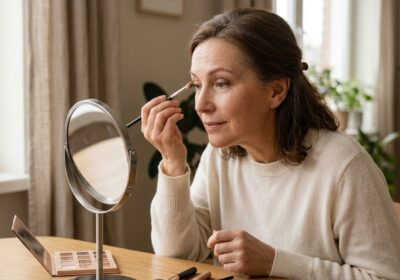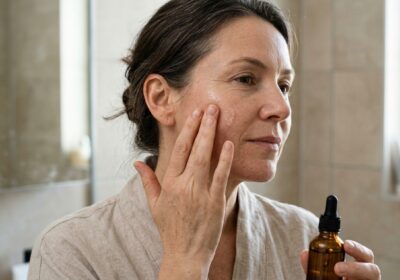

Somewhere in your forties, the moisturiser that worked for years starts to feel thin by bedtime. Skin looks duller in the morning, fine lines show more, and makeup sits differently. That is usually when people start wondering whether they need a night cream, and whether it is anything more than a richer, pricier moisturiser in a nicer jar.
This guide explains what a night cream for your 40s should actually do, which ingredients are worth paying for, how to choose for your skin type, and when you can skip it altogether.
Why skin needs change in your 40s
Several changes tend to meet in this decade. Skin produces less oil, so it loses water more easily and feels tighter. Cell turnover slows, which leaves a layer of dull, rough cells on the surface for longer. Years of sun exposure start to show as uneven tone, brown spots and fine lines. And for many women, perimenopause adds to it: the NHS lists skin changes, including dry and itchy skin, among the symptoms of the menopause transition.
None of this means skin is failing. It means the routine that suited oily or combination skin at 30 may now be too stripping, too light, or missing the active ingredients that do their best work overnight.
What a night cream is for
Day and night creams have different jobs. Cleveland Clinic dermatologist Melissa Piliang puts it simply: a day cream should protect your skin from the outside elements, mainly with sunscreen, while a night cream is meant to help skin repair. Night creams are usually thicker because they are designed to moisturise and soothe while you sleep, when there is no sunscreen, makeup or weather to work around.
Night is also the natural time for ingredients that make skin more sensitive to sunlight, such as retinol and exfoliating acids. Using them in the evening means your skin has the whole night to settle, and you protect it with sunscreen the next morning.
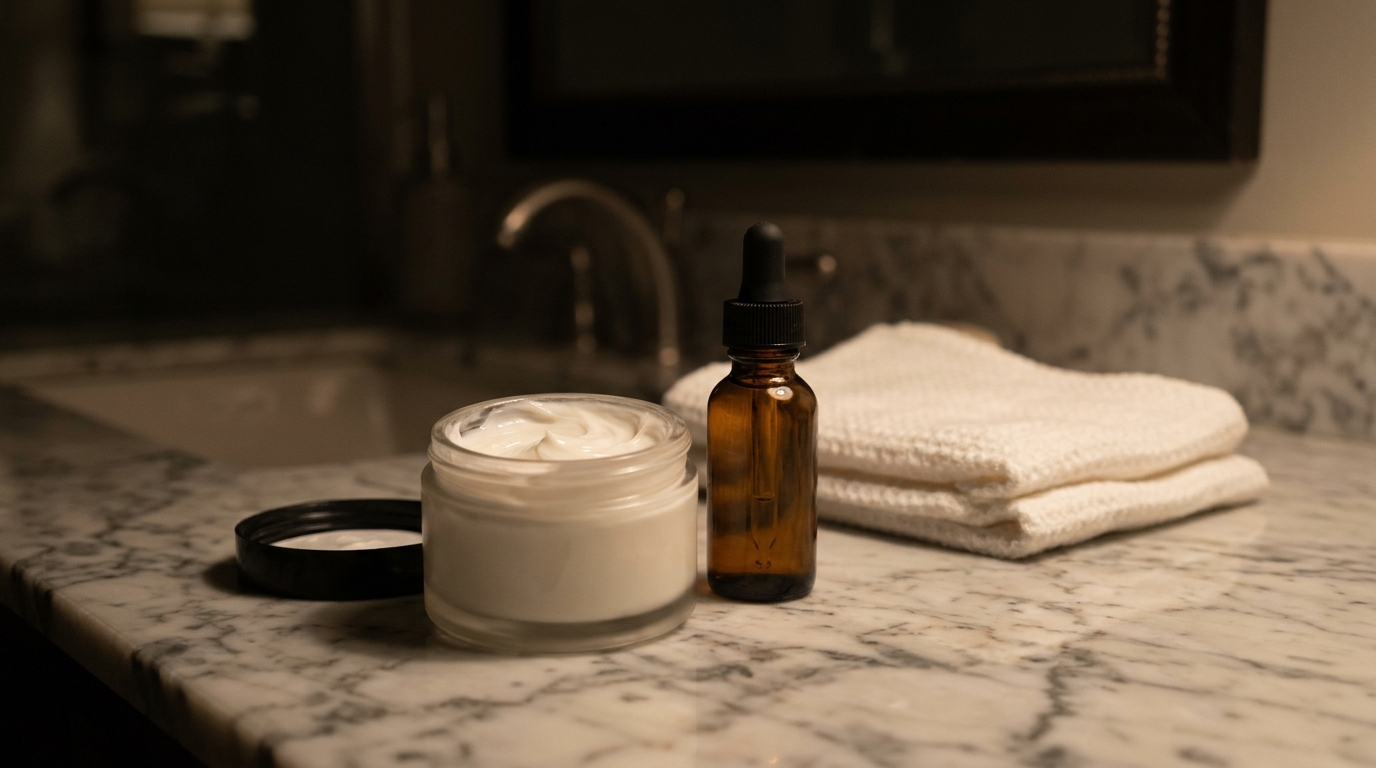
Ingredients worth paying for
| Ingredient | What it does | Who it suits | Watch out for |
|---|---|---|---|
| Retinol | Improves the look of fine lines, wrinkles and brown spots and evens out tone over months | Most skin types in their 40s | Irritation, dryness and peeling at first; start slowly |
| AHAs and BHAs (glycolic, lactic, salicylic acid) | Gently exfoliate dull surface cells and help other products absorb | Dull, rough or congested skin | Stinging; avoid the same night as retinol while you start |
| Hyaluronic acid | Draws water into the skin to plump it | All skin types, especially dehydrated skin | Works best layered under a cream that seals moisture in |
| Ceramides | Rebuild the skin barrier that holds moisture in | Dry and sensitive skin | Very few issues |
| Glycerin | A humectant that draws in water and supports repair | Everyone | Very few issues |
| Vitamin E | An antioxidant that also moisturises | Dry skin | Can feel heavy on oily skin |
| Peptides | Signalling ingredients marketed for firmness | Anyone who tolerates retinol poorly | Evidence is thinner than for retinol; often expensive |
Dr Piliang recommends retinol, AHAs and BHAs, hyaluronic acid, vitamin E and resveratrol as night cream ingredients, and ceramides, glycerin and lactic acid for sensitive skin. Of these, retinol has the strongest reasoning behind it for visible ageing, which is why it is the ingredient most dermatologists suggest introducing in your forties. Our guide to retinol for beginners explains how to start without irritation.
How to choose a night cream for your skin type
Dry skin
Look for a rich cream with ceramides, glycerin and shea butter or squalane. If your skin is rough and flaky as well as dry, a gentle exfoliant a couple of nights a week can help moisturiser reach the skin underneath; our guide to salicylic acid for dry skin explains when that helps and when it does not.
Oily or combination skin
You may not need a heavy cream at all. A light gel-cream or lotion labelled noncomedogenic, which means it is formulated not to block pores, is usually enough. Dr Piliang advises people with oily or acne-prone skin to avoid heavy oils, waxes and petrolatum on the face. Use a retinol serum and a light moisturiser rather than a thick all-in-one cream.
Sensitive skin
Choose fragrance-free products with ceramides and glycerin, and introduce one active at a time. If retinol stings, try it two nights a week over moisturiser, or ask a pharmacist about gentler options. Our guide to skin barrier repair covers what to do if your skin is already irritated.
A simple night routine for your 40s
- Cleanse gently. Use a creamy or gel cleanser that removes makeup and sunscreen without leaving skin tight.
- Apply your active. On retinol nights, a pea-sized amount on dry skin. On exfoliant nights, your acid product instead. Leave one or two nights a week with no actives at all.
- Hydrate. A hyaluronic acid serum on slightly damp skin if your skin feels tight.
- Seal with night cream. Your moisturiser or night cream on top, including the neck.
- Next morning, sunscreen. Retinol and acids make skin more sensitive to the sun, so daily SPF protects the result.
Keep the area around the eyes simple. Thin skin there reacts quickly to strong actives, and a plain, fragrance-free cream is usually enough.

Do you really need a separate night cream?
Not always. A night cream is a useful idea rather than a product category you must buy. If your daytime moisturiser has no sunscreen and feels comfortable overnight, you can use the same moisturiser morning and night and add retinol as a separate step. What matters is that your skin gets a protective day product with SPF and a richer, repairing step at night.
Price is a poor guide. Dr Piliang notes that household-name brands can be just as good as pricier products, and many pharmacy night creams contain the same core ingredients as luxury ones. Spend on the active ingredient that matters to you, usually a retinol product, and keep the moisturiser simple.
Common mistakes
- Starting several new actives at once. If your skin reacts, you will not know which product caused it.
- Using retinol and a strong acid on the same night. That combination is a common cause of stinging and peeling.
- Skipping the neck and hands. They show age as clearly as the face. See our guide to crepey skin on the arms, neck and face for those areas.
- Giving up after two weeks. Hydration shows quickly, but retinol takes months to change texture and tone.
If your skin is reactive as well as dry, a simpler, barrier-first routine often helps more than adding another active. Our guide to microbiome skincare explains why, and how skin changes after menopause.
Questions people ask
At what age should you start using night cream?
Dr Piliang suggests getting into the habit of a day and night cream from the mid to late twenties. In practice, many people start once their skin feels drier or they want to add retinol, which for many is in their thirties or forties.
Can I use my day cream at night?
You can if it does not contain sunscreen and feels comfortable. Sunscreen ingredients are unnecessary at night and some people find they irritate the eyes on the pillow.
Is a night cream with retinol enough, or do I need a serum?
A retinol night cream is a convenient all-in-one. A separate serum gives you more control over strength and frequency, which helps sensitive skin. Either works if you use it consistently.
Can I use night cream during perimenopause if my skin is suddenly sensitive?
Yes. Switch to a fragrance-free cream with ceramides and glycerin, pause strong actives for a couple of weeks, then reintroduce them slowly. If dryness or itching persists, speak to a pharmacist or GP.
Sources
- Cleveland Clinic: What to look for in daytime and nighttime facial creams
- NHS: Symptoms of menopause and perimenopause
Sources checked 17 November 2026.