
Your gut microbiome is the community of bacteria and other microbes living mostly in your intestines. They help break down parts of food you can’t digest on your own, make useful compounds, and support the gut lining.
Food is the biggest lever you have here, and it fits into the wider picture in our guide to gut health.
Food matters because these microbes eat what you leave behind, especially fibre and plant compounds. No single food fixes gut health overnight, but a few food groups can help good bacteria grow and keep digestion on steadier ground.
The best gut microbiome foods usually fall into four buckets: fermented foods, prebiotic fibre foods, polyphenol-rich plants, and resistant starch sources. The trick is using them often enough that they become normal.
- Best Foods for Gut Microbiome Health at a Glance
- How your gut microbiome works and what it needs from food
- Fermented foods that can add helpful probiotics to your diet
- Prebiotic fibre foods that feed your gut microbiome
- Polyphenol-rich foods and resistant starch sources that support a healthier microbiome
- How to build gut-friendly meals without overthinking it
- FAQ
- Conclusion
Best Foods for Gut Microbiome Health at a Glance
If you want the short version before the explanations, here it is. Each of these earns its place for a different reason, which is why variety beats picking a favourite.
| Food | Type | What it does | Easiest way to eat it |
|---|---|---|---|
| Plain yoghurt (live cultures) | Fermented | Adds live microbes | Breakfast bowl with berries and oats |
| Kefir | Fermented | More strains than most yoghurt | Straight, or blended into a smoothie |
| Kimchi | Fermented | Live cultures when unpasteurised | A few forkfuls beside eggs or rice |
| Sauerkraut | Fermented | Live cultures when unpasteurised | On sandwiches or with sausages |
| Miso | Fermented | Fermented soy, salty depth | Stirred into soup off the boil |
| Tempeh | Fermented | Fermented soy plus protein and fibre | Sliced and pan-fried for grain bowls |
| Onions and garlic | Prebiotic | Inulin and fructans feed existing microbes | Base of almost any savoury dish |
| Leeks | Prebiotic | Same fibre family, milder | Softened into soups or a frittata |
| Asparagus | Prebiotic | Inulin | Roasted with olive oil and salt |
| Slightly green bananas | Prebiotic + resistant starch | Less ripe means more resistant starch | Sliced over oats or into a smoothie |
| Oats | Prebiotic fibre | Beta-glucan, easy to eat daily | Porridge or overnight oats |
| Beans, lentils, chickpeas | Prebiotic fibre | Highest fibre per pound spent | Soups, salads, hummus |
| Barley and rye | Prebiotic fibre | Different fibres from wheat | Grain salads, hearty breads |
| Nuts and seeds | Fibre + polyphenols | Widens plant variety fast | Scattered over anything |
| Berries | Polyphenols | Microbes metabolise polyphenols | Fresh or frozen, daily |
| Red cabbage and dark greens | Polyphenols + fibre | Colour signals the compounds | Slaws, sautés, roasted |
| Tea, coffee, cocoa | Polyphenols | Everyday sources people forget | Already in your routine |
| Cooked-and-cooled potato, rice, pasta | Resistant starch | Cooling makes starch harder to digest | Potato salad, rice bowls made ahead |
One honest caveat before the detail: this is a menu, not a checklist. Eating four or five of these regularly does far more than eating all eighteen once.
No superfood fixes your gut. Variety, fibre, and consistency do more than any one trendy ingredient.
How your gut microbiome works and what it needs from food
Think of your gut like a crowded neighbourhood. Different microbes do different jobs, and they do best when there’s a steady supply of the foods they prefer. For many of the helpful ones, that means plant fibres and other compounds that reach the colon mostly undigested.
When microbes ferment these leftovers, they make short-chain fatty acids. Harvard’s Nutrition Source, in its overview of the gut microbiome and dietary fibre, describes how fermenting indigestible fibres produces these compounds, which the body can use as fuel and which may play a role in colon health. Gut microbes also help with vitamin production and crowd out less helpful microbes. When that balance shifts in the wrong direction, digestion can feel off.
Why gut bacteria thrive on plant diversity
Different plants bring different fibres and plant chemicals. Beans offer one mix, oats another, berries another, and leafy greens another. The wider the mix, the more types of microbes you can support.
That doesn’t mean you need a perfect meal plan. It means your gut usually does better with a mix of fruits, vegetables, beans, whole grains, nuts, and seeds across the week. As the University of Chicago explains in its piece on how diet shapes gut microbiome health, diets low in fruits, vegetables, and whole grains tend to reduce microbial variety.
The difference between probiotic, prebiotic, and fibre-rich foods
Probiotic foods contain live microbes. Yoghurt, kefir, and some fermented vegetables fall into that group.
Prebiotic foods feed helpful microbes already living in your gut. Onions, garlic, oats, beans, and bananas are good examples.
Fibre-rich foods help with regular digestion and support bacterial balance. Many foods do double duty. Oats, beans, and lentils bring fibre, and they also act like fuel for beneficial bacteria.
Fermented foods that can add helpful probiotics to your diet
Fermented foods get a lot of attention, and some of it is deserved. They can add live microbes to the diet, which may help support microbial diversity. A review of foods and nutrition on the gut microbiome points to human research linking fermented-food-rich diets with higher microbial diversity and lower levels of some inflammation markers. The human trials here are small, though. Stanford Medicine’s report on its randomized fermented-food trial describes 36 healthy adults over 10 weeks, with the fermented-food group showing increased microbial diversity and lower levels of 19 inflammatory proteins in blood, while the high-fibre group did not.
Still, not every fermented food contains live cultures by the time you eat it. Some products are pasteurised or heat-treated after fermentation, and the ISAPP scientific definition of fermented foods doesn’t require live microbes to be present or viable at the moment you eat them. Labels matter.
Tolerance matters too. People with IBS, SIBO, histamine intolerance, or other digestive issues may do better with small amounts, or with different foods entirely.
Yoghurt and kefir are easy everyday options
Plain yoghurt with live cultures and kefir are easy starting points for most people. They’re mild, familiar, and simple to work into breakfast or snacks.
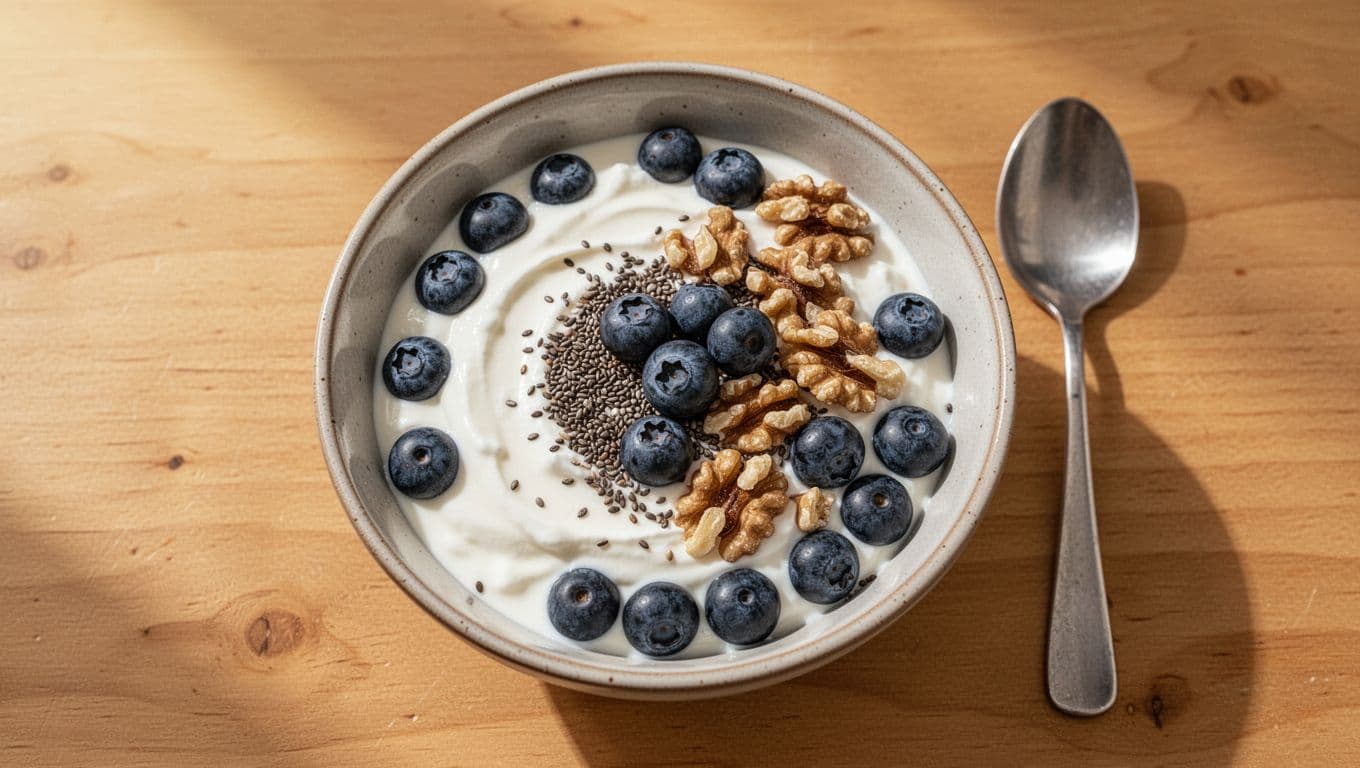
Choose unsweetened versions when you can. Add berries, oats, chia, or walnuts for a meal that does more than one job. Kefir works well in smoothies, and yoghurt fits into breakfast bowls or a quick afternoon snack.
Kimchi, sauerkraut, miso, and tempeh bring variety
Kimchi and sauerkraut add tang, crunch, and live cultures when unpasteurized. A few forkfuls with eggs, grain bowls, or sandwiches is plenty.
Miso works nicely in soup dressings and marinades. Tempeh is fermented soy, and it has a firmer texture than tofu, which makes it good for stir-fries and grain bowls. You don’t need large servings. Small, regular amounts often fit better than a big one-time hit.
Prebiotic fibre foods that feed your gut microbiome
If fermented foods are the headline, prebiotic foods are the daily routine. These are the foods that feed the bacteria already in your gut, and many of them are basic grocery staples. If the difference still feels fuzzy, prebiotics vs probiotics lays it out properly.
Onions, garlic, leeks, asparagus, and bananas
Onions, garlic, leeks, and asparagus are simple ways to build prebiotic fibre into meals you already make, and all four turn up in Cleveland Clinic’s rundown of common prebiotic foods as inulin sources. Add onions and garlic to soups, sauces, eggs, chili, or roasted vegetables. Roast asparagus with olive oil and salt, or fold sliced leeks into a frittata.
Slightly green bananas bring more resistant starch and prebiotic potential than very ripe ones. Blend one into a smoothie or slice it over oatmeal. If your digestion is touchy, smaller portions may go better, especially with garlic, onions, and large servings of asparagus.
Oats, barley, rye, beans, lentils, and chickpeas
Oats are one of the easiest gut-friendly foods to eat often. Oatmeal, overnight oats, or a handful of oats in a smoothie all work. Barley and rye add variety if you like hearty grains and breads.
Beans, lentils, and chickpeas do a lot for not much money. They bring fibre, help with fullness, and feed helpful microbes. Bean soups, lentil salads, chickpea bowls, and hummus all count. If beans don’t love you back yet, start small, rinse canned beans well, and build up slowly over a few weeks.
Nuts and seeds that add fibre and plant compounds
Pistachios, cashews, chia, flax, pumpkin seeds, and sunflower seeds are easy add-ins. Sprinkle them on yoghurt, oatmeal, salads, or cooked vegetables. A little goes a long way, and they help widen the range of plant foods in your week.
Polyphenol-rich foods and resistant starch sources that support a healthier microbiome
Fibre gets most of the spotlight, but polyphenols and resistant starch matter too. Polyphenols are plant compounds that gut microbes interact with. Resistant starch acts more like fibre because part of it escapes digestion in the small intestine and reaches the colon.
Berries, colourful vegetables, tea, coffee, cocoa, and dark chocolate
Berries, cherries, red cabbage, leafy greens, herbs, tea, coffee, cocoa, and dark chocolate all bring polyphenols. These compounds don’t work like magic. They work as part of an overall plant-rich diet. A 2025 review of polyphenol and gut microbiota interactions describes the relationship as two-way: how much you get out of polyphenols depends partly on the microbes you already have, and the polyphenols in turn shift that community.
The practical version: berries at breakfast, colourful vegetables at lunch and dinner, and a square or two of dark chocolate when you want it. Polyphenols are one of the few areas where things people already enjoy happen to count.
Cooked-and-cooled potatoes, rice, pasta, and green bananas
Cooling certain starchy foods changes part of their structure. After they’re cooked and cooled, some of the starch becomes harder to digest, which means more reaches the gut microbes. A review of resistant starch in Advances in Nutrition calls this retrogradation: cooked starch held at a low temperature reforms into a structure that resists digestion in the small intestine and gets fermented in the colon instead.
That makes foods like potato salad, rice bowls made ahead of time, pasta salad, and overnight oats worth a look. Even after reheating, some resistant starch can remain. Green bananas fit here too, which is one reason they show up so often in gut-health conversations.
How to build gut-friendly meals without overthinking it
Most people don’t need a gut-health overhaul. They need a few repeatable meals and a little more plant variety across the week. The same idea sits at the centre of healthy ageing nutrition strategies too: daily patterns beat heroic one-off efforts.
Easy meal ideas for breakfast, lunch, dinner, and snacks
A few combinations make this easier:
- Plain yoghurt or kefir with berries, chia, and oats.
- A lunch bowl with beans, roasted vegetables, greens, and a cooled grain.
- Salmon, tofu, or tempeh with a cooled potato or rice salad and extra vegetables.
- Fruit, nuts, or hummus with sliced vegetables for snacks.
Those meals mix probiotics, prebiotics, fibre, polyphenols, and resistant starch without making you think too hard.
A simple weekly goal, aim for more plant variety
If you like goals, count plant foods over a week instead of chasing a perfect day. Fruits, vegetables, beans, lentils, whole grains, herbs, nuts, and seeds all count.
That approach works better than obsessing over one “best” ingredient. One week might include oats, blueberries, lentils, spinach, chickpeas, pistachios, onions, brown rice, carrots, cabbage, apples, and flax. That’s a better gut-health move than buying one expensive supplement and calling it done.
FAQ
What is the single best food for your gut microbiome?
There isn’t one, and any article naming one is selling something. If forced to pick a category rather than a food, it would be legumes: beans, lentils and chickpeas carry more fibre per serving than almost anything else on the list, cost very little, and are easy to eat several times a week.
How long does it take for food to change your gut microbiome?
Measurable shifts in the microbiome can begin within a few days of a real dietary change. In a small crossover study of ten adults published in Nature, switching between an entirely plant-based and an entirely animal-based diet altered gut microbial communities within about a day, though the participants’ microbiomes drifted back toward baseline once the diets ended. Noticeable differences in bloating, regularity and comfort usually take a few weeks. Broader changes in microbial diversity take longer and depend on staying with the change.
Do I need a probiotic supplement if I eat these foods?
Most people don’t. Supplement evidence is strain-specific and strongest for particular clinical situations rather than general use. Food variety and fibre do more for the average person than a daily capsule, and cost less.
Why does adding these foods sometimes cause bloating?
Because it’s working. Giving gut bacteria more to ferment produces more gas, especially if your usual diet has been low in fibre. MedlinePlus’s encyclopedia entry on dietary fibre makes the same point, noting that a large amount of fibre in a short period can cause gas, bloating and cramps, and advising that you add it gradually over a few weeks and drink plenty of fluid. Do that and it generally settles. If it doesn’t, that’s worth raising with a clinician.
Are fermented foods safe if I have IBS?
Sometimes, in small amounts, but this is genuinely individual. Fermented foods, onions, garlic and large servings of legumes are common triggers for people with IBS. Monash University’s explanation of FODMAPs and IBS lists garlic, onion and most legumes as high-FODMAP foods, which gut bacteria ferment into gas that can stretch the intestinal wall in people with sensitive guts. A dietitian who works with digestive conditions is more useful here than a general food list, including this one.
Conclusion
The best foods for a healthy gut microbiome are mostly plant foods, plus a few fermented foods that you tolerate well. What matters most is the pattern: more variety, more fibre, more consistency.
If digestive symptoms keep showing up, don’t guess forever. People with IBS, SIBO, histamine intolerance, or ongoing bloating, pain, or bowel changes may need more personal guidance. Food can help a lot, but it still works best when it’s matched to your body.