Dried blood is surprisingly stubborn. After a cut, a shaving nick, a nosebleed or a fall, it sets into fine lines on the skin, around the nails and in hair, and scrubbing at it can reopen the very wound you are trying to clean around. The good news is that dried blood dissolves easily in water once you give it time to soften.
This guide explains how to remove dried blood from skin gently, how to clean around a healing cut, what to avoid, and the signs that a wound needs more than home care.
- Why dried blood is so hard to wipe off
- First, make sure the bleeding has stopped
- How to remove dried blood from intact skin
- Cleaning dried blood around a cut or graze
- Dried blood under nails and in hair
- What not to use
- After 50: fragile skin and easy bleeding
- A simple kit to keep at home
- When to get medical help
- Questions people ask
- Sources
Why dried blood is so hard to wipe off
Blood is designed to stick. When you bleed, proteins in the blood form a mesh of fibres called fibrin that traps red blood cells and seals the wound. As that mesh dries on the skin around a cut, it grips the tiny ridges and creases of the surface, and around hair and nails it wraps itself into every gap. Wiping dry blood with a dry tissue mostly smears it. Water reverses the drying, loosens the mesh and lets it lift away, which is why soaking works so much better than scrubbing.
First, make sure the bleeding has stopped
Cleaning comes after bleeding control, not before. The NHS advice on cuts and grazes is to apply firm pressure with a clean cloth or bandage and raise the injured part if you can. Only once bleeding has stopped should you clean a small wound and cover it.
For a nosebleed, the NHS advises sitting down, leaning forward with your head tilted forward and your mouth open, and pinching the soft part of the nose just above the nostrils for 10 to 15 minutes. Wait until it has fully stopped before cleaning your face.
How to remove dried blood from intact skin
Where the skin is not broken, for example blood that has run down an arm or dried on your face after a nosebleed, these steps work for most people:
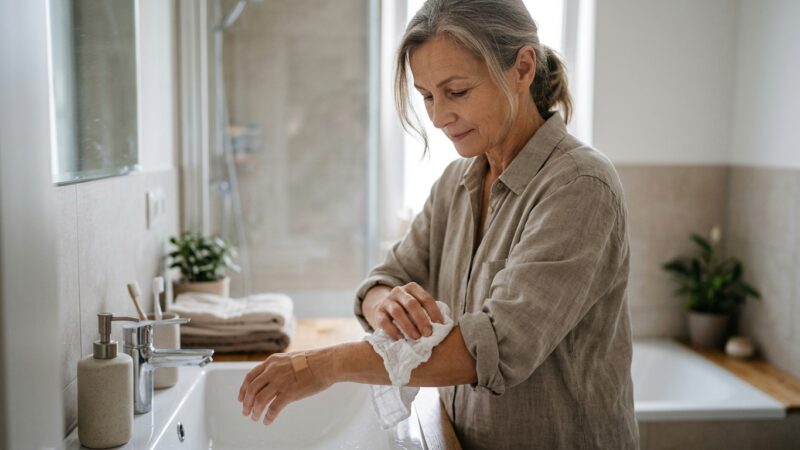
- Soak, do not scrub. Hold a clean cloth soaked in lukewarm water against the area for one to two minutes. Dried blood softens and starts to lift as it rehydrates.
- Wipe gently with mild soap. Use a fragrance-free soap or gentle cleanser and wipe in one direction with the cloth. Rinse the cloth often.
- Repeat rather than press harder. A second soak usually removes what is left. Rubbing hard irritates the skin and can leave it red and sore.
- Pat dry and moisturise. A plain moisturiser calms any redness from washing.
Use cool or lukewarm water rather than hot. That is a lesson borrowed from laundry, where hot water makes blood harder to shift, and it is also kinder to skin.
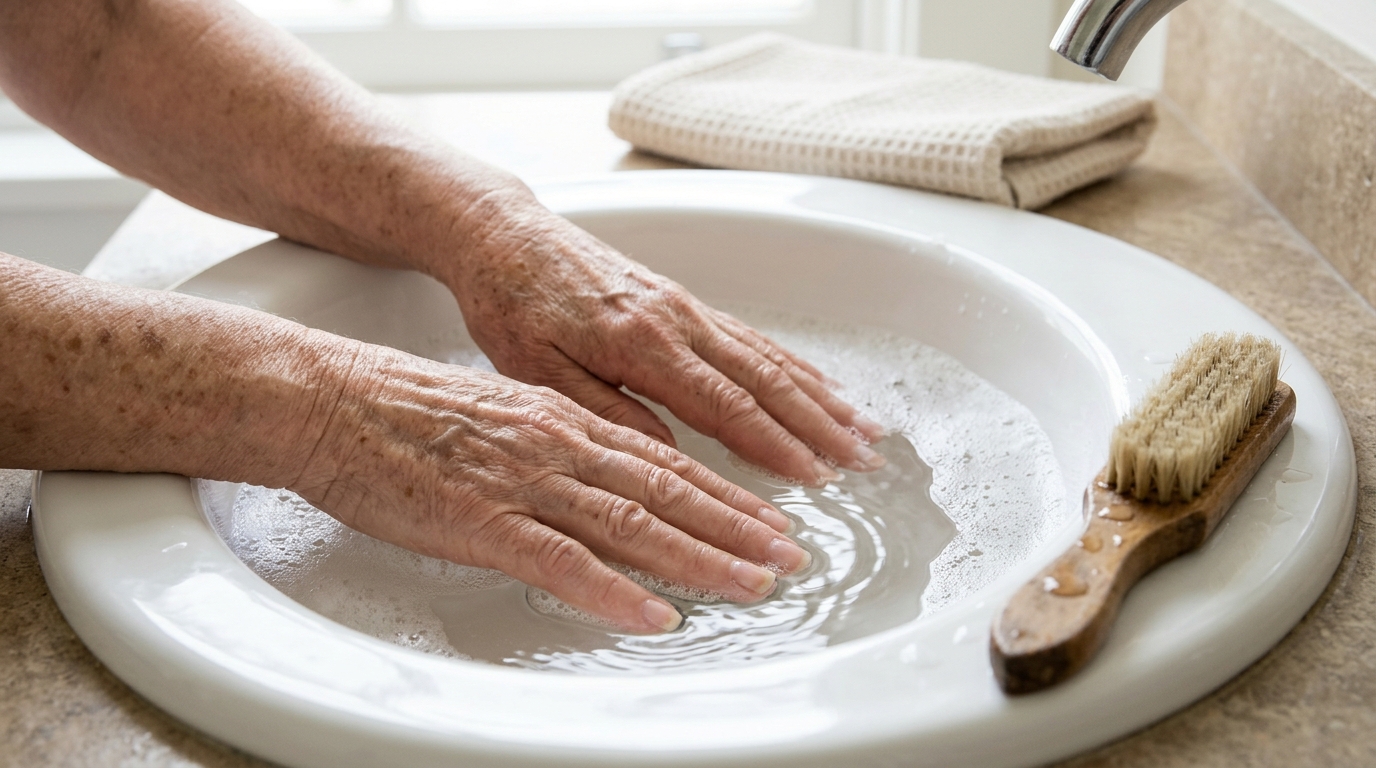
Cleaning dried blood around a cut or graze
Around a healing wound, the aim is to clean the skin without disturbing the clot or scab that is protecting it. The NHS steps for cleaning a small wound are a good template:
- Wash your hands and dry them. Use disposable gloves if you have them.
- Rinse the wound with bottled or tap water, or use sterile wipes.
- Pat it dry with gauze or a clean cloth, then cover the wound itself with clean gauze.
- Clean the skin around it with soap and water, wiping away from the wound and using a clean part of the cloth for each stroke.
- Cover with a plaster or dressing.
Leave the blood that has dried into the wound edge alone. It is part of the clot, and pulling it away can restart the bleeding and slow healing. If the dressing has stuck to dried blood, soak it with clean water for a few minutes before peeling it off slowly.
Dried blood under nails and in hair
Under fingernails, soak your hands in warm soapy water for a few minutes, then use a soft nail brush. Avoid digging with sharp tools, which can cut the skin under the nail. In hair, wet the area thoroughly, apply shampoo and leave it for a minute before rinsing, then repeat. Comb gently rather than pulling at clumps.
What not to use
| Product | Why to skip it on skin | Better choice |
|---|---|---|
| Hot water | Harsher on skin and less effective on blood | Cool or lukewarm water |
| Rubbing alcohol | Stings, dries the skin and is not needed for ordinary cleaning | Mild soap and water |
| Hydrogen peroxide | Often used on wounds out of habit, but NHS advice for small cuts is simply water or sterile wipes | Tap or bottled water |
| Bleach or stain removers | Made for fabric, not skin; can burn | Never use on skin |
| Scrubs and exfoliating brushes | Irritate skin and can reopen small wounds | A soft cloth and patience |
After 50: fragile skin and easy bleeding
Skin thins with age, so small knocks cause more skin tears and bruises, and blood can spread under thin skin. Be especially gentle when cleaning: soak for longer and avoid rubbing. Our guide to crepey skin on the arms explains why the skin on the forearms becomes more fragile, and our tips for skin barrier repair help skin recover after frequent washing.
If you take medicines that thin the blood, small cuts may bleed for longer and leave more dried blood behind. Keep applying pressure for longer, and speak to your GP or pharmacist if bleeding is hard to stop or you are bruising much more than usual. Never stop a prescribed medicine on your own.
A simple kit to keep at home
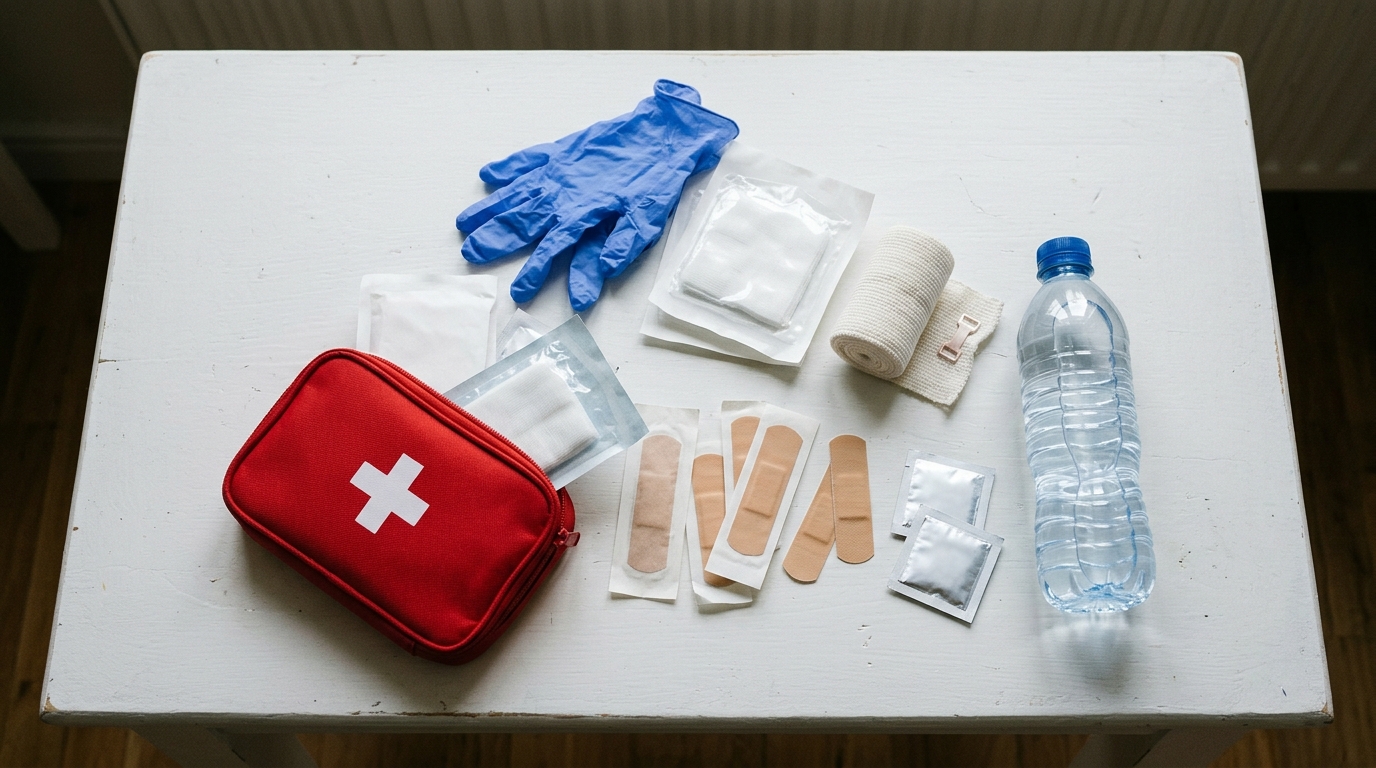
Most of what you need for cuts and dried blood is cheap and fits in one small box: disposable gloves, sterile wipes or a bottle of clean water, sterile gauze swabs, a few sizes of plasters, a couple of non-stick dressings, a roll of bandage, a fragrance-free soap and a soft cloth kept only for first aid. Having it ready means you can stop bleeding and clean up calmly instead of reaching for kitchen roll and whatever is in the bathroom cabinet. Check it every few months and replace anything used or past its date.
When to get medical help
The NHS advises getting an urgent GP appointment or contacting NHS 111 if:
- a wound has soil, pus or body fluids in it, or is still dirty after cleaning
- you were bitten by a person or a wild or stray animal
- a cut is swollen, red and getting more painful, or pus is coming out
- a cut is larger than around 5cm
- you feel generally unwell or have a high temperature
Call 999 or go to A&E if you cannot stop the bleeding, if blood comes out in spurts, if the wound is very large or deep, if you lose feeling near it, or if something is stuck in it. Go to A&E for a nosebleed that lasts longer than 10 to 15 minutes or that started after a blow to the head.
Questions people ask
What dissolves dried blood on skin?
Water. A damp, lukewarm cloth held on the area for a minute or two rehydrates dried blood so it wipes away with mild soap. Strong chemicals are not needed and are harder on skin.
Should I wash dried blood off a scab?
Clean the skin around it gently, but leave the scab itself alone. It protects the healing wound underneath, and picking at it can restart bleeding.
How do I get dried blood off after shaving?
Press a clean, damp cloth on the nick for a minute to stop any oozing, then rinse with cool water. Avoid wiping the nick itself until it has sealed.
Is it safe to clean dried blood from someone else?
Wash your hands before and after, and wear disposable gloves if you have them, as the NHS advises when dealing with cuts. Cover any cuts on your own hands.
Sources
Sources checked 17 November 2026.