Most advice about ultra-processed food tells you what to cut. Far less of it tells you what to put in the basket instead. That gap matters, because “eat less processed food” is not a plan until you know which foods count as unprocessed, which count as minimally processed, and which processed foods are still perfectly good choices.
This list of unprocessed foods is the other half of our ultra-processed foods list. It is organised by food group, it uses foods you can find in an ordinary UK supermarket, and it explains the simple test that separates a sensible tin of beans from a heavily engineered snack.
What counts as unprocessed or minimally processed food?
Almost every food is processed to some degree. The NHS makes this point plainly: a processed food is any food that has been changed during making or preparation, which includes freezing, tinning, pasteurising and pressing, according to its guide to what processed foods are. So the useful question is not whether a food has been processed, but how much and in what way.
The NOVA system, developed by researchers at the University of São Paulo and set out in an FAO report on ultra-processed foods and diet quality, sorts food into four groups. Group 1 is unprocessed or minimally processed food: the edible parts of plants and animals, sometimes cleaned, dried, ground, chilled, frozen, pasteurised or fermented without alcohol, but with no added salt, sugar, oils or fats. That is the group this list focuses on.
| NOVA group | What it means | Everyday examples |
|---|---|---|
| 1. Unprocessed or minimally processed | Whole food, at most cleaned, frozen, dried or pasteurised | Fresh or frozen vegetables, fruit, eggs, plain milk, dried lentils, oats, fresh meat and fish |
| 2. Processed culinary ingredients | Extracted from foods and used in cooking | Olive oil, butter, salt, sugar, honey, vinegar |
| 3. Processed foods | Group 1 foods with group 2 ingredients added | Tinned beans in brine, cheese, traditional bread, tinned fish, salted nuts |
| 4. Ultra-processed foods | Industrial formulations, often with additives not used in home cooking | Fizzy drinks, packaged biscuits and cakes, crisps, most ready meals, reconstituted meat products |
The list of unprocessed foods, group by group
The table below is designed to be used while shopping. The middle column shows the minimally processed version of each food, and the last column shows the most common way the same food drifts into ultra-processed territory.
| Food group | Unprocessed or minimally processed choices | Where it usually tips into ultra-processed |
|---|---|---|
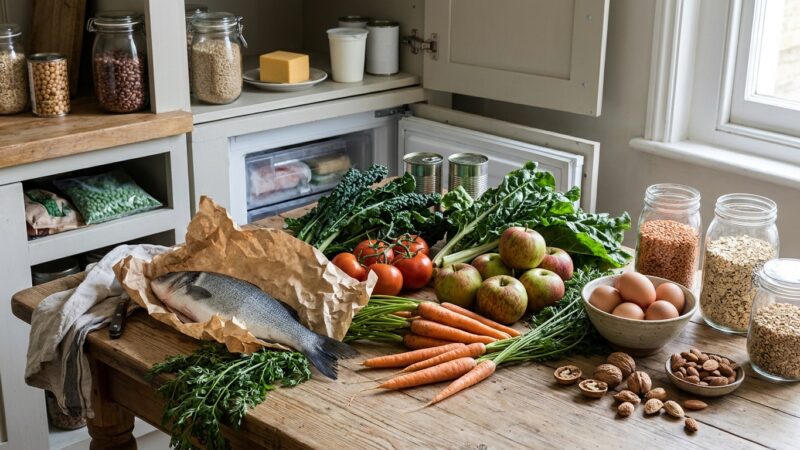
| Vegetables | Fresh, frozen or bagged vegetables and salad, plain tinned tomatoes, passata with no additives | Vegetable crisps, coated or battered vegetables, many jar sauces |
| Fruit | Fresh fruit, frozen berries, unsweetened dried fruit | Fruit-flavoured snacks, fruit “bars” with syrups, sweetened smoothie drinks |
| Grains | Porridge oats, brown and white rice, plain pasta, bulgur wheat, barley, quinoa, plain flour | Flavoured instant porridge pots, sugary breakfast cereals, packaged pastries |
| Pulses | Dried lentils, split peas, dried or plain tinned beans and chickpeas | Flavoured bean snacks, some meat-free burgers and sausages |
| Nuts and seeds | Unsalted nuts, seeds, plain nut butters with no added oils or sugar | Chocolate or honey-coated nuts, nut butters with palm oil and sugar |
| Eggs, meat and fish | Eggs, fresh or frozen chicken, lean meat, mince, fresh or frozen fish | Chicken nuggets, fish fingers, sausages, ham and other reconstituted or cured products |
| Dairy | Plain milk, plain yoghurt, kefir, cottage cheese | Flavoured yoghurts, dairy desserts, processed cheese slices |
| Drinks | Water, plain tea and coffee, plain milk | Fizzy drinks, energy drinks, sweetened milk drinks |
Two patterns stand out. First, frozen and tinned foods often belong on the list. Frozen peas, frozen berries and frozen fish fillets are usually just the food, chilled quickly, and they can be cheaper and longer-lasting than fresh. Second, the version that tips over the line usually gains a flavour, a coating or a convenience feature. Plain oats are minimally processed; a flavoured instant pot with sweeteners and emulsifiers is not.
Processed foods that are still good choices
A strict “unprocessed only” rule is neither realistic nor necessary. The British Dietetic Association’s position statement on processed food argues that a food’s nutritional quality matters more than its processing level, and warns against avoiding every food with more than five ingredients. Processed foods help many people eat well, particularly older adults, people living alone and those with limited time or cooking confidence.
Foods in this group that earn their place include:
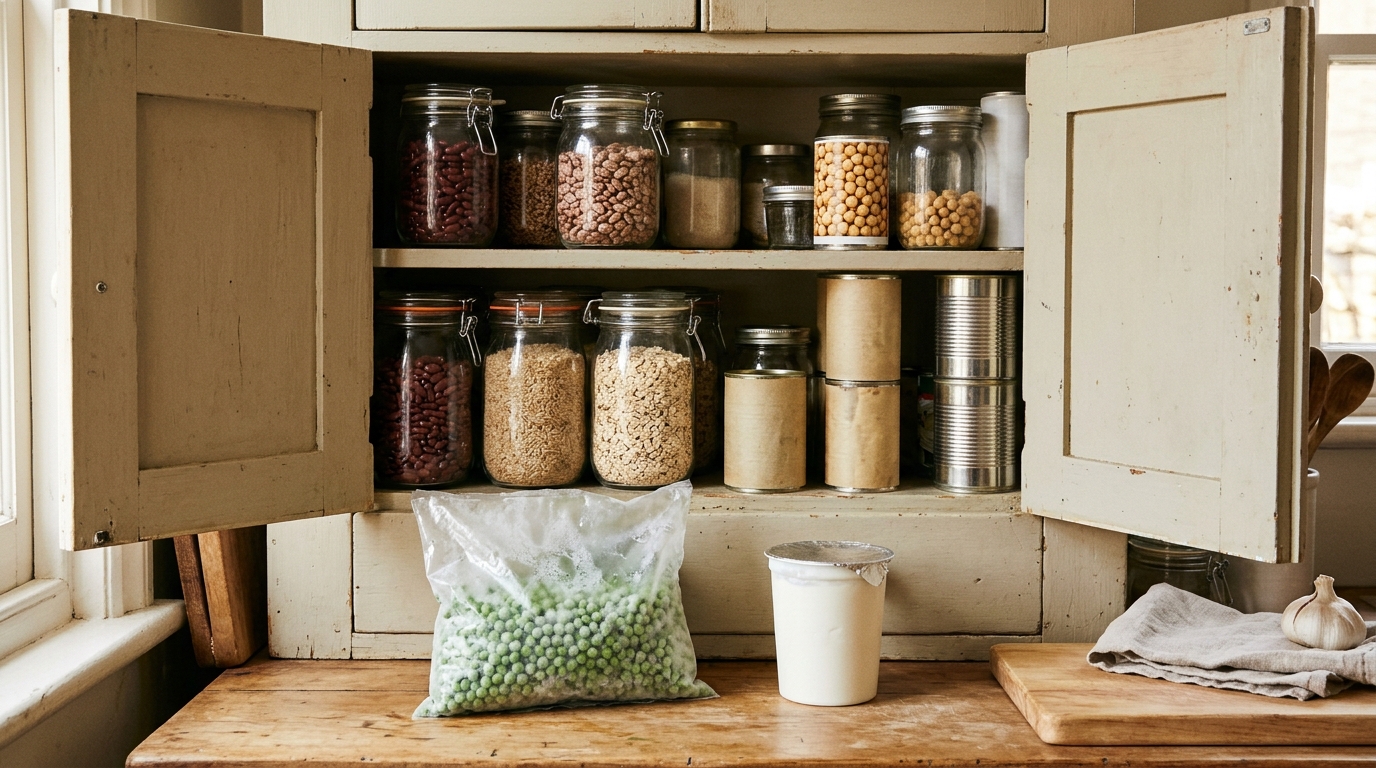
- Tinned beans, lentils and chickpeas. Fibre and protein in minutes. Choose versions in water, or rinse those in brine to cut the salt.
- Tinned fish. Sardines, mackerel and salmon are among the easiest ways to eat oily fish. Fish in spring water or olive oil is the simpler choice.
- Wholemeal bread. The NHS lists wholemeal sliced bread among processed foods that fit a healthy diet. A short ingredients list is a good sign.
- Cheese. Traditional cheese is a processed food in NOVA terms, and a useful source of protein and calcium in sensible portions.
- High-fibre breakfast cereals. Plain shredded wheat or bran flakes are far closer to their grains than chocolate-coated cereals.
- Fortified plant milks. Some count as ultra-processed by NOVA, but unsweetened, calcium-fortified versions can still be a sensible choice for people who do not drink dairy.
How to tell processed from ultra-processed in the shop
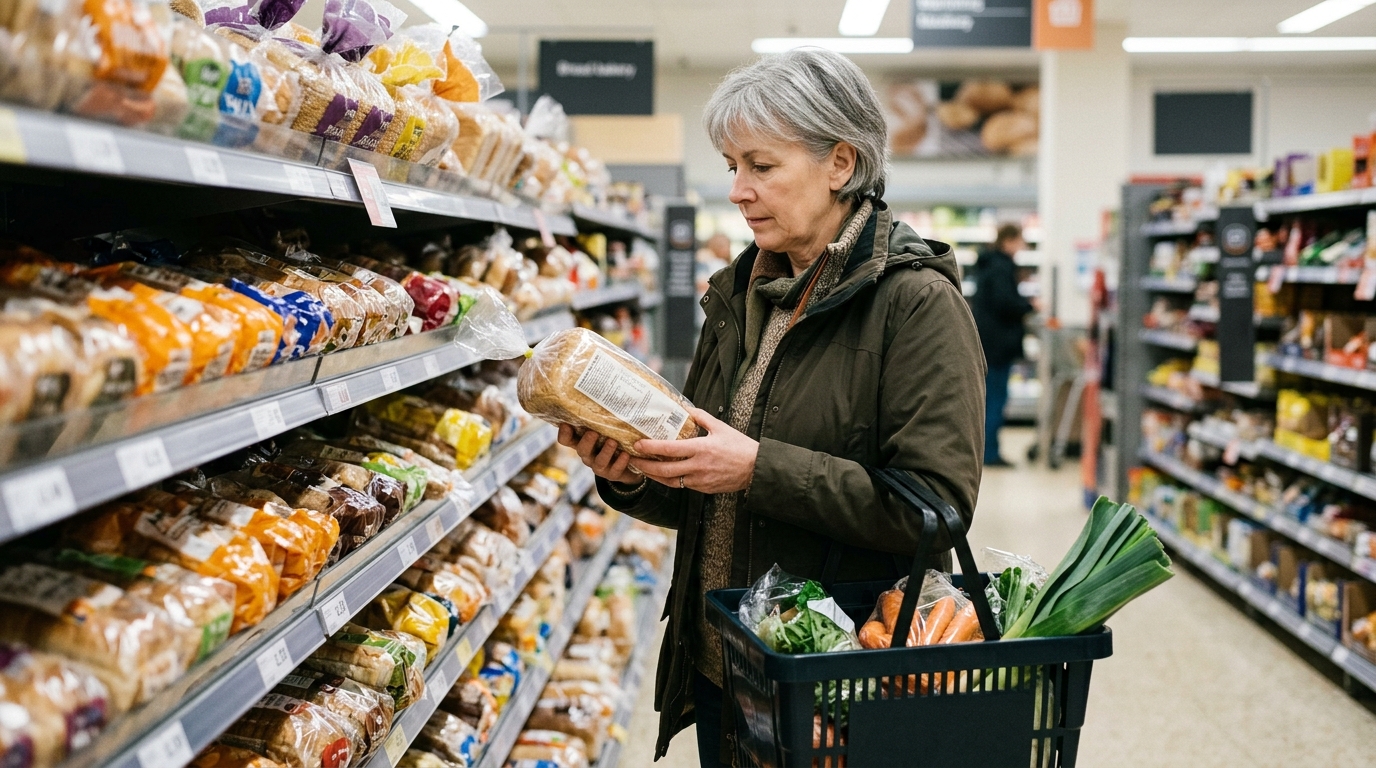
You do not need to memorise every food. Turning the packet over and reading the ingredients list answers the question in most cases. Three quick checks do most of the work.
- Could you buy every ingredient yourself? Flour, water, yeast and salt are kitchen ingredients. Emulsifiers, modified starches, flavourings and intense sweeteners are industrial ones. If the list contains several items you would never find in a home kitchen, the food is probably ultra-processed.
- Is the main ingredient the food itself? In a minimally processed tin of tomatoes, tomatoes come first. In a flavoured snack, the first ingredients are often refined starch, sugar or oil.
- What does the traffic-light label say? UK front-of-pack colours show fat, saturated fat, sugar and salt per portion. The NHS recommends using them alongside the ingredients list, since a food can be minimally processed and still high in salt, or ultra-processed and low in it.
A week of simple swaps
Changing everything at once rarely lasts. Swapping one item a day for a week shifts the balance of a diet without making shopping harder or more expensive. These swaps keep the convenience while moving one step down the processing ladder.
| Instead of | Try | Why it helps |
|---|---|---|
| Flavoured instant porridge pot | Plain oats with fruit and a spoon of nuts | Same speed, no added sweeteners or emulsifiers, more fibre |
| Fruit yoghurt | Plain yoghurt with frozen berries | Less sugar, live cultures more likely, berries add colour and fibre |
| Packaged sandwich | Wholemeal bread with tinned fish or eggs and salad | Fewer additives, more protein, often cheaper |
| Crisps | Unsalted nuts or a handful of popcorn you make yourself | Healthy fats and fibre instead of refined starch |
| Ready meal | Frozen vegetables, a tin of beans and rice or pasta | Ten minutes of cooking, far more fibre |
| Fizzy drink | Sparkling water with a slice of lemon | No sugar or sweeteners |
| Chicken nuggets | Oven-baked chicken thigh pieces | Whole meat instead of a reconstituted product |
Why the balance matters more after 40
From midlife, appetite, muscle mass and digestion all change. Meals built mostly from minimally processed foods tend to deliver more protein, fibre and micronutrients per calorie, which matters when the body needs fewer calories but just as many nutrients. Our guide to protein after 50 shows how to build meals around that need.
Many foods on this list also feed the gut microbiome. Pulses, oats, vegetables, nuts and plain yoghurt are the same foods that appear in our list of the best foods for gut microbiome health, and they are the backbone of the eating patterns described in our look at what long-lived populations eat.
None of this requires perfection. The research linking ultra-processed food to poorer health looks at diets where these foods make up a large share of daily calories. A biscuit with tea or a ready meal on a busy night is not the problem. A diet built mostly from them is.
Questions people ask
Are frozen vegetables unprocessed?
Plain frozen vegetables count as minimally processed. Freezing is one of the processes allowed in the first NOVA group. Frozen vegetables in sauces, batters or seasoning mixes are a different matter.
Is bread an unprocessed food?
Bread made from flour, water, yeast and salt is a processed food. Many packaged supermarket loaves contain emulsifiers and preservatives that move them into the ultra-processed group. Both can fit a healthy diet; wholemeal versions with short ingredients lists are the better everyday choice.
Is it expensive to eat mostly unprocessed food?
Not necessarily. Oats, rice, dried and tinned pulses, frozen vegetables, eggs and seasonal fruit are among the cheapest foods per portion in UK supermarkets. Costs rise when the shopping list depends on fresh meat and out-of-season produce.
Do I need to avoid all ultra-processed food?
No. The aim is to make minimally processed foods the base of most meals. Dietitians caution against strict rules, which can make eating stressful and push out useful foods such as fortified cereals and plant milks.
Sources
- NHS: What are processed foods?
- FAO: Ultra-processed foods, diet quality, and health using the NOVA classification system
- British Dietetic Association: Processed food position statement
Sources checked 4 November 2026.