Longevity foods aren’t a miracle powder, whatever the hype suggests. Strip away the marketing and long life looks a lot more like beans, greens, whole grains, and meals that don’t come out of a wrapper. The people who often live the longest don’t eat perfectly, and they don’t all eat the same cuisine. What they do share is a steady pattern of simple food, modest portions, daily movement, and strong social ties.
Food is one strand of a bigger picture, which our guide to longevity sets out in full.
So if you’re wondering what to put on your plate, start with the pattern, not the magic ingredient.
What longevity foods have in common
The first surprise is how ordinary these foods are. No rare berries from a mountain. No secret oil. No anti-ageing snack bar.
Across long-lived populations, the base of the diet is usually mostly plants, a pattern a 2021 Nutrients review on the Mediterranean diet, chronic disease, and longevity traces in detail. A 2022 Maturitas review on diet and longevity in the Blue Zones lists the same repeat players over and over: beans, leafy greens, whole grains, nuts, and seasonal produce. That’s not trendy. It’s dependable.
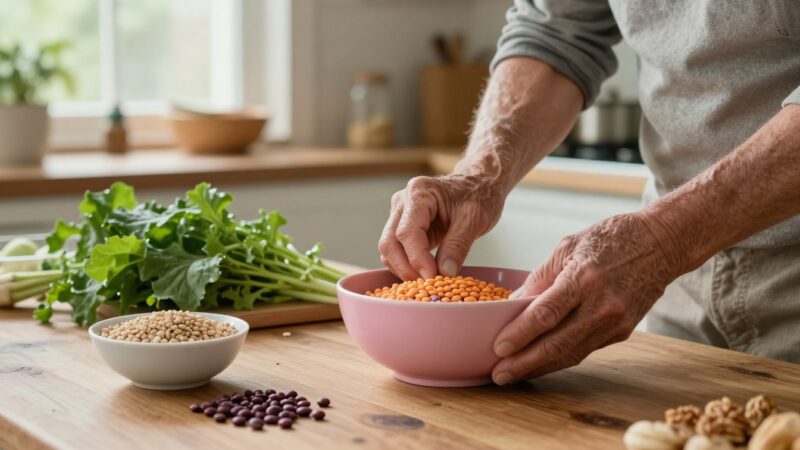
Beans matter more than most people expect. Lentils, black beans, chickpeas, fava beans, and soy foods show up again and again because they’re filling, affordable, rich in fibre, and easy to build meals around. Leafy greens matter too, partly because they’re nutrient-dense and partly because people who cook greens often eat fewer ultra-processed foods without trying to. For more detail, read Ultra-Processed Foods List: What to Avoid and What’s Fine.
Whole grains and starchy staples also show up in a less flashy form. Think oats, barley, brown rice, corn, potatoes, sweet potatoes, and traditional breads. These foods don’t promise a shortcut. They give meals structure.
Animal foods aren’t always absent. They’re often smaller and less frequent. In many long-lived communities, meat is more side dish than centerpiece. Dairy shows up in some regions, not others. Fish is common in some coastal areas. The pattern still holds, plants do most of the heavy lifting.
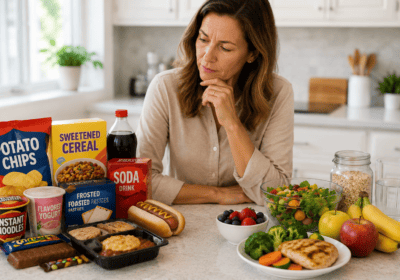
What’s usually limited? Sugary drinks, packaged snacks, refined sweets, and giant portions. That’s a big part of the story.
Long life isn’t built on one heroic food. It’s built on ordinary meals repeated for years.
A useful way to picture it is this: if your cart looks like someone could recognise every item from 100 years ago, you’re getting closer.

Simple meals built around vegetables, whole grains and other minimally processed plant foods are common across many long-lived populations.
What long-lived populations eat, place by place
The famous “Blue Zones” aren’t identical, and that’s the point. Longevity diets don’t come in one flavour. They adapt to local crops, religion, climate, and tradition.
Here’s the quick view.
| Place | Common foods | What stands out |
|---|---|---|
| Okinawa, Japan | Sweet potatoes, tofu, vegetables, sea vegetables | Lots of plant foods, modest calories |
| Ikaria, Greece | Beans, potatoes, greens, olive oil, herbal teas | Simple home cooking, little processed food |
| Sardinia, Italy | Beans, whole-grain breads, garden vegetables, olive oil | Traditional meals, strong family life |
| Nicoya, Costa Rica | Corn, beans, squash, tropical fruit | Basic staples, physically active daily life |
| Loma Linda, California | Beans, oats, nuts, fruit, many vegetarian meals | Faith, routine, social connection |
The Blue Zones literature keeps making the same point. Food matters, but it sits inside a bigger lifestyle that includes movement, stress reduction, and community. That’s why chasing a single “best” longevity food misses the plot.
Still, the food pattern is hard to ignore. Okinawan meals have long leaned on vegetables, soy foods, and sweet potatoes. Ikarian cooking uses beans, olive oil, and greens like it’s second nature. In Nicoya, the traditional trio of corn, beans, and squash shows how a basic staple pattern can carry real nutritional weight.
Even the differences are useful. Some groups eat dairy, some barely do. Some include small amounts of fish or meat, some keep meals mostly vegetarian. What stays steady is the backbone: minimally processed plants, regular meal routines, and not much overeating.
That should take some pressure off. You don’t need to copy Sardinia exactly. You need the same logic on your own plate.
What the claims actually support, and where they stretch
The Blue Zones story gets repeated so often that the caveats fall off along the way. It’s worth separating the part that holds up from the part that has been added on top, because they aren’t the same strength of claim.
The claim that these diets are mostly plants
This one is on firm ground. Dietary surveys, household records, and decades of observation in these regions agree on the basic shape of the food: legumes, vegetables, whole grains, and starchy staples doing most of the work, with meat as an occasional addition rather than a daily habit. Nobody seriously disputes the description. The description is not the same as an explanation, though, and that’s where the trouble starts.
The claim that the diet is why they live longer
This is the weakest link, and it’s the one the marketing leans on hardest. All of this evidence is observational. Nobody randomized a few thousand Sardinians to beans and a matched group to something else. The same people who ate that way also walked steep ground every day, worked physically into their seventies and eighties, lived within reach of their children and grandchildren, and belonged to communities where an isolated older person was unusual. You cannot hold movement, family structure, purpose, and daily physical work still and vary only the food.
Money complicates it further. These were mostly rural communities of modest means, where the diet was largely what was affordable and available rather than a considered choice. Cheap staples, home cooking, and unavoidable physical labour came as a package. Lifting the food out of that package and dropping it into a sedentary, car-dependent, socially thin life is a different experiment, and it’s not obvious it gives the same result.
The claim that the ages themselves are reliable
Even the underlying numbers deserve a second look. Verifying an age of 105 requires a birth record from a rural district in the early 1900s, and record-keeping in many of these places was patchy. Work by a UCL demographer on those records found that the highest reported rates of extreme old age tend to track with poverty, missing birth certificates, and fewer verified 90-year-olds, and turned up people listed as living in government records who had in fact already died. That doesn’t erase the pattern, because these regions still show good health in later life by most ordinary measures, but it should make you less impressed by the headline figures.
What survives all that
Quite a lot, as it happens. The food pattern these regions share lines up with evidence from completely separate sources: trials and long-term studies on fibre, legumes, whole grains, olive oil, and the effects of cutting back on ultra-processed food. Harvard’s Nutrition Source review of the Mediterranean diet points to PREDIMED, a randomized trial in thousands of people at high cardiovascular risk, where a Mediterranean pattern with extra virgin olive oil or nuts cut deaths from stroke by roughly 30 percent, and it lands on the same caution this article does, the benefit looks like it comes from the combination of foods rather than any single one. That convergence is the real argument. The advice would still be reasonable if no one had ever drawn a circle on a map.
So the honest version sounds less exciting than the marketing. Eating this way is a sensible bet with decent support behind it. It isn’t a purchased extra decade, and anyone selling it as one has quietly skipped past everything above.
Simple ways to eat this way in real life
This is where people get stuck. The research is interesting, but what do you eat on a Tuesday when you’re tired and hungry?
Start with one anchor habit. Not ten. One. Put beans, lentils, or soy foods into a few meals each week, then build around them. That’s a lot easier than trying to “eat like a centenarian” all at once.
Breakfast is one easy win. Oats with walnuts and fruit works. So does plain yoghurt with nuts and berries, or tofu with vegetables if you like a savoury start. Lunch can be bean soup, leftovers from dinner, or a grain bowl with greens, chickpeas, olive oil, and something crunchy on top.
Dinner doesn’t need to be complicated. A pot of lentils, roasted vegetables, brown rice, and a simple salad gets you most of the way there. Chili with beans and vegetables works. Pasta with white beans, olive oil, greens, and a little cheese works too.
None of that is exotic. It’s the same shape the research keeps describing: mostly plant-based meals, everyday staples, and restraint with processed food.
A few easy meal ideas:
- Oatmeal with chopped walnuts, berries, and cinnamon.
- Bean and vegetable soup with whole-grain toast.
- Rice, black beans, sauteed greens, avocado, and salsa.
- Chickpea salad with cucumbers, tomatoes, herbs, and olive oil.
- Baked sweet potato with lentils and a spoonful of yoghurt or tahini.
You don’t need perfect purity. If fish, eggs, yoghurt, or a little cheese fit your life, they can sit alongside the bigger pattern. What matters more is what happens most days.
The best longevity diet is the one you’ll still want on a tired Wednesday.
One more thing helps: make the healthy choice the lazy choice. Keep canned beans in the pantry. Wash greens when you bring them home. Cook extra grains. Freeze soup. Longevity foods are easier to eat when dinner is half done before you’re hungry.
Why diet is only part of the story
Food gets the headline, but it doesn’t act alone. Long life is shaped by a whole stack of habits, including movement, sleep, social connection, purpose, stress, income, healthcare, and plain luck.
That’s why it’s better to think in patterns than promises. A bean-heavy diet can’t cancel out chronic sleep loss, isolation, smoking, or constant stress. On the other hand, simple meals eaten in a calmer, more active life may do more than a technically perfect meal plan that falls apart after two weeks.
Long-lived communities often move without calling it exercise. They walk, garden, cook, carry, climb, and gather. They also tend to eat with other people. That matters more than it gets credit for. Shared meals slow you down. They pull you out of distracted snacking. They give food a rhythm.
There’s also room for common sense. If you have kidney disease, diabetes, digestive issues, or take medicines affected by diet, a major diet change should go through your clinician or dietitian. “Natural” doesn’t mean risk-free for everyone.
So yes, focus on longevity foods. Then zoom out. Ask how you sleep, how often you move, who you eat with, and whether your daily routine feels calm or chaotic. That broader picture is closer to how real longevity works.
Conclusion
The big takeaway is almost annoyingly simple. The foods linked with long life are usually humble, repeatable, and familiar: beans, greens, whole grains, nuts, fruit, olive oil, and meals cooked more often than unwrapped.
That’s why the strongest idea here is pattern, not perfection. If your plate leans more plant-based, your portions stay sane, and your meals fit into a life with movement, sleep, and connection, you’re much closer to the mark than any superfood claim could get you.