
Retinol has a reputation as one of the few skincare ingredients with solid evidence behind it. It also has a reputation for making faces red, dry and flaky in the first few weeks. Both are true, and the second is mostly avoidable. Retinol for beginners works best as a slow, simple routine: a gentle product, a small amount, a few nights a week, good moisturiser and daily sunscreen. This guide explains what retinol does, how it compares with prescription retinoids, a practical starting plan, how to handle irritation, what to use alongside it, and who should avoid it altogether.
- What retinol does
- Retinol and the wider retinoid family
- Choosing a first product
- A simple evening routine
- Retinol for beginners: a week-by-week starting plan
- Handling irritation
- What to pair with retinol, and what to space out
- Common beginner mistakes
- What to expect, month by month
- Who should avoid retinol or ask first
- Questions people ask
- Sources
What retinol does
Retinol is a form of vitamin A. Once applied, skin converts it in steps into retinoic acid, the active form that switches on genes involved in cell turnover and collagen production. Over time, that can lead to smoother texture, more even tone, fewer clogged pores and softer fine lines.
The changes are gradual. Some people notice smoother skin within a few weeks, but visible improvement in lines and tone usually takes several months of regular use. A 2016 study in the Journal of Cosmetic Dermatology compared retinol with prescription retinoic acid on human skin and found that retinol produced the same kinds of changes in skin structure and collagen-related activity, which supports its use as a gentler starting point.
Retinol and the wider retinoid family
“Retinoid” is the umbrella term for vitamin A-derived ingredients. The American Academy of Dermatology explains that over-the-counter retinol is generally gentler and slower than prescription retinoids.
| Ingredient | Availability | Relative strength and irritation | Notes |
|---|---|---|---|
| Retinyl esters (for example retinyl palmitate) | Over the counter | Mildest | Several conversion steps; modest effect |
| Retinol | Over the counter | Moderate | The usual starting point for cosmetic use |
| Retinaldehyde (retinal) | Over the counter | Stronger than retinol | One step from retinoic acid |
| Adapalene 0.1% | Over the counter in some countries | Moderate to strong | Mainly used for acne |
| Tretinoin, tazarotene, trifarotene | Prescription | Strongest | Used for acne and sun damage under medical guidance |
If your main goal is treating acne, cosmetic retinol is not a substitute for acne treatment. A clinician may recommend adapalene or a prescription retinoid instead.
Choosing a first product
- Keep it simple. Pick a straightforward, fragrance-free formula. Supporting ingredients such as glycerin, ceramides or squalane can improve comfort.
- Start low. Lower-strength products are easier to tolerate. Follow the label rather than chasing the highest percentage.
- Check the packaging. The ingredient degrades with light and air, so opaque, air-restrictive packaging such as a pump or tube is preferable to an open jar.
- Patch test. The AAD’s patch-testing advice is to apply a new product to a small area, such as the inner arm or beside the jaw, for several days before using it more widely. Test one new product at a time.
A simple evening routine
- Cleanse gently and pat your face dry. Wait until skin is fully dry, as damp skin can increase stinging.
- Optional buffer. If your skin is sensitive, apply a thin layer of moisturiser first.
- Apply a pea-sized amount of retinol for the whole face, dotting it on the forehead, cheeks and chin before spreading. Avoid eyelids, lips and the creases beside the nose.
- Moisturise on top if you did not buffer, or add a second thin layer if skin feels dry.
- Next morning, wear broad-spectrum sunscreen of SPF 30 or higher, and reapply when outdoors for long periods. Retinoids can make skin more sensitive to sun, and UV exposure undoes much of what you are trying to achieve.
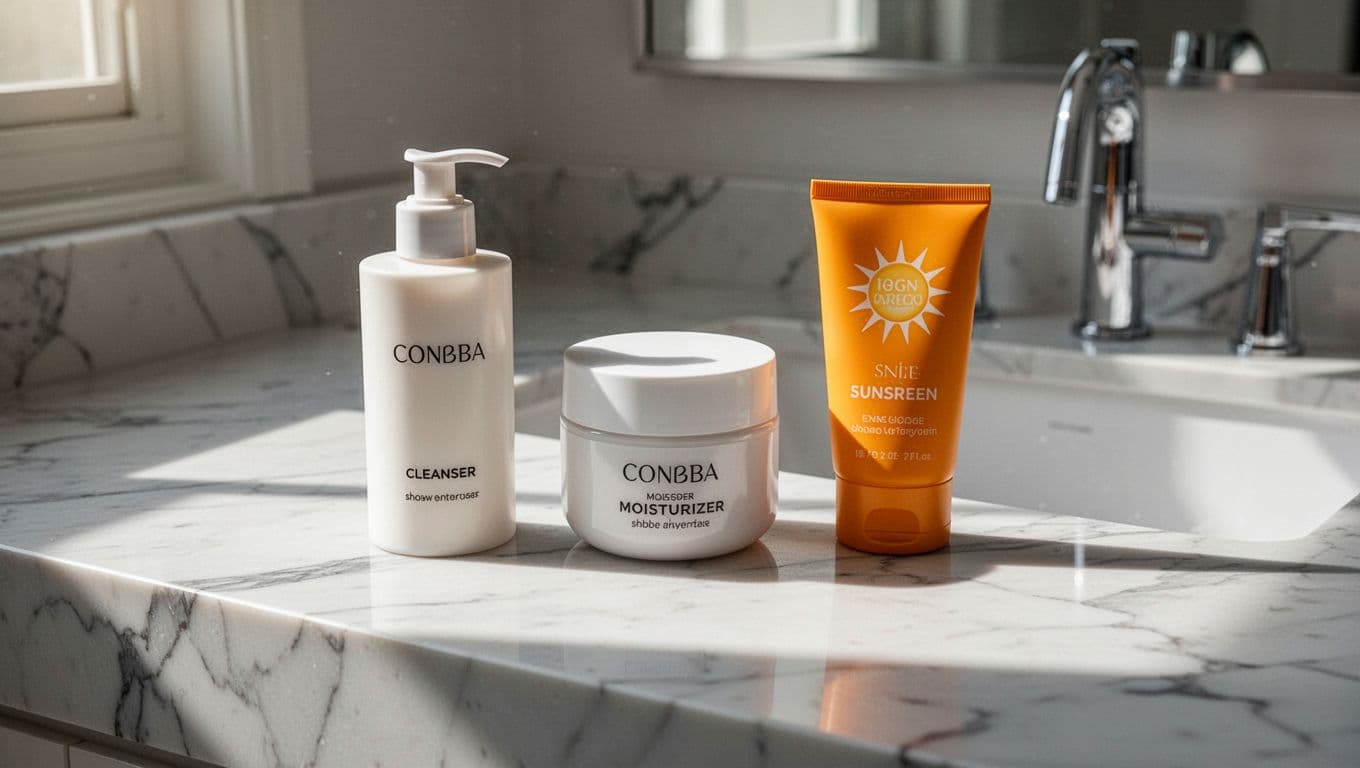
Putting retinol between two light layers of moisturiser is often called the sandwich method. It can reduce irritation without making retinol useless. On nights off, simply cleanse and moisturise.
Retinol for beginners: a week-by-week starting plan
| Weeks | How often | Move on when |
|---|---|---|
| 1 to 2 | Once or twice a week, on non-consecutive nights | Skin feels comfortable with no lasting redness or stinging |
| 3 to 4 | Two or three nights a week | Any dryness is mild and settles with moisturiser |
| 5 to 8 | Every other night, if tolerated | Skin stays calm for two weeks in a row |
| After 8 | Nightly, if you want to and your skin agrees | Not required; many people stay at three nights a week |
There is no prize for reaching nightly use. Two or three comfortable applications a week, kept up for months, will do more than nightly use that you abandon after a fortnight.
Handling irritation
Some dryness, mild flaking or slight tightness is common in the first weeks, sometimes called “retinisation”. It is a signal to go slower, not to push harder.
- Mild dryness: use more moisturiser, try the sandwich method, and hold at the current frequency.
- Stinging, redness or peeling: stop for several days. Use only a gentle cleanser, plain moisturiser and sunscreen until skin feels normal, then restart at a lower frequency. Our skin barrier repair guide explains the recovery routine.
- Swelling, hives, blistering or a spreading rash: stop the product and seek medical advice. This may be an allergic reaction rather than ordinary irritation.
People with rosacea, eczema or very reactive skin may find retinol hard to tolerate and should ask a dermatologist before starting. It is also optional; a good cleanser, moisturiser and sunscreen remain a sound routine without it.
What to pair with retinol, and what to space out
| Ingredient | With retinol? | Practical approach |
|---|---|---|
| Ceramides, glycerin, hyaluronic acid | Yes | Good companions that support comfort |
| Niacinamide | Usually yes | Often well tolerated alongside retinol |
| Sunscreen | Essential | Every morning |
| Vitamin C | Separate | Use in the morning; introduce after retinol is settled |
| Glycolic, lactic or salicylic acid | Space out | Avoid the same night while you are starting |
| Benzoyl peroxide | Space out | Use in the morning or on alternate nights to limit dryness |
| Scrubs and at-home peels | Avoid | Add friction and irritation |
Change one active product at a time so you can tell what is helping and what is not. Our guides to ceramide moisturisers and using niacinamide and vitamin C together cover supporting ingredients in more depth.
Common beginner mistakes
- Using too much. A thick layer does not work faster. It simply irritates more.
- Starting nightly from day one. This is the most common reason people give up in the first month.
- Adding several new actives at once. If you start retinol, a new acid toner and a vitamin C serum in the same week and your skin reacts, you will not know which one caused it.
- Skipping sunscreen. Retinoids can make skin more sun-sensitive, and daily UV exposure works directly against the results you want.
- Applying close to the eyes and mouth. Product migrates, and these thin areas sting easily.
- Switching products every few weeks. It needs months of steady use. Changing too often resets the adjustment period.
- Pushing through pain. Mild dryness is expected. Burning, raw skin or swelling is not, and needs a break.
What to expect, month by month
| Timeframe | What many people notice |
|---|---|
| First two to four weeks | Some dryness, mild flaking or tightness as skin adjusts; sometimes a few extra breakouts in people prone to clogged pores |
| One to three months | Adjustment settles; skin often feels smoother and looks a little brighter |
| Three to six months | More even tone and softer fine lines become visible for many users |
| Six months and beyond | Continued gradual improvement with steady use and daily sun protection |
If you see no change at all after six months of consistent use, or your main concern is acne or pigmentation that is not improving, a dermatologist can advise whether a prescription retinoid or a different treatment would suit you better.
Who should avoid retinol or ask first
- Pregnancy and trying to conceive. The AAD advises avoiding retinoids during pregnancy. Stop and speak to your doctor if you become pregnant while using one.
- Breastfeeding. Ask a doctor or pharmacist about the specific product rather than assuming, and keep any topical product away from areas a baby may touch or feed from.
- Active skin conditions. Eczema, rosacea, broken skin, sunburn or a persistent rash should be assessed first.
- Prescription skin treatments or acne medicines. Check with your prescriber before adding retinol, especially if you take oral isotretinoin.
- Before procedures. Tell your practitioner if you use retinoids before waxing, peels or laser treatments, as they can increase skin sensitivity.
For the bigger picture on what ages skin and what protects it, see our guide to skin ageing and protection.
Questions people ask
Can I use retinol every night?
You can once your skin has adjusted, but you do not have to. Many people get good results with two or three nights a week.
How much retinol should I use?
About a pea-sized amount for the whole face. More product does not speed up results and makes irritation more likely.
Does retinol go before or after moisturiser?
Either works. If your skin is sensitive, apply moisturiser first or sandwich retinol between two thin layers.
Can I use retinol in the morning?
It is usually applied at night because light can break it down. Keep mornings for sunscreen and, if you use it, vitamin C.
How long does retinol take to work?
Texture may improve in a few weeks. Changes in fine lines and tone usually take three to six months of consistent use.
Sources
- American Academy of Dermatology: Retinoid or retinol?
- American Academy of Dermatology: How to test skin care products
- American Academy of Dermatology: Is any acne treatment safe to use during pregnancy?
- Kong R, et al. A comparative study of the effects of retinol and retinoic acid on histological, molecular, and clinical properties of human skin. J Cosmet Dermatol. 2016
Sources checked 15 September 2026. This article is for general information and does not replace advice from a doctor, dermatologist or pharmacist. See our editorial policy and medical disclaimer.