
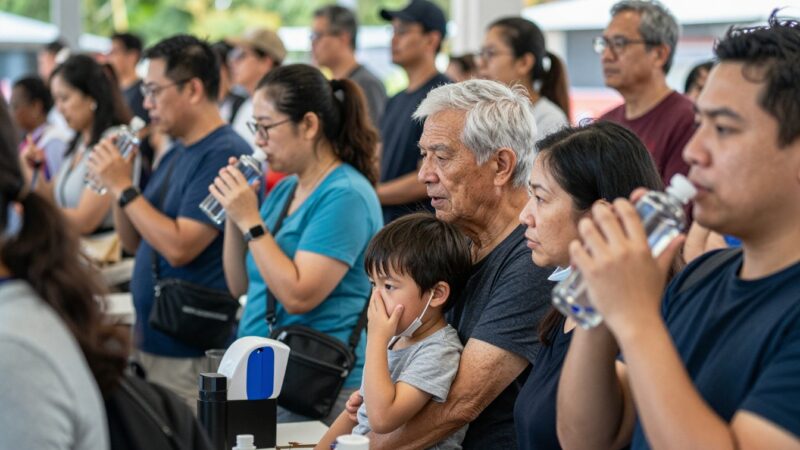
Why do so many people come home from a big tournament with a cough, a stomach bug, or that wrung-out feeling? Usually, it’s not one bad hot dog or one dirty handrail. It’s small risks stacking up over a long day.
Think about the full path. Packed seats, loud fan zones, buses and trains, hotel elevators, shared bathrooms, food lines, bad sleep, too little water, too much alcohol, hot sun, cold rain, and a lot of close contact. Most fans do fine, but enough little hits can add up fast.
For travellers staying in large hotels, especially older adults or people with weakened immune systems, it is also worth understanding the separate issue of Legionella risk in building water systems.
The good news is simple. A few steady habits before, during, and after the event can lower your odds without turning game day into a chore.
Getting Sick at Crowded Events: Why Infection Spreads
Big tournaments create repeated exposure. You aren’t only around a crowd for two hours. You’re in lines, on transit, in restrooms, at concessions, in hotels, and back in the crowd again. The risk isn’t crowd density on its own. It’s crowd density stacked on travel, shared surfaces, disrupted sleep, and several days of it in a row.
Fans usually don’t get sick from one single moment. They get sick when a long event gives germs, stress, and fatigue too many chances.
Crowding, cheering, and close contact give germs more chances to move
Respiratory viruses love a crowd. When people shout, sing, laugh, and talk face to face, more droplets move through the air. Add hugging after a goal, squeezing past knees in tight rows, and shoulder-to-shoulder fan zones, and the number of close contacts climbs fast.
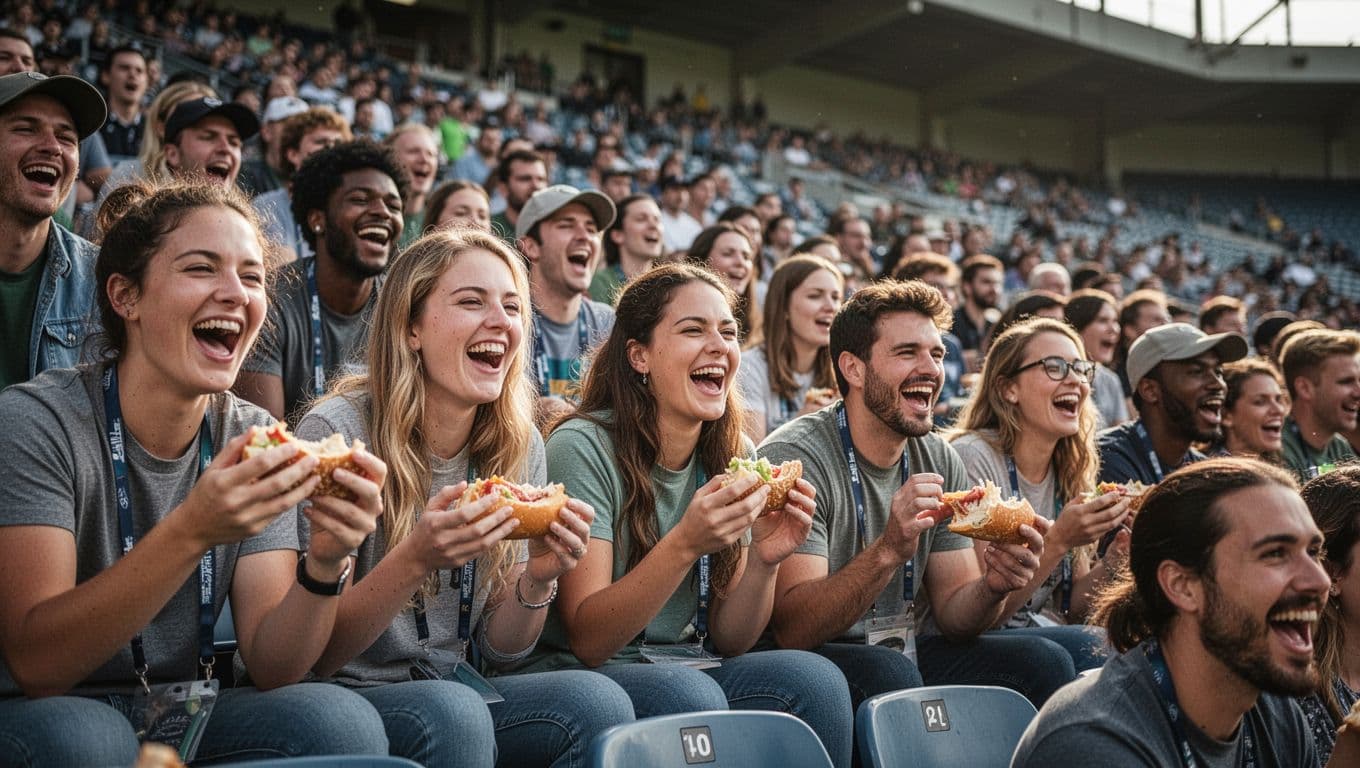
Outdoor stadiums help because air moves better. Even then, not every part of the day is outdoors. Think indoor bars, narrow concourses, elevators, suites, shuttle buses, and packed merchandise shops. Weak airflow in those spots can raise the chance that a cough or sneeze reaches more people.
You also stay exposed longer than you realise. A pregame bar, three hours in the stands, then a crowded train back to the hotel can turn one event into an all-day relay of close contact.
Shared bathrooms, concession lines, and high-touch surfaces matter more than people think
Fans touch a lot without noticing it. Railings, ticket scanners, seatbacks, payment screens, ketchup pumps, faucet handles, stall locks, tabletops, and the tops of drink cups all get passed from hand to hand.
The bigger problem isn’t usually the surface by itself. It’s what happens next. You grab the rail, then rub your eye. You tap the payment screen, then eat fries. You carry your phone into the restroom, then set it on the table while you split nachos with friends. That hand-to-face, hand-to-food chain is how germs move.
Stomach bugs can spread this way, and so can some respiratory viruses. Shared bathrooms and rushed concession lines make people skip basic handwashing, which is where the trouble starts.
Travel, poor sleep, dehydration, alcohol, and weather can wear the body down
Sometimes fans say they “got sick,” when part of the story is that they got worn down first. Early flights, late games, hotel noise, missed meals, and long walks leave you tired before kickoff. Then the weather adds more stress.
A hot afternoon in direct sun can dry you out fast. Multi-day trips add even more variables like jet lag, food safety, and crowd logistics, which is why our broader travel health guide for major events is worth reading before you pack. A cold, wet night can leave you chilled, tired, and miserable. Alcohol piles on because it can dehydrate you, mess with sleep, and make it easier to forget simple hygiene habits.
None of that means fatigue causes a virus. It means you feel worse, recover slower, and make more small mistakes. When your throat is dry, your sleep is short, and your water intake is poor, the whole day gets harder.
Simple tournament hygiene tips that lower your risk
The best tournament hygiene tips aren’t fancy. They’re the repeatable habits that block the usual ways illness spreads. No one follows perfect hygiene for 10 hours straight, and no one has to. You only need to get the big moments right, again and again.
The biggest win is clean hands at the right moments
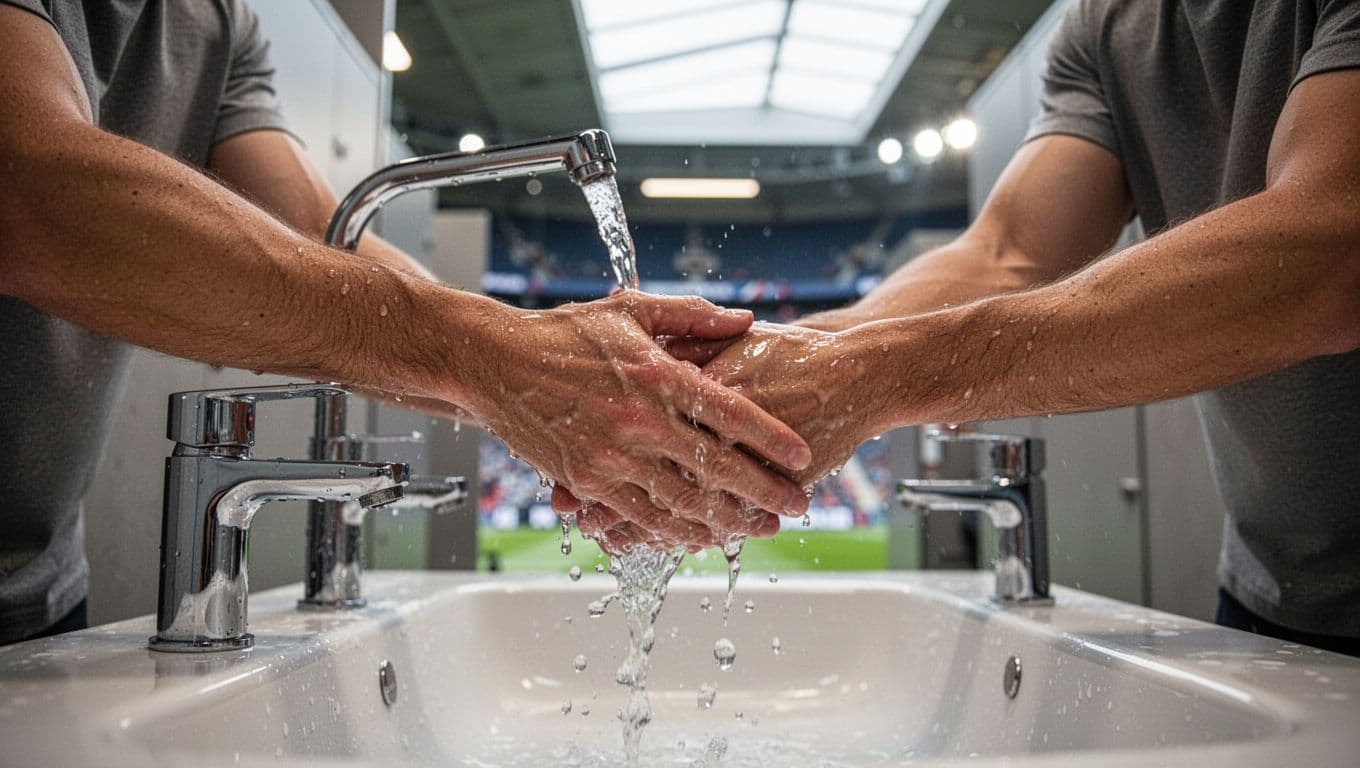
Handwashing matters most after the bathroom, before eating, after touching transit rails or stadium surfaces, and after coughing or sneezing into your hands. Those are the points when germs are most likely to travel from a shared space to your mouth, nose, or food.
Soap and water are best when you have them. Take the extra 20 seconds, which is the scrub time the CDC’s clean hands guidance asks for, and the moments it flags are the same ones that come up all day at an event: before eating, after the toilet, after handling trash. If washing isn’t easy, use sanitiser with enough alcohol to do the job. The CDC’s hand sanitiser guidance puts that at 60 percent alcohol or higher, and it’s clear that sanitiser is a substitute rather than an equal: it may not work as well when hands are visibly dirty or greasy, and soap and water beat it against norovirus and a few other germs. Use it as the fallback, not the plan.
This is where people slip. They rush out to beat the line, grab food with unwashed hands, and head back to their seats. That one shortcut shows up all day.
Small daily habits help more than one last-minute fix
Clean hands help most when you stop sending germs right back to your face. That means touching your eyes, nose, and mouth less often. Harder than it sounds, but worth trying.
Bring your own water bottle if the venue allows it, or keep your drink to yourself. Don’t pass cups around. Skip the “try a bite” routine with the same fork. If you’re with kids, give each child their own snack and drink instead of one shared one that bounces between hands.
Your phone deserves more attention, too. It rides through transit, tables, bathrooms, seats, and hotel rooms with you. Wipe it down at the end of the day, along with reusable bottle tops, glasses, and anything else you handle often.
When a mask, extra space, or staying home makes sense
Masks still have a place. They can help in crowded indoor spaces, on buses and trains, inside hotel lobbies, in concourses, or anywhere airflow is poor and people are packed in close. They’re also a smart choice when flu, COVID, or another bug is making the rounds in your area.
Extra space helps when you can get it. End seats, outdoor waiting spots, and a little distance in lines won’t make you invisible to germs, but they cut down some of the constant close contact.
If you’re actively sick, staying home is the right call. Fever, vomiting, diarrhoea, a bad cough, or feeling clearly unwell are all good reasons to skip the event. It protects other fans, and it saves you from dragging yourself through a day you’re unlikely to enjoy.
The three routes illness actually takes at a crowded event
It helps to sort all of the advice above into the three paths germs really use to reach you. They call for different countermeasures, and they are not equally likely, so knowing which is which tells you where to spend your limited attention on a long day.
Route one: the air you share
This is the one that sends most people home with a cough. Colds, flu, COVID, and similar bugs travel in what people breathe out, and shouting, singing, and standing face to face all push more of it into the air around you. What actually reduces this: staying outdoors or in spots where air moves, cutting the time you spend in packed indoor spaces such as shuttle buses, elevators, and jammed concourse bars, and wearing a well-fitting mask when you cannot avoid those places. Note what does nothing here. Washing your hands is excellent practice, but it does not touch this route at all. The CDC’s guidance on preventing respiratory viruses sorts its advice the same way, treating cleaner indoor air and staying home when you’re sick as core moves, with masks as an extra layer on top.
Route two: surfaces and your own hands
Rails, scanners, payment screens, stall locks, and seatbacks only matter because of what your hands do next. The surface is the middle of the chain, not the end of it. What actually reduces this: washing hands after the restroom and before eating, and keeping fingers away from eyes, nose, and mouth in between. Trying to disinfect a stadium yourself is wasted effort. Treating your own hands as the link in the chain is the whole job.
Route three: food and water
This route hits less often, but when it hits it hits hard and fast, and it can flatten a whole group at once. The usual culprits are food that has been sitting warm for hours, shared plates and utensils, tailgate coolers that stopped being cold before lunch, and, when you are travelling, water you are not used to. The same logic applies to fresh produce, and our guide on how to rinse produce properly covers what a good rinse can and cannot catch. What actually reduces this: eat hot food while it is hot, be wary of anything that has been out in the sun, keep your own drink and your own fork, and stick to sealed bottled water where the local supply is uncertain.
Where the risk really sits
These three are not a flat list. For the respiratory illnesses most fans bring home from a big event, the shared air does the bulk of the work, and the single most useful lever is reducing how long you spend in crowded indoor spaces with poor airflow. Hand hygiene earns its place mainly against stomach bugs and food-related trouble, which is exactly why the before-eating moment matters more than any other. If you only remember two things from this article, make them these: get out of packed indoor air when you have the choice, and clean your hands before food touches your mouth.
A before, during, and after game plan for staying well
A simple routine beats winging it. If you decide what you’ll do before the trip starts, you won’t have to think about every little choice in the middle of a loud, crowded day.
Before the event: pack for hygiene, hydration, and rest
The night before matters more than most fans admit. Get decent sleep. Eat a real meal. Start the day hydrated instead of trying to catch up after two beers and a long line in the sun. If you’re heading into a hot afternoon and wondering what to put in the bottle, it’s worth knowing when you actually need an electrolyte drink and when plain water is enough.
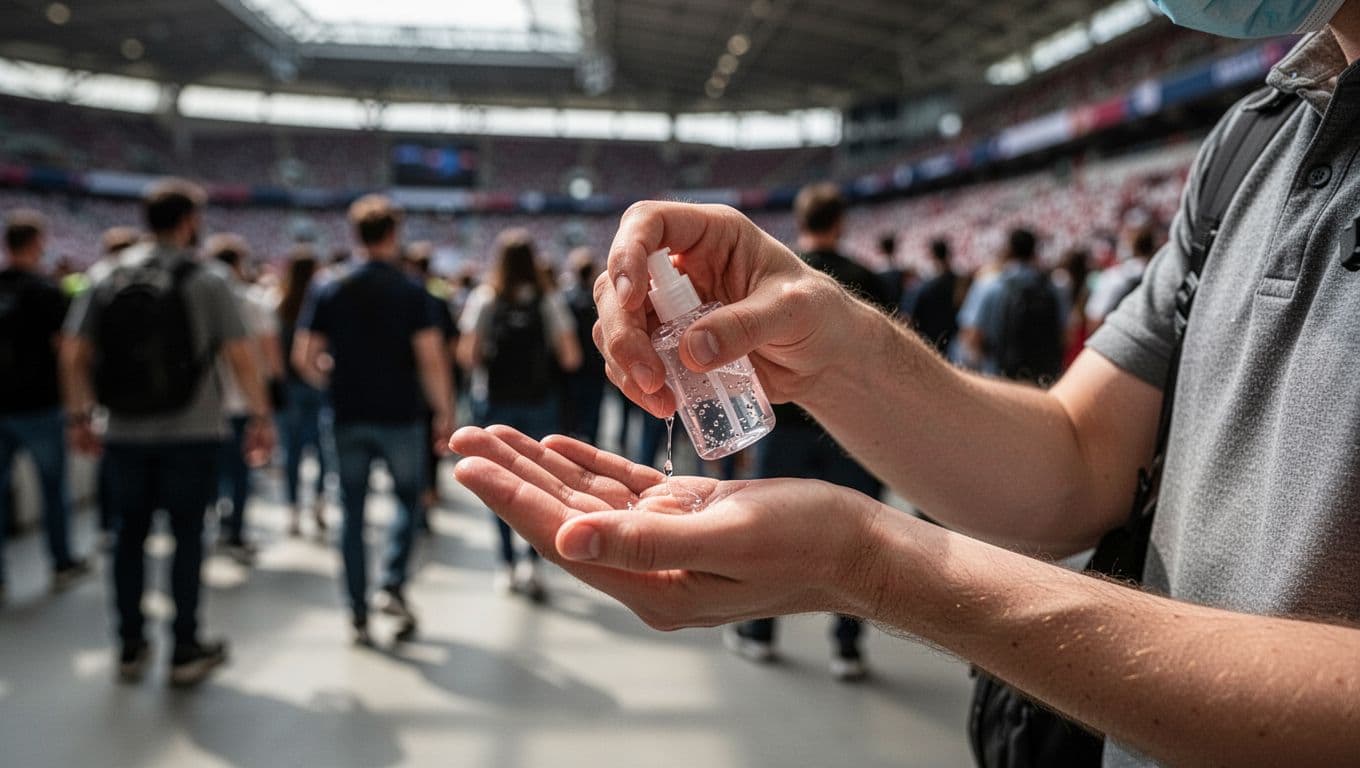
Pack a small kit. Hand sanitiser, tissues, a few wipes, your water bottle if allowed, and a mask if you want one for transit or indoor crowds. If tailgates, hotel-room leftovers, or shared snacks are part of the weekend, the USDA’s steps to keep food safe are a good refresher. The one worth memorising is the time limit: perishable food shouldn’t sit out more than two hours, and only one hour once it’s above 90 degrees.
If you wake up sick, don’t talk yourself into pushing through. Also think ahead on routine vaccines, such as flu or COVID, when one fits your plans and timing.
During the event: protect yourself in crowds, lines, and transit
Once you’re there, focus on the high-risk moments. Clean your hands after the restroom and before eating. Use sanitiser after touching rails, kiosks, or crowded shuttle surfaces. Try not to touch your face while you’re in lines or carrying food.
Pick outdoor or better-ventilated spots when you can. If halftime means cramming into a tight indoor bar, it may be smarter to stay outside, walk the concourse where air moves, or wait a few minutes for the rush to thin out.
Keep your own drink and utensils. That’s true for adults and even more true for kids, who share without thinking. On trains, buses, and hotel shuttles, hold what you need to hold, then sanitise later instead of eating with those same hands.
After the event: watch for symptoms and recover well
When the day ends, the job isn’t over. Wash your hands, clean your phone, drink water, and get some sleep. Recovery counts. A rough night followed by another packed day is how small problems turn into a miserable trip.
Over the next few days, pay attention to fever, vomiting, diarrhoea, cough, or a sore throat. Most cases will pass with rest and fluids, but get medical help if breathing is hard, you can’t keep fluids down, dehydration seems likely, or symptoms hang on longer than expected. Kids and older adults can dry out faster, so don’t brush that off.
Take this routine to the next tournament
Big tournaments are fun because they’re crowded, loud, and full of energy. That’s also why illnesses spread there. Shared spaces, long days, close contact, and travel all raise the odds.
You don’t need perfect protection. You need better habits at the right times: wash your hands, use sanitiser, keep your drink to yourself, sleep, hydrate, mask when it makes sense, and stay home if you’re sick.
Save that routine for your next event. It travels well.