
People usually want one number. Below it, radiation is safe; above it, radiation is dangerous. Safe radiation limits do not work that way, and the reason is worth understanding, because it changes how you read every headline, scan report and product warning you will ever see.
Whether a dose matters depends on four things at once: how much energy the body absorbs, how quickly it arrives, what kind of radiation carries it, and which tissues receive it. A dose that would be harmless spread across a decade can be serious if delivered in a few minutes. This article builds a single ladder of doses, from a banana at the bottom to a radiation emergency at the top, and explains what the legal limits along the way are actually designed to do. For a tour of where everyday exposure comes from, start with our guide to everyday radiation exposure.
- The units, without the jargon
- A dose ladder, from a banana to an emergency
- Two kinds of harm, and why they behave differently
- Safe radiation limits: what legal limits are for, and what they are not
- The banana problem: when a true fact misleads
- Background radiation: the baseline everything sits on
- Where your effort actually pays off
- Questions people ask
- Sources
The units, without the jargon
Two units do most of the work. The gray (Gy) measures energy absorbed per kilogram of tissue. It is a physical quantity and is used when doses are high enough to injure tissue directly. The sievert (Sv) takes that absorbed energy and adjusts it for the type of radiation and the sensitivity of the organs exposed, producing an estimate of long-term health risk across the whole body. This adjusted figure is called the effective dose.
A sievert is a very large amount, so everyday exposures are written in millisieverts (mSv, one thousandth of a sievert) or microsieverts (µSv, one millionth). One mSv equals 1,000 µSv. When you see a dental X-ray described as 5 µSv and a CT scan as 6 mSv, the CT figure is roughly 1,200 times larger, even though both numbers look small.
Effective dose is a protection tool, not a personal risk score. It was designed to compare exposures and set limits for populations. It does not account for your age, sex or medical history, which is one reason a radiologist, not a calculator, should interpret your own imaging history.
A dose ladder, from a banana to an emergency
| Exposure | Approximate dose | Source of the figure |
|---|---|---|
| Eating one banana | 0.0001 mSv (0.1 µSv) | US EPA |
| Dental X-ray | 0.005 mSv | RadiologyInfo (ACR/RSNA) |
| One-way flight across the United States | about 0.035 mSv | CDC |
| Chest X-ray | 0.1 mSv | RadiologyInfo |
| Screening digital mammogram | 0.28 mSv | RadiologyInfo |
| Natural background radiation for a year in the US | about 3 mSv | RadiologyInfo |
| CT scan of the chest | 6.1 mSv | RadiologyInfo |
| Average yearly dose per person in the US, all sources | 6.2 mSv | US EPA |
| CT of the abdomen and pelvis | 7.7 mSv | RadiologyInfo |
| Whole-body PET/CT | 22.7 mSv | RadiologyInfo |
| US annual limit for an adult radiation worker | 50 mSv | US NRC |
| Threshold for acute radiation syndrome | above 0.7 Gy, delivered to most of the body within minutes | CDC |
The table above puts published figures from several agencies on one scale; every medical figure is a typical adult estimate, and real doses vary with the equipment, the settings and the size of the patient. Two things stand out. First, the everyday exposures people worry about most, such as a single flight or a dental X-ray, sit far below a year of ordinary background radiation. Second, the acute threshold at the top is in a different world altogether. The CDC’s clinical guidance on acute radiation syndrome notes that the dose must be large, penetrating, delivered to the whole body or most of it, and usually received within minutes. No routine scan, flight or household source comes close.
Two kinds of harm, and why they behave differently
Radiation can harm the body in two broad ways, and the idea of a “safe limit” means something different for each. Tissue reactions happen when enough cells are killed at once that an organ stops working properly. Skin burns, hair loss, cataracts and radiation sickness belong here. These effects have thresholds: below a certain dose they do not occur, and above it they become more severe as the dose rises. Everyday and diagnostic exposures are far below these thresholds, which is why nobody develops radiation sickness from an X-ray.
Cancer risk works differently. A single damaged cell can, in principle, start a chain that ends in cancer years later. Because of that, radiation protection agencies assume that risk rises in proportion to dose with no threshold, even though the extra risk at low doses is too small to measure directly in people. The World Health Organization’s fact sheet on ionizing radiation describes both kinds of effect and explains why low-dose risk is estimated rather than observed.
This cautious assumption is a sensible basis for regulation. It is not evidence that a dental X-ray causes cancer. It means that avoidable exposure should be avoided, and that necessary exposure should be kept as low as reasonably achievable. Dose rate matters too: the same total dose spread over months gives cells time to repair damage that a sudden dose would overwhelm.
Safe radiation limits: what legal limits are for, and what they are not
The limits most often quoted come from regulators. In the United States, the Nuclear Regulatory Commission caps the dose that its licensees may add to a member of the public at 1 mSv per year. That figure excludes natural background radiation and excludes a person’s own medical care. Adult radiation workers have a separate annual limit of 50 mSv, explained in the NRC’s information for radiation workers.
Three misreadings of these limits come up again and again. The first is that 1 mSv is the safe yearly amount. In reality it is a ceiling on what a licensed facility may add to your life, set well below any level where harm has been observed, and natural background alone is about three times higher.
The second is the idea that a CT scan breaks the public limit. Medical exposure is deliberately kept outside that limit and is instead governed by two principles: justification, meaning the scan must be expected to do more good than harm, and optimisation, meaning it must use no more dose than the question requires. The third is the belief that workers can safely take 50 mSv every year. That figure is a maximum, and employers are expected to keep doses well below it, with most monitored workers receiving only a small fraction of it. In short, a limit is a management tool, not a line where safe becomes unsafe, and not an allowance to be used up.
The banana problem: when a true fact misleads
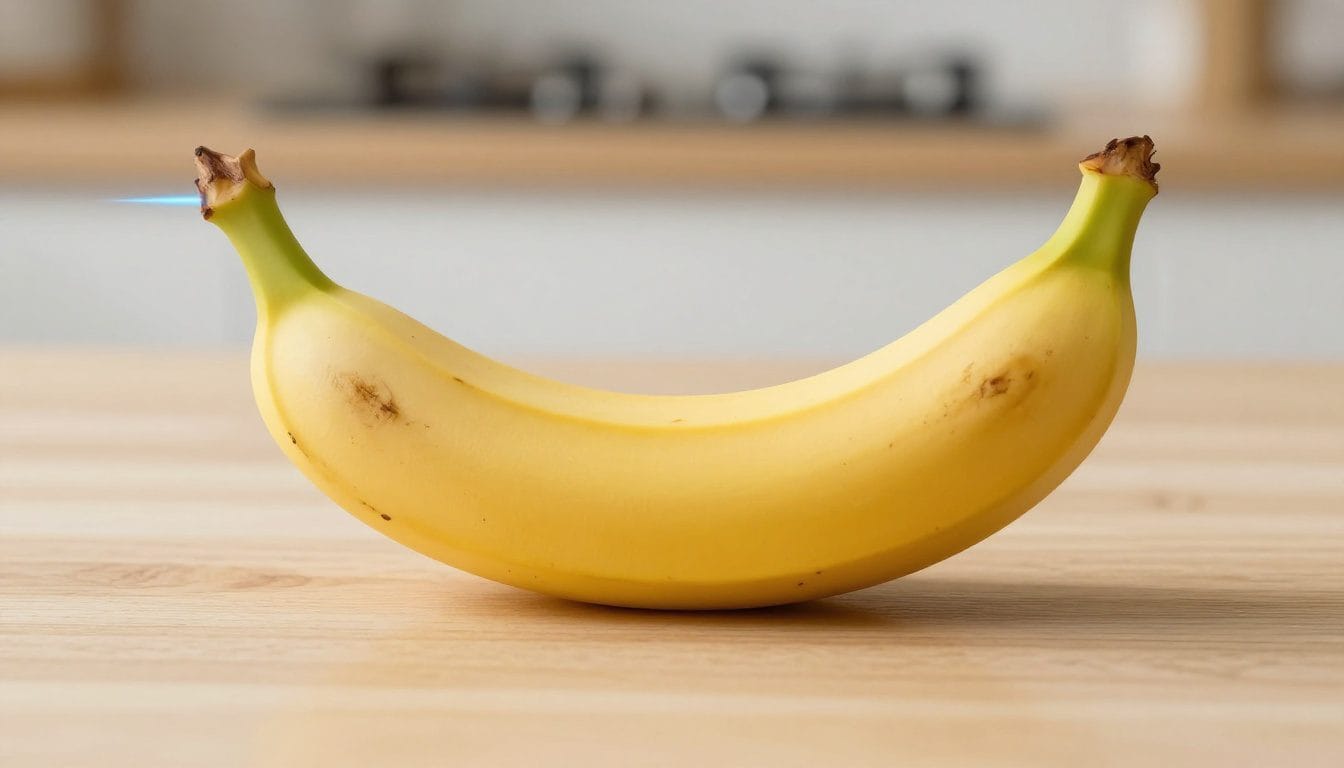
Bananas are radioactive. That sentence is true, and it has been used both to frighten people and to reassure them. The radioactivity comes from potassium-40, a naturally occurring form of potassium present in every potassium-containing food and in your own body. The US Environmental Protection Agency estimates the dose from eating one banana at about 0.1 µSv and states plainly that natural radioactivity in food needs no special action.
The popular “banana equivalent dose” can still mislead, for a reason that is rarely explained. Your body holds its potassium within a narrow range. When you eat more, your kidneys excrete more. So the amount of potassium-40 inside you stays roughly constant whether you eat one banana a week or two a day. You cannot add up every banana you have eaten and treat the total as an accumulating dose. The comparison is useful for sensing scale and useless as arithmetic.
There is one real caution around bananas, and it has nothing to do with radiation. People with advanced kidney disease, or who take medicines that raise blood potassium, may be advised to limit high-potassium foods. That is a question for their clinician or dietitian.
Background radiation: the baseline everything sits on
Everyone receives a steady dose from cosmic rays, from radioactive elements in rock and soil, from radon gas and from the small amount of radioactive material in food and the body. The EPA gives the US average from all sources as 6.2 mSv a year, with roughly half coming from medical procedures and most of the rest from natural sources, according to its page on radiation sources and doses.
That average hides a lot of variation. The same EPA page notes that someone living in Denver, a mile above sea level, receives about 0.8 mSv a year from cosmic radiation, compared with about 0.3 mSv at sea level. Geology matters even more for radon, which can differ sharply between neighbouring houses. Populations living with higher natural background do not show obvious differences in health that can be pinned on that extra dose, which is part of why ordinary background radiation is not considered something to fear.
Where your effort actually pays off
If you want to reduce avoidable radiation exposure, effort is best spent in this order, ranked by how much difference each step can make for a typical household:
- Test your home for radon. It is often the largest single contributor to natural dose, it is invisible, and a high reading can usually be fixed. The EPA recommends action at 4 picocuries per litre or above. Our guide to everyday radiation exposure covers why radon deserves more attention than phones or routers.
- Keep a record of your imaging. Note the date, body area and facility of every CT, nuclear medicine study and major X-ray. It helps clinicians avoid repeating a scan that has already been done elsewhere.
- Ask what a scan will change. Before non-urgent imaging, ask what the test is looking for and how the result will affect your care. Never delay urgent imaging over dose concerns.
- Protect your skin from ultraviolet light. UV is not counted in sieverts, but it is the radiation most clearly linked to harm in daily life. Our article on skin ageing and sun protection covers the practical side.
- In an emergency, follow official instructions. Go inside, stay inside and stay tuned. Take potassium iodide only if public health officials tell you to; the CDC explains that it protects only the thyroid, and only from radioactive iodine.
Things that do not belong on this list: “radiation detox” supplements, shielding stickers and pendants, and avoiding bananas, Brazil nuts or occasional flights. None of them changes your dose in any meaningful way.
Questions people ask
Is any amount of radiation completely safe?
Regulators assume no dose is entirely free of risk, which is why they aim to keep exposure as low as reasonably achievable. At everyday levels the added risk is extremely small and cannot be measured in individuals.
How many CT scans are too many?
There is no fixed yearly or lifetime quota. Each scan should be justified on its own merits. If you have had several, share that history with the clinician ordering the next one.
Do airport body scanners add to my dose?
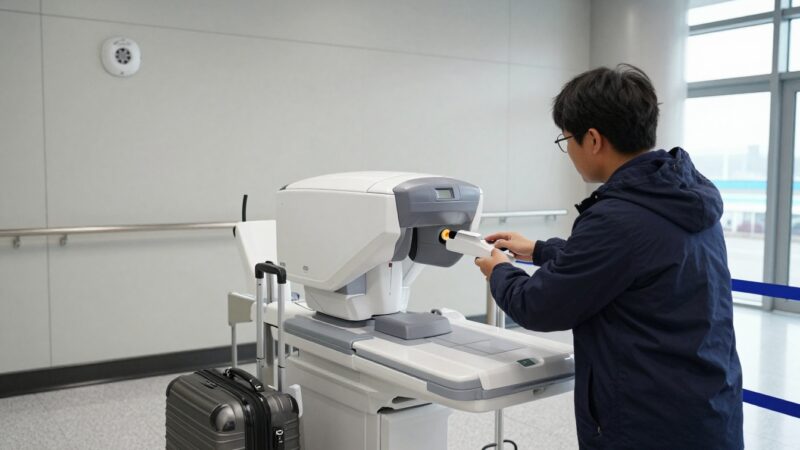
Most passenger scanners now use millimetre-wave radio energy, which is non-ionizing. If you want to know what a particular checkpoint uses, ask the security staff.
Can background radiation make me feel ill?
No. Ordinary background levels do not cause symptoms. Persistent symptoms deserve a medical assessment rather than an assumption about radiation.
Sources
- RadiologyInfo (ACR/RSNA): Radiation dose from X-ray and CT exams
- US EPA: Radiation sources and doses
- CDC: Facts about radiation from air travel
- US NRC: 10 CFR 20.1301, dose limits for members of the public
- WHO: Ionizing radiation and health effects
Sources checked 15 September 2026. This article is general education, not a personal risk assessment. See our editorial policy and medical disclaimer.