Creatine used to be something you found next to protein tubs in a gym shop. Now it is one of the most talked-about supplements for women in midlife, with claims ranging from stronger muscles to sharper thinking and better mood through the menopause. Some of that interest is backed by research. Some of it runs well ahead of the evidence.
This guide looks at what creatine for women over 40 and 50 can realistically do, what it probably cannot, how much people usually take, and who should check with a doctor first.
- What creatine is and why age matters
- What the research shows in women over 40
- The key point: creatine works with training, not instead of it
- How much creatine do women over 50 take?
- Side effects and common worries
- Who should check with a doctor first
- Food first: protein still matters more
- Creatine and the brain: worth watching, not yet proven
- Questions people ask
- Sources
What creatine is and why age matters
Creatine is a compound your body makes from amino acids and also gets from food, mainly meat and fish. Most of it is stored in muscle, where it helps recycle the energy muscles use for short, intense efforts such as lifting, climbing stairs or getting up from a low chair. A smaller amount is used by the brain.
From midlife, muscle mass and strength gradually decline, a process that speeds up for many women around the menopause as oestrogen falls. Our guide to sarcopenia and muscle loss with age explains why that matters for balance, falls and independence later on. Creatine interests researchers because it may help muscles respond better to the training that slows this decline.
What the research shows in women over 40
A 2021 review in the journal Nutrients, Creatine Supplementation in Women’s Health: A Lifespan Perspective, pulled together the studies in women, including those after the menopause. Its findings are more nuanced than social media suggests.
| Claimed benefit | What the review found | Strength of evidence |
|---|---|---|
| More muscle and strength | Most studies support benefits when creatine is combined with resistance training. On its own, effects were small or inconsistent. | Moderate, with training |
| Stronger bones | Mostly no benefit, alone or with training. One year-long trial with training found less loss of hip bone density. | Weak and mixed |
| Better mood | Small trials in women already taking antidepressants reported improvement when creatine was added. | Early, limited |
| Sharper thinking | Some benefit in healthy adults and during sleep deprivation; little direct data in menopausal women. | Early |
| Safety | No greater side effects than placebo in postmenopausal women in the studies reviewed. | Reasonably reassuring for healthy adults |
It is worth knowing that two of the review’s authors advise a creatine manufacturer, which helped fund publication. That does not make the findings wrong, but it is a reason to weigh them alongside independent research and to notice that the review itself is cautious.
The key point: creatine works with training, not instead of it
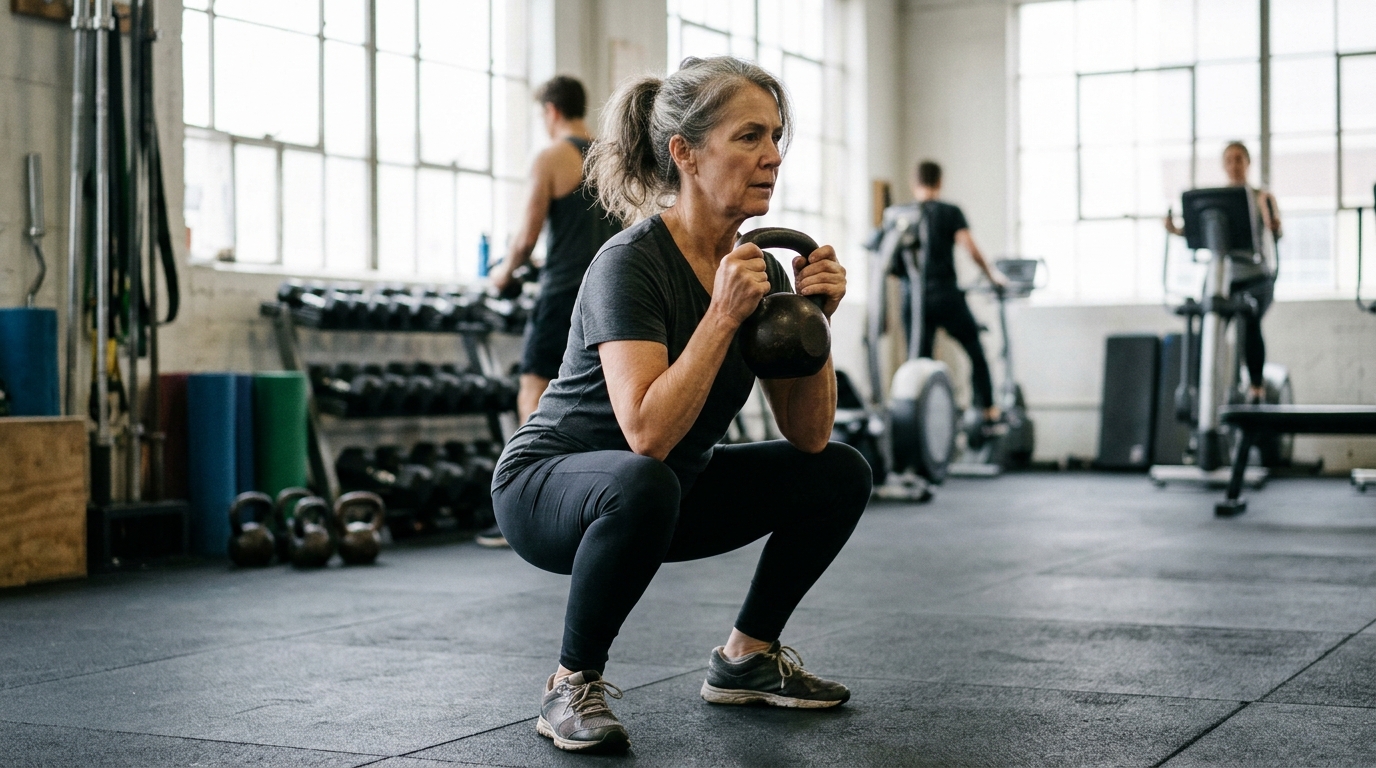
The clearest theme in the research is that creatine supports the effects of resistance exercise. It helps muscles do a little more work in each session, and over months that extra work can add up to more strength and muscle. Without the training, there is very little for it to amplify.
So if you are thinking about creatine, the first question is whether you are doing some form of strength training two or more times a week. If not, starting that will do far more for your muscles and bones than any supplement. Our beginner plan for strength training after 50 at home is a simple place to begin.
How much creatine do women over 50 take?
The form with by far the most research is creatine monohydrate. The International Society of Sports Nutrition’s 2017 position stand on creatine describes two common approaches:
- Steady approach: 3 to 5 g a day. Muscle stores rise gradually over about a month.
- Loading approach: about 0.3 g per kilogram of body weight a day, split into several doses, for 5 to 7 days, followed by 3 to 5 g a day. This raises stores faster but is more likely to cause stomach upset and a quick, temporary rise on the scales.
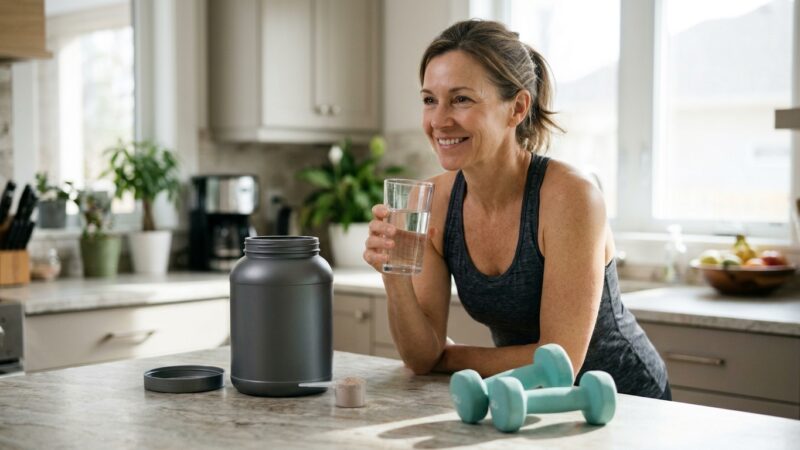
Most people who are not athletes choose the steady approach. Timing matters less than taking it consistently. Many mix it into water, coffee, yoghurt or a smoothie at whatever time of day they will remember.
Side effects and common worries
Will creatine make me gain weight or look bloated?
Creatine draws water into muscle cells, so a small, quick gain on the scales is possible, especially with a loading phase. That is water inside the muscle, not fat. The 2021 review describes concerns about weight gain in women as largely unfounded, and many trials found no significant change in body weight.
Is creatine bad for the kidneys?
In healthy people, the ISSN position stand found no compelling evidence of harm from creatine monohydrate in short- or long-term use, including studies of up to 30 g a day for five years. Creatine can raise creatinine, a waste product that doctors use in kidney blood tests, which can make results look worse than they are. If you have a blood test, tell your GP you are taking it.
Does creatine cause hair loss?
This worry comes largely from one small study in young men. It has not been confirmed by later research, but if hair thinning concerns you, it is reasonable to discuss it with your GP.
Who should check with a doctor first
- Anyone with kidney disease, or a history of kidney problems
- People with diabetes or liver disease
- Anyone taking regular prescription medicines, particularly those that affect the kidneys
- Women who are pregnant or breastfeeding
- Anyone with bipolar disorder, since creatine’s effects on mood are still being studied
Supplements are less tightly regulated than medicines. If you buy creatine, choose plain creatine monohydrate from a reputable seller, ideally with independent batch testing, and avoid blends with stimulants or long ingredient lists.
Food first: protein still matters more
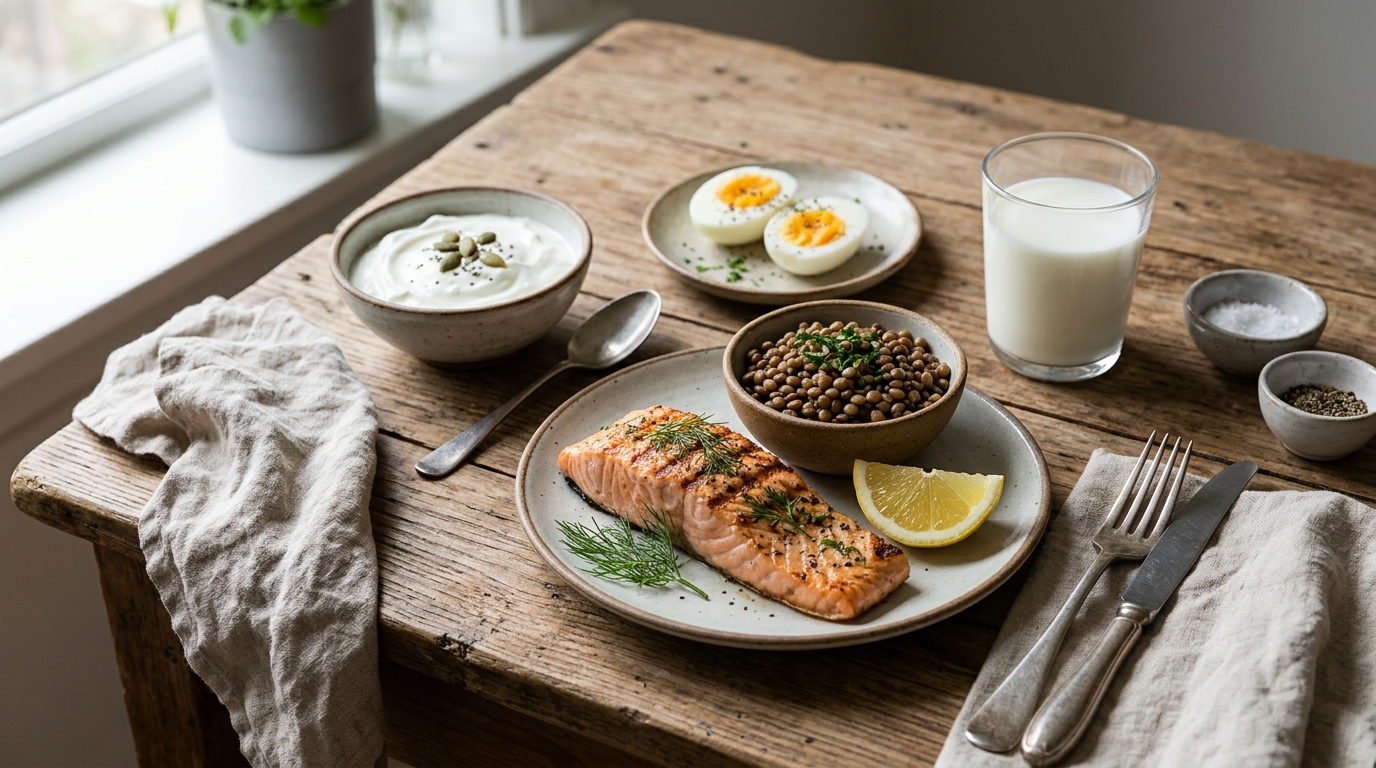
Creatine is a supporting act. For muscle in midlife, getting enough protein spread through the day, and doing regular strength work, are the main events. Fish and meat provide some creatine as well as protein, while dairy, eggs, pulses and soya are useful protein sources for vegetarians, who tend to have lower creatine stores to begin with. See our guide to protein after 50 for practical amounts.
Creatine and the brain: worth watching, not yet proven
Interest in creatine for brain fog, memory and mood around the menopause is growing quickly. The 2021 review notes promising early results, including faster improvement in depression when creatine was added to antidepressants, and some benefit for thinking during sleep deprivation. These were small studies, and few were in menopausal women specifically. If brain fog is a concern, sleep, exercise and other habits in our guide to brain health have stronger evidence today.
Questions people ask
Should women over 50 take creatine?
It is a reasonable option for healthy women who already do strength training and want to support it. It is not essential, and it does little without the training. Check with your GP first if you have any of the conditions listed above.
How long does creatine take to work?
At 3 to 5 g a day, muscle stores rise over roughly three to four weeks. Any effect on strength depends on training and usually shows over months.
Can creatine help with menopause symptoms?
There is no good evidence that creatine treats hot flushes or other core menopause symptoms. Research interest is in muscle, strength and possibly mood, not in symptom relief.
Do I need to cycle off creatine?
There is no evidence that cycling is necessary. If you stop, muscle stores gradually return to their usual level over several weeks.
Sources
- Smith-Ryan AE et al. Creatine Supplementation in Women’s Health: A Lifespan Perspective. Nutrients, 2021
- Kreider RB et al. ISSN position stand: safety and efficacy of creatine supplementation in exercise, sport, and medicine. JISSN, 2017
Sources checked 4 November 2026.