Salicylic acid has a reputation as an acne ingredient for oily skin, so it seems an odd thing to put on skin that already feels tight and flaky. Yet dermatologists use it on some of the driest, roughest skin there is. Whether it helps or hurts your dry skin comes down to what kind of dryness you have, how strong the product is and how often you use it.
This guide explains when salicylic acid for dry skin makes sense, when it is the wrong tool, and how to use it without making the dryness worse.
What salicylic acid actually does
Salicylic acid is a keratolytic. In plain terms, it softens keratin, the tough protein in the outer layer of skin, and loosens the bonds between dead skin cells so they shed more easily. DermNet, the dermatology reference run by New Zealand dermatologists, describes it as an ingredient that loosens dry, scaly skin so it is easier to remove, and lists strengths from 0.5% in face washes up to 30% in treatments for corns and warts.
It is also oil-soluble, which is why it is popular for blackheads: it can work its way into oily pores. That same property is the source of the myth that it only suits oily skin. Its exfoliating effect works on any skin type. What changes on dry skin is how much it takes to cause irritation.
Is salicylic acid good for dry skin?
It can be, for one specific problem: a build-up of dead, rough skin that sits on the surface and stops moisturiser from doing its job. If your dry skin looks flaky, feels like sandpaper, or has small rough bumps, a gentle keratolytic can clear that layer so moisturiser reaches the skin underneath. That is why salicylic acid appears in prescription creams for thick, scaly skin conditions.
It is less helpful when your skin is dry because its barrier is weak. That kind of skin stings when you apply almost anything, looks red rather than flaky, and feels tight within minutes of washing. Adding an exfoliant there removes cells the barrier is short of. The fix for that skin is repair first, exfoliation later, if at all.
| Your dry skin looks like | Is salicylic acid likely to help? | What to do |
|---|---|---|
| Flaky patches, rough texture, makeup catching on dry spots | Often yes, at low strength | A 0.5% to 2% leave-on product two or three times a week, followed by moisturiser |
| Small rough bumps on upper arms or thighs | Often yes | A body lotion with salicylic acid or urea, used most nights |
| Dry skin with blackheads or breakouts | Yes | A salicylic wash or leave-on in the T-zone only, rich moisturiser elsewhere |
| Red, tight, stinging skin that reacts to most products | Usually not | Pause all acids, use a fragrance-free cream, see a pharmacist or GP if it persists |
| Cracked or broken skin | No | Do not apply acids to broken skin |
How to use salicylic acid on dry skin without making it worse
The aim is the smallest effective dose. These steps keep the exfoliating benefit while protecting a barrier that is already short of oil.
- Choose a low strength. For the face, 0.5% to 2% is the usual range in over-the-counter products. There is no benefit in reaching for the strongest option on dry skin.
- Prefer a leave-on product that is not alcohol-based. A cream, lotion or serum with salicylic acid is kinder than an alcohol-heavy toner. A wash has the least contact time, which makes it the gentlest starting point.
- Start two or three times a week. Use it in the evening on clean, dry skin. Increase only if your skin stays comfortable for two to three weeks.
- Moisturise straight after. A cream with glycerin, ceramides or shea butter replaces what the exfoliant loosens. The American Academy of Dermatology recommends creams or ointments over lotions for dry skin in its tips for relieving dry skin.
- Do not stack strong actives on the same night. DermNet advises against combining salicylic acid with retinoids, benzoyl peroxide or abrasive scrubs unless a doctor has directed it. If you use retinol, alternate nights.
- Wear sunscreen in the morning. Freshly exfoliated skin is easier to irritate, and daily SPF protects the result.
Mild tingling for a few seconds can be normal. Burning, spreading redness or skin that feels hot is a signal to stop and let your skin settle. If that happens, return to a plain cleanser and moisturiser for a week or two before trying again less often.
Salicylic acid vs lactic acid vs urea for dry skin
Salicylic acid is not the only way to shift rough, dry skin, and for many people with dry skin it is not the first choice. Two other ingredients exfoliate while also holding water in the skin.
| Ingredient | How it works | Best for | Watch out for |
|---|---|---|---|
| Salicylic acid (BHA) | Softens keratin, oil-soluble so it reaches into pores | Dry skin that also gets blackheads or breakouts, rough bumps, thick flaky patches | Can feel drying at higher strengths or with daily use |
| Lactic acid (AHA) | Loosens surface cells and acts as a humectant, drawing water into the skin | Dull, dry skin without breakouts | Stinging on sensitive skin; increases sun sensitivity |
| Urea | At low levels it hydrates; at higher levels it softens thick, hard skin | Very dry skin, rough elbows, heels and legs | Can sting on cracked skin |
Lactic acid is on the AAD’s list of ingredients that help relieve dry skin. If your skin is dry but clear, a moisturiser with lactic acid or urea may give you smoother skin with less risk of irritation. If your skin is dry and congested, salicylic acid earns its place. Our guide to a simple routine for acne-prone skin covers how to fit it around other treatments.
Rough bumps on arms and legs
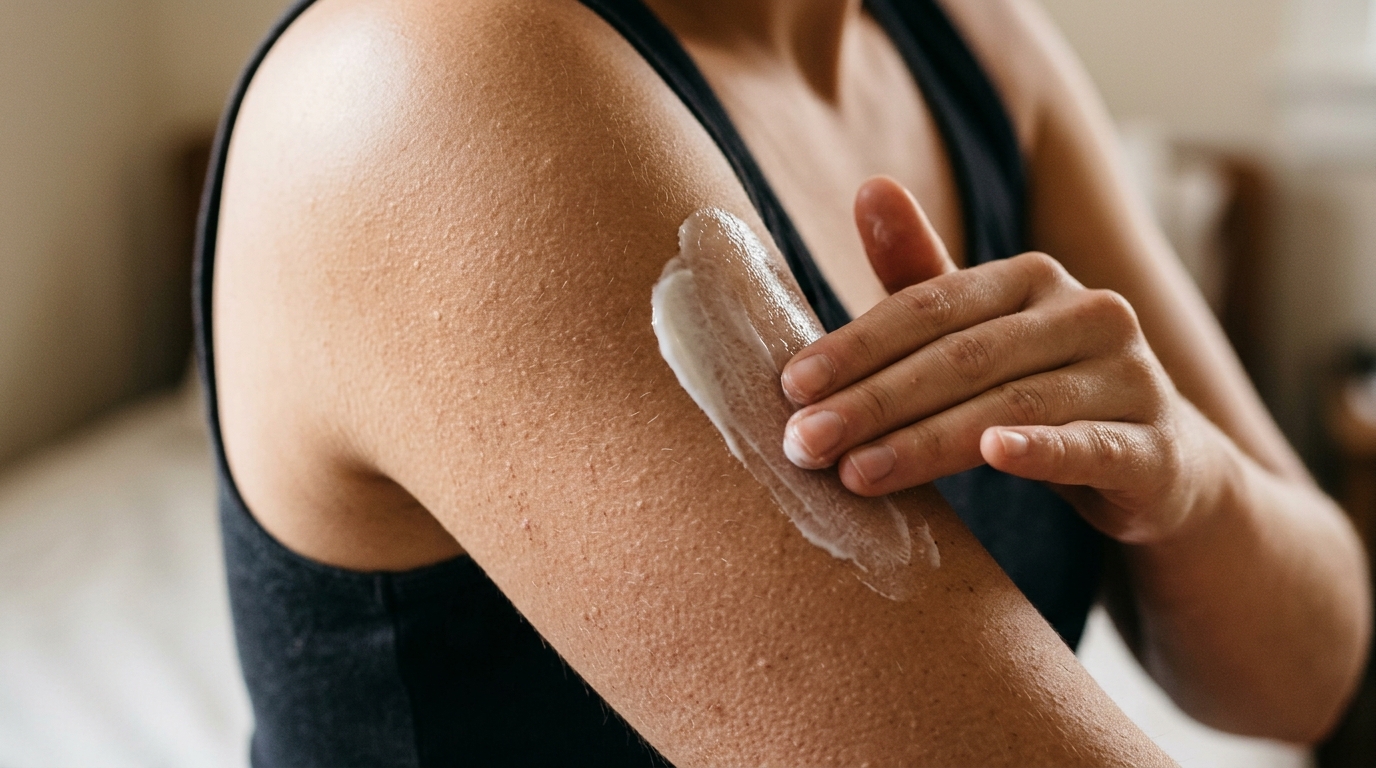
Small, rough bumps on the backs of the arms, thighs or buttocks are extremely common and are often caused by keratin plugging the hair follicles. This is one place where salicylic acid on dry skin is genuinely useful. Body lotions combining salicylic acid with a moisturising base, or creams with urea or lactic acid, can smooth the texture over several weeks. Scrubbing hard tends to make it look redder, not smoother.
Why dry skin changes after 40
Many people notice that skin which used to be combination or oily becomes drier in their forties and fifties. Oil production tends to fall with age, and hormonal changes around the menopause can add to it. Skin cell turnover also slows, so dead cells hang around longer and make dry skin look dull and rough. That combination is exactly where a gentle exfoliant and a richer moisturiser work well together.
It also means the products that suited you at 30 may need adjusting. A daily salicylic acid toner might have been fine on oily skin, but the same product used every day on drier skin is a common cause of tightness and flaking. For a fuller look at how a routine changes with age, see our morning-to-night skin routine. If redness is part of your picture as well as dryness, azelaic acid is a gentler alternative worth reading about.
Who should be cautious
- If you are pregnant or breastfeeding, DermNet advises speaking to a doctor first, because salicylic acid can be absorbed through the skin.
- If you have diabetes or poor circulation, or have reacted badly to a medicine before, Patient.info’s salicylic acid leaflet advises checking with a pharmacist or doctor first.
- For large areas of skin, follow the label closely. Using more, more often or for longer than directed increases absorption.
- For persistent scaling, itching or cracking, see a pharmacist or GP. Long-lasting dry, scaly patches can be eczema, psoriasis or another condition that needs proper treatment.
Questions people ask
Can salicylic acid make dry skin worse?
Yes, if it is too strong, used too often, or applied to skin with a weak barrier. Signs it is too much include tightness that lasts all day, new flaking, stinging when you apply moisturiser, and redness. Cut back to twice a week or stop.
Can I use salicylic acid every day on dry skin?
Some people with dry skin tolerate a gentle salicylic wash daily, but most do better with a leave-on product two or three times a week. Let how your skin feels guide you rather than the label’s maximum.
Should I use salicylic acid before or after moisturiser?
Usually before. Apply it to clean, dry skin, wait a minute or two, then moisturise. If your skin is very sensitive, some people apply a thin layer of moisturiser first to buffer the acid.
Is salicylic acid or glycolic acid better for dry skin?
For dry skin without breakouts, many people find a gentle AHA such as lactic acid more comfortable than either, because it also draws water into the skin. Salicylic acid is the better choice when dry skin is also prone to blackheads or spots.
Sources
- DermNet: Salicylic acid
- American Academy of Dermatology: Dermatologists’ tips for relieving dry skin
- Patient.info: Salicylic acid for skin conditions
Sources checked 4 November 2026.