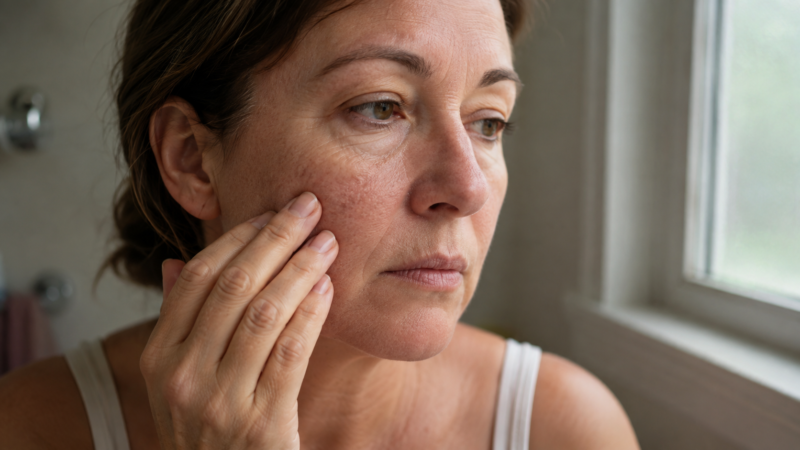
How to tell if skin is dry or dehydrated is a popular skincare question, but the distinction is often made too confidently. “Dry skin” commonly refers to reduced surface lipids and barrier function; “dehydrated skin” is a cosmetic description for low water content in the outer layer. A person can have both, and appearance alone cannot reveal the exact cause.
- Dry Skin vs Dehydrated Skin: What Each Term Means
- Common reasons skin becomes dry
- Changing how you bathe
- Reading a moisturiser label
- Fragrance free is not the same as unscented
- Dryness on darker skin tones
- A two week routine that also tells them apart
- Creating a maintenance routine
- What about drinking more water?
- When to see a clinician
- Frequently asked questions
- Sources
Dry Skin vs Dehydrated Skin: What Each Term Means
Tightness, roughness, fine surface lines and dullness may occur with either description. Flaking, cracking and itch often point towards more substantial dryness, but eczema, contact dermatitis, psoriasis, infection and medication effects can resemble ordinary dry skin.
The internet “pinch test” is not a reliable diagnostic tool for facial dehydration. Skin turgor can be influenced by age and other factors, and whole body dehydration is assessed through broader symptoms and clinical context.
Common reasons skin becomes dry
- Long, hot showers and frequent cleansing
- Cold or low humidity air
- Harsh soap, fragrance or over exfoliation
- Age related changes in skin
- Eczema or another inflammatory condition
- Certain medicines or health conditions
The American Academy of Dermatology’s dry skin advice recommends gentle cleansing, short warm not hot showers and applying fragrance free moisturiser promptly after bathing. The MedlinePlus encyclopedia entry on dry skin gives similar home care advice and lists the point at which dryness needs a doctor.
Changing how you bathe
Keep showers comfortably warm and relatively brief. Use cleanser where it is needed rather than creating a thick lather over every dry area, and stop before the skin feels squeaky, because that removes surface oils and can worsen tightness. Pat the skin instead of rubbing, then apply moisturiser while a little water remains on the surface.
Frequent hand washing may require moisturiser after each wash. At night, a thicker cream or ointment can be applied to hands, with cotton gloves if comfortable. Cracked skin that is painful, bleeding or infected needs assessment.
Reading a moisturiser label
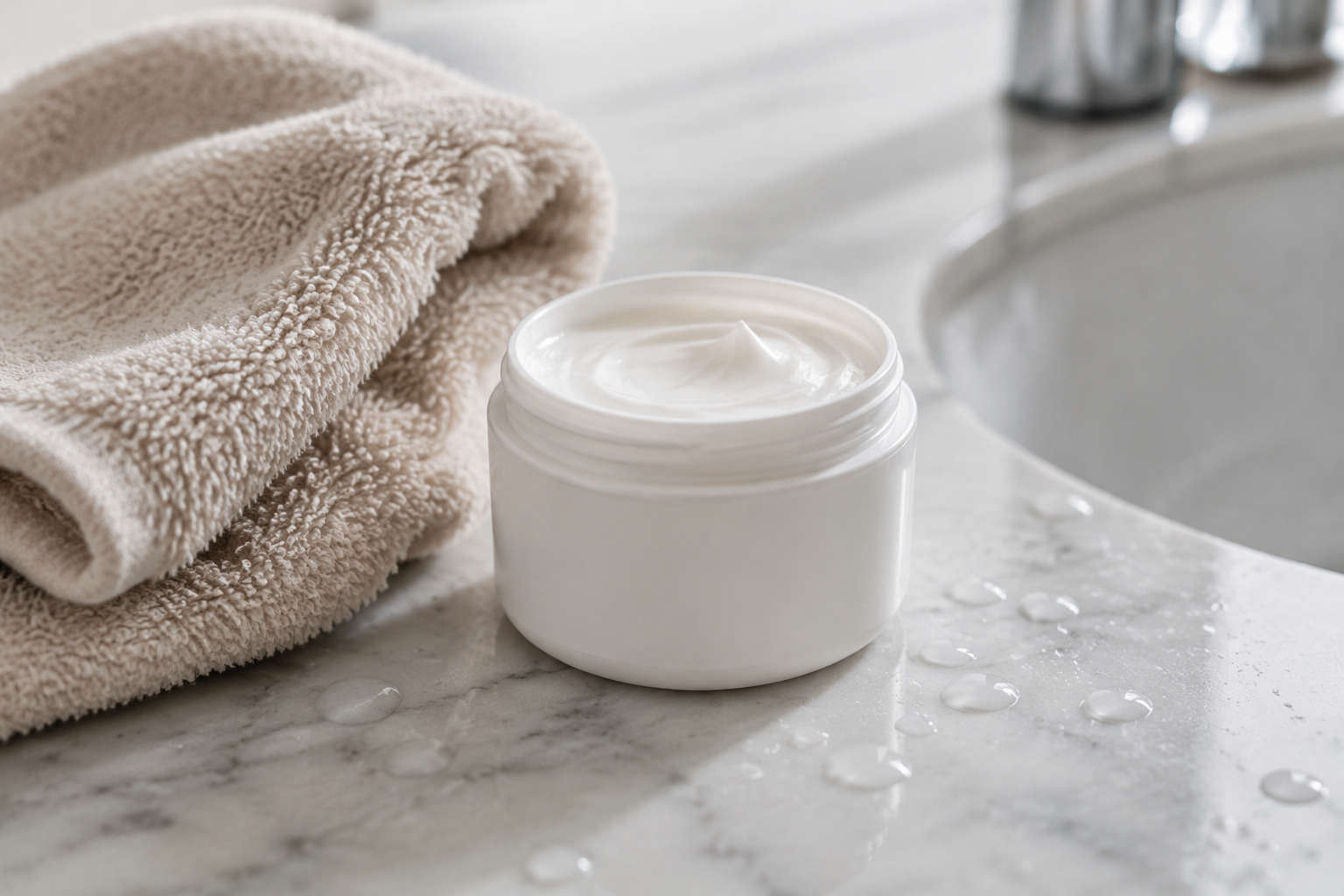
Humectants such as glycerin attract water in the outer skin layer. Emollients smooth spaces between surface cells. Occlusive ingredients reduce water loss. Effective moisturisers often combine these functions, which is why a complete formula usually matters more than a fashionable single ingredient. Our ceramide moisturiser guide explains how to assess formulas without treating one ingredient as magic.
Texture helps determine when and where a product is useful. A lotion spreads easily over the body. A cream may provide more comfort for persistent dryness. An ointment can be useful for very dry patches but may feel heavy on acne prone facial areas.
There is one detail about humectants worth knowing, because it explains a common and frustrating experience. Humectants such as glycerin and hyaluronic acid attract water, and in dry air with nothing sealing them in, some of that water can come from the skin itself and then evaporate. This is why a hydrating serum applied alone in winter can leave skin feeling tighter than before. The fix is not to abandon the serum. It is to apply it to slightly damp skin so there is water available, then follow it with a cream or ointment that slows evaporation.
Fragrance free is not the same as unscented
An unscented product may contain fragrance ingredients used to mask odour. People with reactive skin may prefer a product labelled fragrance free. Botanical extracts and essential oils can also irritate some skin even when marketed as natural. Patch testing a moisturiser can be helpful when you have reacted before: apply it to a small area for several days, while remembering that this cannot rule out every future reaction.
Dryness on darker skin tones
Dryness can look grey or ashy on deeper skin tones, making it more visible. The AAD’s dry skin guidance for darker skin recommends moisturisers containing ceramides and notes that creams and ointments tend to be more effective than thin lotions.
A two week routine that also tells them apart
Because appearance alone cannot separate the two, the most reliable way to find out which you are dealing with is to remove the variables and watch what happens. This is not a diagnostic test in any medical sense. It is a way to stop guessing, and it doubles as a repair routine.
Morning
- Rinse with lukewarm water or use a gentle cleanser if needed.
- Apply a cream containing humectants such as glycerin and barrier supporting lipids.
- Finish with broad spectrum sunscreen.
Evening
- Cleanse gently; avoid brushes and scrubs.
- Apply moisturiser while the skin is slightly damp.
- Use a thin layer of ointment on very dry patches if it suits your skin and does not worsen acne.
Pause exfoliating acids and retinoids for the fortnight, and change nothing else: no new products and no adding a serum because day four looked promising. Each morning, note three things only: whether the skin felt tight on waking, whether there was visible flaking, and whether the bland products stung. On day fourteen, compare your notes from the first three days with the last three.
If tightness and flaking have largely resolved, the problem was most likely your routine rather than your skin type. Something in it was disrupting the barrier faster than it could recover. Reintroduce one product at a time, several days apart, and the culprit usually announces itself. If your skin still feels raw, our guide to skin barrier repair sets out a gentler routine and how long recovery usually takes.
If the skin is comfortable but still looks dull or shows fine surface lines on some days and not others, you are probably watching water content fluctuate with the environment. That responds to humectants under an occlusive layer, and to conditions: heating, air conditioning, wind and long hot showers all move it.
If flaking, cracking or itch is unchanged after two weeks of a genuinely bland routine, that is the most useful result of all. Skin that does not improve when you stop irritating it is not being irritated, and that is the point to seek assessment rather than a different cream. One caveat: this suits ordinary, persistent dryness. If you have a diagnosed skin condition or an active flare, follow the treatment plan you were given, and do not stop a prescribed product to run an experiment.
Creating a maintenance routine
Once comfort returns, continue gentle cleansing and regular moisturiser rather than stopping everything immediately. Applying moisturiser only when the skin becomes uncomfortable allows repeated cycles of dryness. Reduce ointment on areas that no longer need it while retaining cream after bathing and hand washing, and expect the routine to change with climate and activity. Adding several serums while continuing a harsh cleanser rarely solves the underlying problem, so reintroduce optional actives one at a time and wait long enough to observe tolerance before adding another. If dryness returns, the last change provides a useful clue.
What about drinking more water?
Correcting true body dehydration is important, but drinking excessive water is not a direct treatment for a damaged skin barrier and can be unsafe. Drink according to thirst, climate, activity and any medical fluid guidance you have. If you have vomiting, diarrhoea, confusion, faintness or very low urine output, seek medical advice rather than relying on skincare. Our guide to dehydration symptoms and treatment covers the whole body side of the question.
When to see a clinician
Arrange assessment for widespread or persistent itch, open cracks, bleeding, oozing, signs of infection, sleep disruption or a rash that does not improve with a bland routine. Sudden severe dryness plus other symptoms may need a medical review. A dermatologist can also distinguish irritant dermatitis from allergy and inflammatory skin disease.
Frequently asked questions
Can oily skin be dehydrated?
Yes. Surface oil does not guarantee adequate water content or an intact barrier.
Is hyaluronic acid enough?
A humectant serum may help, but it usually works best under a moisturiser that reduces water loss. In very dry air, a serum alone may feel tight.
How quickly should a simple routine help?
Comfort may improve within days, while cracks and significant scaling take longer. No improvement or worsening suggests the diagnosis or triggers need review.
Sources
- American Academy of Dermatology: Dermatologists’ tips for relieving dry skin
- American Academy of Dermatology: Dry skin remedies for darker skin
- MedlinePlus: Dry skin
Sources checked 19 September 2026.