If your eyeshadow seems to vanish the moment you open your eyes, or liner prints onto the skin above your lashes by lunchtime, you probably have hooded eyelids. They are extremely common, and they become more common with age as the skin above the eye loosens. The good news is that eye makeup for hooded eyes over 50 is mostly a matter of moving things up and keeping them soft. A few changes in where you place colour make more difference than any product.
This guide covers how to tell whether your lids are hooded, the placement that works, the products that stay put, and the signs that a droopy eyelid is worth showing to an optometrist rather than covering with makeup.
- Hooded, droopy or both? Why eyelids change with age
- The one rule: apply with your eyes open
- Step by step: eye makeup for hooded eyes over 50
- What to choose and what to skip
- Eye makeup for hooded eyes over 60
- A five-minute everyday version
- Common mistakes that make hooded eyes look heavier
- When a droopy eyelid needs more than makeup
- Questions people ask
- Sources
Hooded, droopy or both? Why eyelids change with age
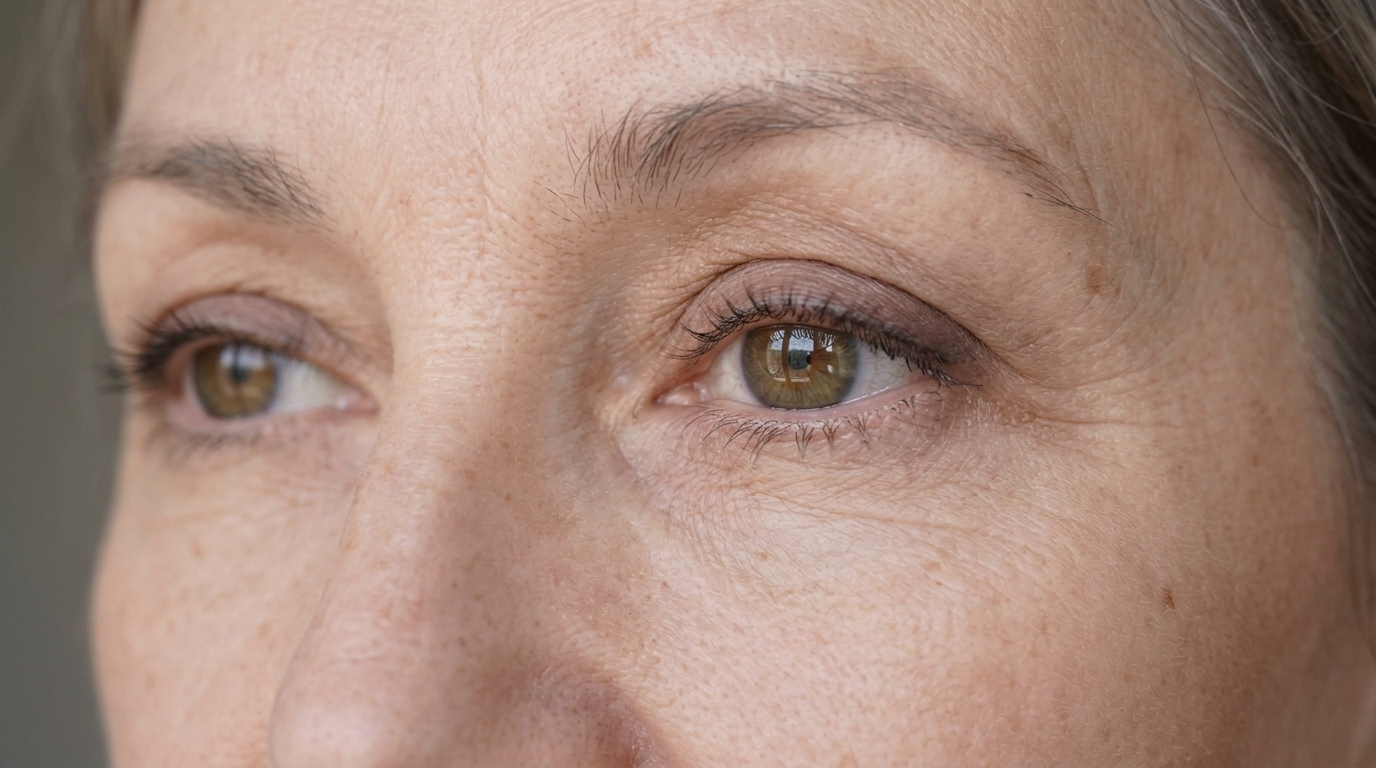
A hooded eyelid is one where a fold of skin from the brow bone sits over the crease, partly or completely hiding the mobile lid when your eyes are open. Some people are born with this shape. For many others it develops from their forties onwards.
Two age-related changes are usually involved, and they often happen together. The American Academy of Ophthalmology’s EyeWiki describes dermatochalasis as loose, excess eyelid skin that comes from weakened connective tissue and reduced elasticity, and notes it is most pronounced in the upper lids. Ptosis is different: it is the eyelid itself sitting lower because the muscle that lifts it has stretched. Both make the lid look heavier, and both affect how makeup sits.
A simple test: look straight ahead into a mirror with your face relaxed. If you can see little or none of the lid between your lashes and the crease, your eyes are hooded. If you have to lift your brows to see your lid clearly, the hooding is more pronounced, and the eyes-open techniques below matter even more.
The one rule: apply with your eyes open
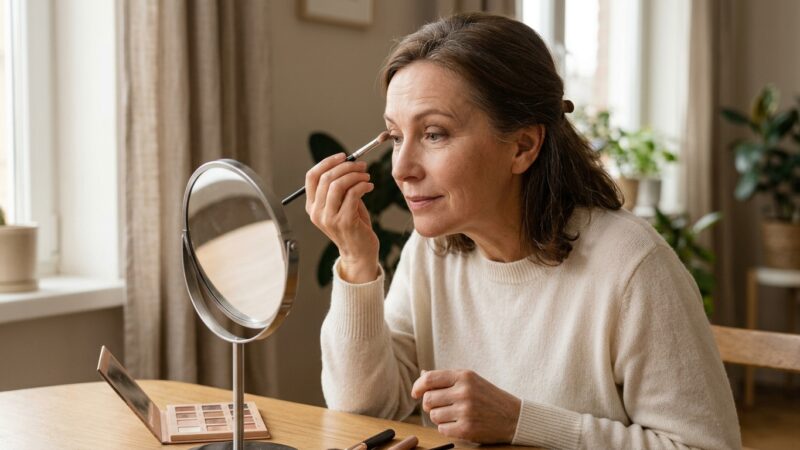
Almost every makeup tutorial tells you to close your eye and follow the crease. On a hooded lid, that crease disappears as soon as you open your eyes, taking the shadow with it. Instead, look straight ahead into a mirror at eye level and place colour where you can see it with your eyes open. That visible zone is your new crease. It usually sits a few millimetres above the natural fold.
Step by step: eye makeup for hooded eyes over 50
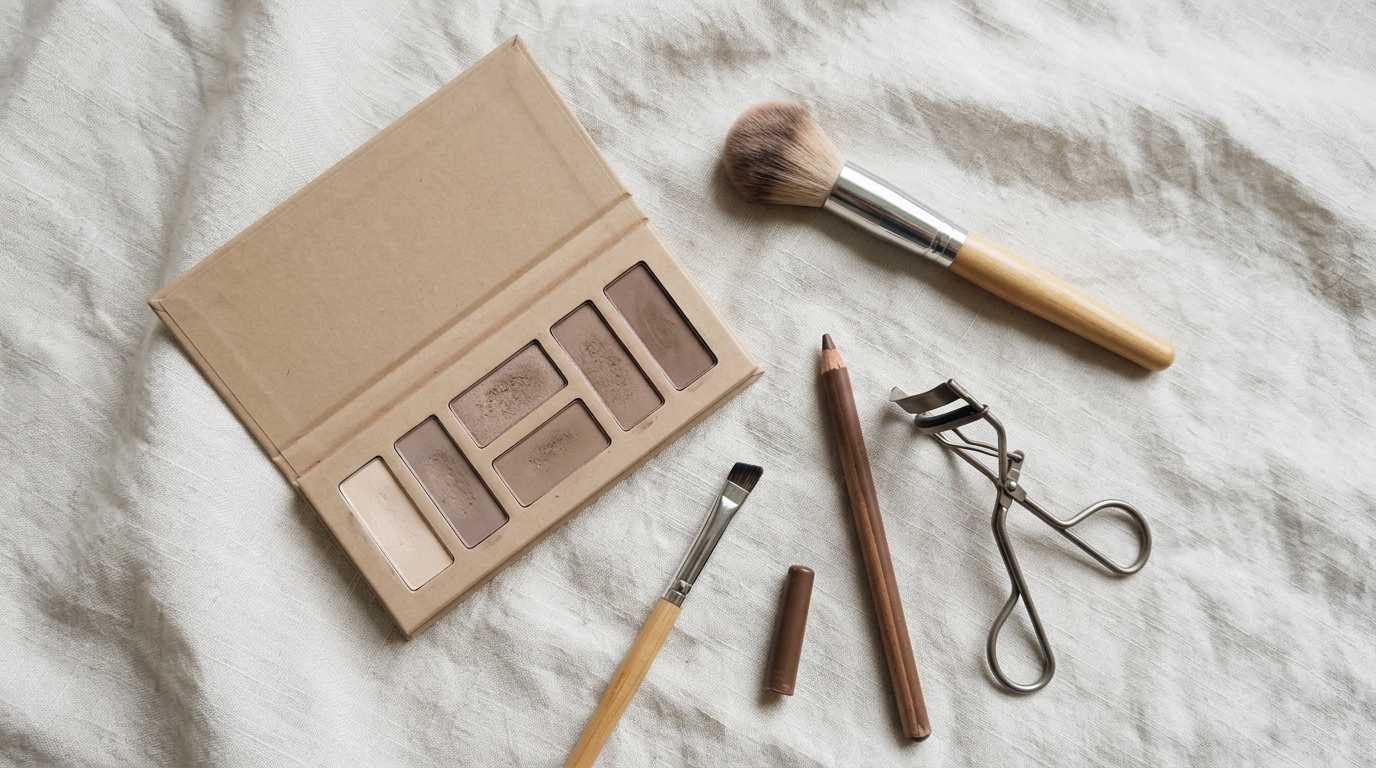
- Prime the lid. Hooded lids touch the skin above them when the eye is open, which transfers and creases product. A thin eyeshadow primer, or a dab of concealer set with powder, gives shadow something to grip.
- Sweep a light matte shade over the whole area. A shade close to your skin tone, from lashes to brow, evens out redness and veins so the darker shade blends cleanly.
- Place a soft matte mid-tone just above the fold. With your eyes open, use a fluffy brush to put taupe, soft brown or muted plum in the visible area above the hood. Blend in small windscreen-wiper movements, keeping the colour slightly higher at the outer end. This creates the illusion of a crease where you can actually see it.
- Lift the outer corner. Angle the deepest part of the colour up towards the tail of your brow rather than outwards or down. A downward flick makes the eye look heavier.
- Keep the lid itself light. A soft satin or light shimmer in the centre of the mobile lid catches light when you blink. Avoid heavy glitter on the hood itself; it can draw attention to texture.
- Tightline rather than drawing a thick line. A thick line on top of the lid often disappears under the hood. Work a soft brown or charcoal pencil into the roots of the upper lashes instead, from underneath if you are comfortable doing so. It defines the eye without taking up lid space.
- Curl and coat the lashes. Curling lifts lashes out from under the hood and opens the eye more than mascara alone. A tubing mascara is less likely to smudge onto the skin above.
- Finish with the brows. Well-shaped brows frame the eye and visually lift the area. Fill sparse tails lightly and avoid drawing the brow lower at the outer end.
What to choose and what to skip
| Product | Better for hooded eyes over 50 | Usually harder to wear |
|---|---|---|
| Eyeshadow | Matte and satin finishes in soft browns, taupes and muted plums | Heavy glitter on the hood, very dark colours all over the lid |
| Formula | Powder over primer, or a long-wear cream stick set with powder | Rich creams with no setting powder, which crease quickly |
| Eyeliner | Soft brown or charcoal pencil, tightlined or smudged at the roots | Thick liquid lines and long downward wings |
| Mascara | Tubing or smudge-resistant formulas after curling | Very wet formulas that print onto the hood |
| Lower lash line | A soft smudge on the outer third only | A full dark line all the way under, which can close the eye |
Eye makeup for hooded eyes over 60
The same principles apply, with a few adjustments as skin on the lid becomes thinner and finer. Lighter layers wear better than heavy ones, because thin crepey skin shows every patch of product. Cream shadows blended with a fingertip can look more natural than powder on very textured lids, as long as they are set. Swap black liner for brown or grey, and focus definition at the outer corners. If the hood sits right on the lashes, many people find a lash curler and mascara alone do more for the eye than any shadow.
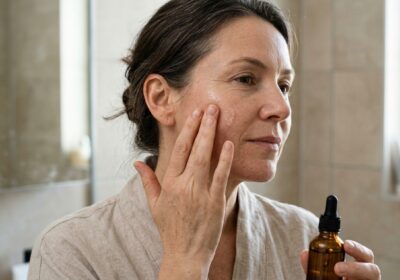
Skin care also plays a part. Fragile skin around the eyes reacts to rubbing, so remove makeup with a gentle cleanser or oil rather than scrubbing, and keep strong actives well away from the lids. Our retinol for beginners guide explains why lids are one area to avoid when you start. For softening texture on the rest of the face, see our morning-to-night skin routine.
A five-minute everyday version
On busy mornings, three steps cover most of the benefit. First, pat a thin layer of primer or concealer over the lid and the hood. Second, with your eyes open, sweep one matte mid-tone shade just above the fold and blend it upwards at the outer corner with your fingertip or a fluffy brush. Third, curl your lashes and apply one coat of mascara to the roots, wiggling the wand upwards. That is enough to define the eye, lift the outer corner and keep the lid looking fresh all day. Add liner only when you have the extra minute, and keep it close to the lashes.
Common mistakes that make hooded eyes look heavier
- Blending only in the natural crease. It disappears when your eyes are open.
- Dark colour packed over the whole mobile lid. It shrinks the visible eye and makes the hood look deeper.
- A drooping outer corner. Shadow or liner that drags downward follows the direction of the hood instead of countering it.
- Skipping primer. Lids that touch the skin above them need something to stop transfer.
- Using a magnifying mirror close up. It is useful for liner, but check the overall look at normal distance with your eyes open.
When a droopy eyelid needs more than makeup
Most hooding is cosmetic. Sometimes, though, a heavy lid affects how you see. EyeWiki lists reduced side vision, a heavy or tired feeling around the eyes and a dull brow ache among the symptoms of excess eyelid skin. If you notice you tilt your head back or raise your brows to see properly, mention it to an optometrist or GP. Treatment, such as eyelid surgery, is sometimes offered when vision is affected.
A lid that droops suddenly is different. Specsavers’ guidance on ptosis advises seeking help urgently if a droopy eyelid comes on suddenly or is painful. If a sudden droop comes with weakness on one side of the face, slurred speech or a severe headache, call 999, because these can be signs of a stroke. The NHS uses the word FAST to help people remember the main stroke symptoms.
Questions people ask
Should older women with hooded eyes wear shimmer?
Yes, in moderation. A soft satin or fine shimmer on the centre of the mobile lid brightens the eye. Keep the hood itself matte, since shimmer there highlights texture and the area that is already prominent.
How do I stop eyeshadow creasing on hooded eyes?
Use a thin primer, apply less product than you think you need, and set cream shadows with a light dusting of powder. Removing excess eye cream before makeup also helps, as rich creams make shadow slide.
Is winged eyeliner possible on hooded eyes?
It is, if you draw it with your eyes open. Draw the wing so it looks straight with your eye open, even if it looks bent when closed. A short, upward-angled wing usually works better than a long one.
Do eyelid tapes or strips work?
They can temporarily create a crease for an event. Test one on a small area first, remove gently, and avoid using them on irritated skin.
Sources
- American Academy of Ophthalmology EyeWiki: Dermatochalasis
- Specsavers: Ptosis (droopy eyelid)
- NHS: Stroke symptoms
Sources checked 4 November 2026.