
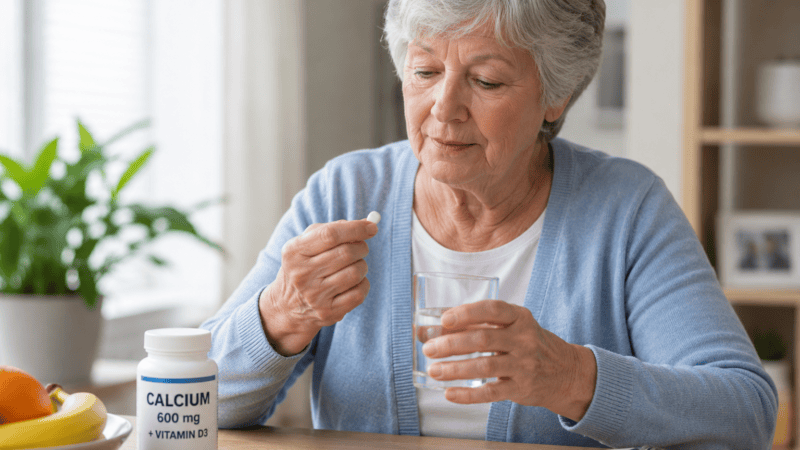
A lot of people take calcium supplements because they think it protects them from broken bones. The answer is less comforting than that. For most older adults, calcium supplements do not reliably prevent fractures, and the newest research says the benefit is tiny at best.
That matters for older adults, caregivers, and anyone trying to stay independent. It also matters because bone health is about more than one pill. The latest evidence points to a bigger picture: food, vitamin D status, strength, balance, and fall prevention matter more than calcium tablets alone.
- What the latest research says about calcium and fractures
- Why calcium alone usually is not enough to protect older bones
- Who might still benefit from calcium supplements
- The benefits and limits of calcium pills compared with food
- How to lower fracture risk without depending on supplements alone
- Common mistakes older adults make with calcium supplements
- FAQ
- Conclusion
What the latest research says about calcium and fractures
The newest studies have shifted the conversation. A newer BMJ review found little to no meaningful effect from calcium alone, vitamin D alone, or the two together in older adults living at home. The review included 11 trials and 9,067 people. It also found little to no effect on hip fractures or falls.
Why newer reviews changed the conversation
Bigger reviews usually give a clearer picture than small ones. When researchers pulled together more studies, the expected benefit got smaller. In plain English, the pills looked less useful once the full body of evidence was on the table.
That does not mean every older adult is the same. It means routine use for fracture prevention is not supported for most people.
What the numbers mean in everyday life
A tiny risk change sounds nice on paper, but it may not matter much in real life. If a supplement only helps a little, it may not be worth the cost, daily hassle, or possible side effects for someone who already gets enough calcium.
For many people, the result is simple: a calcium pill is not a shield.
Why older studies seemed more hopeful
Earlier reviews were more optimistic, especially when calcium and vitamin D were paired. Some included people with low calcium intake or low vitamin D levels, which can make the effect look better.
An earlier PMC review also points to that pattern. The benefit, when it showed up, was more likely in people who started out with a gap to fill.
Why calcium alone usually is not enough to protect older bones
Bones are not built from calcium alone. They need vitamin D to help absorb calcium, protein to support muscle and bone tissue, and movement to keep the skeleton under stress in a healthy way.
Bones need a full support system, not just calcium
Think of bone like a house. Calcium is one brick. Vitamin D is the worker that helps place it. Exercise is the force that keeps the structure strong.
If one piece is missing, the whole system weakens. A supplement cannot replace that bigger picture.
How fracture risk is shaped by more than diet
Age matters. So do osteoporosis, previous fractures, low body weight, smoking, certain medicines, and poor balance. Even good calcium intake cannot fix those problems on its own.
That is why two people with the same diet can have very different fracture risk. One may need a supplement. Another may need exercise, medication review, or prescription treatment for osteoporosis.
When calcium from food may be enough
Many older adults can meet their needs with food. Dairy, fortified plant milks, tofu made with calcium, beans, leafy greens, and canned fish with bones all help. Food also brings protein and other nutrients that pills do not.
A meal plan often does more than a bottle ever will.
Who might still benefit from calcium supplements
Calcium pills are not useless. They can help when there is a real shortfall. The point is not “never.” The point is “not for everyone.”
People with low calcium intake from food
If someone eats very little dairy or few calcium-rich foods, a supplement may fill a real gap. This is common in people with small appetites, food limits, or trouble chewing.
In that case, the pill is a backup, not the plan.
Older adults with vitamin D deficiency or osteoporosis
Some people need calcium along with other treatment, especially if they have vitamin D deficiency, low bone density, or diagnosed osteoporosis. A recent review on vitamin D and calcium suggests the best results may show up in people who are deficient at baseline.
That is a very different situation from taking calcium just in case.
Why personal medical advice matters here
The right dose depends on diet, lab results, kidney stone history, and the medicine list. One person may need nothing. Another may need a supplement plus prescription treatment.
That is why age alone should not make the decision.

The benefits and limits of calcium pills compared with food
Supplements have one real advantage: they are easy. If someone cannot get enough calcium from meals, a pill can close the gap without much effort.
What supplements can do well
They offer predictable dosing. They are also handy for people with low appetite or narrow food choices.
That makes them useful in the right setting. It does not make them magic.
Where supplements fall short
They do not improve balance, build muscle, or stop falls. They also do not repair osteoporosis by themselves.
If fracture prevention is the goal, that matters. A pill can add calcium. It cannot teach the body to stay upright.
Why food-first is often the better starting point
Food is usually the safer first step. It gives calcium with protein and other nutrients, and it lowers the chance of taking more than you need.
For many people, the best plan is simple: count food first, then decide if a pill still makes sense.
How to lower fracture risk without depending on supplements alone
Bone protection works best as a full plan. The strongest steps are often the least glamorous, but they do the job.
Exercises that help bones and prevent falls
Walking helps. Resistance training helps more. Balance work helps too.
Stronger muscles mean fewer falls. Fewer falls mean fewer fractures. That link is hard to beat.
Simple home changes that lower fall risk
Good lighting matters. So do safe shoes, clear floors, and grab bars in the bathroom. Loose rugs are a problem waiting to happen.
Small changes at home can prevent a big injury.
Other habits that support bone health
Smoking weakens bones. Heavy alcohol use raises fall risk. Not eating enough protein can also hurt strength.
Regular eye checks and medicine reviews matter too, especially if dizziness is part of daily life.
Common mistakes older adults make with calcium supplements
The biggest mistake is assuming more calcium means stronger bones. That idea is too simple, and it can push people toward pills they do not need.
Taking supplements without knowing your real intake
It helps to estimate food intake first. A glass of milk, yogurt, fortified cereal, tofu, or canned salmon may already cover a lot.
Without that check, it is easy to overdo it.
Using calcium as a substitute for proven treatments
People with osteoporosis may need prescription medicine. Calcium is not a replacement for treatment when fracture risk is high.
It is a support, not the main event.
Questions to bring to your appointment
Ask whether your diet already covers your needs. Ask if your vitamin D level should be checked. Ask whether your fracture history or bone density scan changes the plan. Ask which medicines might raise fall risk.
Those questions turn a guess into a plan.
FAQ
Do calcium supplements stop fractures in older adults?
Not for most older adults. The latest evidence shows little to no meaningful fracture protection in people living at home.
Is calcium from food better than pills?
Usually, yes. Food gives calcium with protein and other nutrients, and it is less likely to push total intake too high.
Should everyone over 65 take calcium?
No. The decision depends on diet, bone density, vitamin D status, and overall fracture risk.
Can calcium help if I have osteoporosis?
Sometimes, but usually as part of a larger plan. Many people with osteoporosis need prescription treatment too.
What is the safest next step?
Review your diet, ask about vitamin D, and talk with a clinician before starting supplements.
Conclusion
The big question has a pretty plain answer. For most older adults, calcium supplements do not reliably prevent fractures, and the newest research shows little to no meaningful benefit.
Some people still need them, especially if they have low calcium intake, vitamin D deficiency, or osteoporosis. But they should not be treated like a stand-alone fix.
Food, exercise, fall prevention, and the right medical advice usually matter more than a calcium pill sitting in the cabinet.