
A healthy gut can make a bigger difference in your day than you might think. When digestion is off, everything feels off too, from bloating and irregular bathroom trips to low energy and that heavy, uncomfortable feeling after meals.
The good news is that you can often improve gut health with simple habits that fit into real life. Eating more fiber, adding fermented and prebiotic foods, drinking enough water, sleeping well, moving your body, and easing up on ultra-processed foods can all support digestion without making your routine complicated.
Small changes add up over time, and that’s the point here. If you’ve got persistent digestive symptoms, food intolerances, IBS, IBD, or another medical condition, talk with a qualified healthcare professional before making big changes.
What gut health really means, and why it affects more than digestion
Gut health is bigger than whether your stomach feels calm after lunch. Your gut helps break down food, absorb nutrients, and keep things moving in a way that feels predictable. It also connects to immune function and everyday comfort, which is why gut trouble can show up far beyond the bathroom.
Think of it less like one organ doing one job, and more like a system that affects the rest of you. When it’s working well, meals feel easier, energy feels steadier, and your body has a better chance of handling what you eat.
### The gut microbiome in plain language
The gut microbiome is the community of microbes living in your digestive tract. Some are helpful, some are less helpful, and most are just part of the mix. What matters most is balance and variety, not one magic food or supplement.
You can picture it like a neighborhood. A healthy neighborhood has different kinds of people, jobs, and routines, not just one type of house on every block. Your gut works the same way, with many microbes doing different tasks at once.
Those microbes help break down fiber, support digestion, and create helpful compounds your body can use. That’s one reason fiber-rich foods matter so much. They feed the microbes that help keep the whole system running more smoothly.
A few habits tend to support that balance:
- Eat a wide range of plant foods so your microbes get different types of fuel.
- Include fermented foods like yogurt, kefir, kimchi, or sauerkraut if you tolerate them.
- Add prebiotic foods such as onions, garlic, oats, bananas, and asparagus.
- Skip the all-or-nothing mindset, because gut health is built over time.
Gut health is less about chasing one perfect food and more about giving your microbes steady support.
What a healthy gut often feels like
A healthy gut usually shows up in small, practical ways. Bowel habits feel more regular, bloating is less common, and meals sit more comfortably. You may also notice fewer random stomach upsets and less of that heavy, overfull feeling after eating.
For a quick reality check, these common signs of digestive health often line up with what people notice when digestion is doing its job well. The pattern matters more than any single day, because even a healthy gut has off days.
A few signs people often describe are:
- Regular bathroom habits without a lot of strain or surprise
- Less bloating or gas after everyday meals
- Fewer stomach upsets that interrupt the day
- Better comfort after eating instead of lingering discomfort

If digestive symptoms keep showing up, or you deal with food intolerances, IBS, IBD, or other medical conditions, a qualified healthcare professional can help you sort out what’s going on before you make bigger changes.
Signs your gut may need more support
Your gut usually gives you clues before it gives you a big problem. The trick is learning which signals are normal after a heavy meal and which ones keep showing up for no clear reason.
If bloating, bathroom changes, or stomach discomfort are becoming part of your routine, your digestion may need a little more support. That doesn’t automatically mean something serious is going on, but it does mean your body is asking for attention.

### Digestive symptoms that are easy to notice
Some gut symptoms are hard to ignore because they show up in daily life. Maybe your stools are always off, you feel stuffed after eating a small portion, or certain meals leave you bloated for hours.
These are some of the most common signs people notice:
- Irregular stools that swing between constipation and loose stools
- Frequent bloating after meals, especially the same meals over and over
- Feeling overly full even when you didn’t eat much
- Gas and cramping that keep coming back
- Heartburn or nausea that shows up more than once in a while
- Food-related discomfort after dairy, fried foods, spicy foods, or other trigger meals
A few of these symptoms every now and then can happen to anyone. When they become a pattern, though, it can point to a gut that isn’t handling food as smoothly as it should. That is often the point where simple changes like more fiber, more water, slower meals, or fewer ultra-processed foods can help you improve gut health.
If the same meal keeps making you feel off, your gut is probably telling you something useful.
For many people, the clues are not dramatic. They are just annoying enough to become familiar, and that is exactly why they get missed.
When symptoms mean it is time to get help
Some digestive symptoms need more than home habits and patience. If your discomfort is persistent, worsening, or getting in the way of normal life, it’s time to check in with a qualified healthcare professional.
Get medical help if you notice any of these:
- Unexplained weight loss
- Blood in the stool
- Ongoing belly pain
- Food intolerances that seem new or severe
- IBS or IBD symptoms that are getting worse
- Constipation, diarrhea, or bloating that doesn’t improve
The Houston Methodist guide to seeing a gastroenterologist is a helpful reminder that chronic digestive issues deserve attention, not guesswork. A clinician can help sort out whether the issue is something minor, a food sensitivity, or a condition that needs treatment.
If you’re dealing with repeated symptoms, don’t keep pushing through them. Gut trouble is easier to address when you catch it early, and that’s a lot better than waiting until every meal feels like a test.
Foods that help improve gut health naturally
What you eat has a direct effect on your gut, and the biggest wins usually come from simple foods, not fancy rules. Fiber-rich plants, prebiotic foods, and fermented foods all help in different ways, and they fit into normal meals without much fuss.
The goal is not to eat one magic food and call it done. It is to give your gut a steady mix of fuel, friendly bacteria, and variety so digestion has what it needs to work well.
Fiber-rich foods that feed good bacteria
Fiber does two important jobs at once. It helps keep digestion moving, and it gives your gut microbes the material they need to stay active.
That is why foods like oats, beans, lentils, berries, vegetables, nuts, seeds, and whole grains show up again and again in gut-friendly eating. They bring different types of fiber, which helps keep things varied for your microbiome, not just your plate.
A few easy examples include:
- Oatmeal topped with berries and chia seeds
- Beans or lentils added to soups, salads, or grain bowls
- Whole-grain toast with nut butter
- Roasted vegetables with a handful of seeds
- Brown rice or quinoa as a base for lunch or dinner
If your diet has been low in fiber, increase it gradually. Jumping too fast can leave you bloated and uncomfortable, and that is the opposite of what you want.
Fiber works best when it comes in regularly, not all at once.
Prebiotic foods that help the microbiome thrive
Prebiotic foods are plant foods that help feed the helpful bacteria already living in your gut. Think of them as the food supply for your microbiome, not the bacteria themselves.
Some of the most useful options are onions, garlic, leeks, asparagus, bananas, oats, and cooked-and-cooled potatoes. These foods contain fibers and compounds that bacteria can use, which helps support a healthier gut environment over time.
You do not need a special recipe to use them. Add garlic and onions to a skillet, toss asparagus into a sheet-pan dinner, or slice a banana into oatmeal. Even leftovers help, especially when potatoes or rice are cooked, cooled, and eaten later.
For a deeper look at how fermented foods and microbiome diversity connect, see research on fermented foods and gut microbes.
Fermented foods that can fit into everyday meals
Fermented foods bring live microbes and helpful compounds into the mix. They are not required for good digestion, but they can be a smart addition if your body tolerates them well.
Good examples include yogurt with live cultures, kefir, kimchi, sauerkraut, miso, and some fermented pickles. These foods can add variety to meals without forcing you to overhaul your whole diet.
Start small if you are not used to them. A spoonful of sauerkraut, a small glass of kefir, or a few bites of kimchi is enough to begin with.
A simple way to ease in is to pair fermented foods with meals you already eat:
- Add yogurt to breakfast instead of skipping it.
- Stir miso into soup.
- Use kimchi or sauerkraut as a side, not the main event.
- Choose pickles labeled as naturally fermented when possible.
Fermented foods can be bold in taste, so a little goes a long way. That is good news if you want to improve gut health without making every meal feel like a project.
If you deal with persistent digestive symptoms, food intolerances, IBS, IBD, or another medical condition, it is smart to check with a qualified healthcare professional before making bigger changes.
Habits That Can Work Against Gut Health
Some gut problems start with what looks like normal daily eating. Not one big splurge, but the same habits repeated over and over, until fiber drops, meals get rushed, and digestion has less to work with.
The pattern is simple. When ultra-processed foods, sugary drinks, and erratic eating crowd out whole foods, your gut gets less of the fuel it likes best.

> Gut health often slips when convenience starts making more decisions than your plate does.
Why ultra-processed foods can crowd out better choices
Ultra-processed foods are easy to reach for, but they often push better options off the menu. If a snack or meal comes from a bag, box, or drive-thru window most days, it usually leaves less room for fiber-rich foods like beans, vegetables, fruit, oats, and whole grains.
That matters because gut bacteria do better when they get steady fiber. A review in PMC on fast and processed food notes that these foods are often low in fiber and high in salt, which makes them a poor fit for digestive support. Over time, that kind of pattern can leave meals less satisfying and less useful for the gut microbiome.
It does not mean every packaged food is off-limits. It means the balance matters. If most of your plate comes from processed foods, your gut gets less variety, and variety is what helps feed a broader mix of microbes.
A few common ways this shows up are:
- Snack foods replacing meals when life gets busy
- Packaged sides and ready-made entrées taking the place of vegetables or beans
- Sweet breakfast foods crowding out oats, fruit, or yogurt
- Frequent grazing on salty, low-fiber foods instead of eating balanced meals
The goal is not perfection. Start by adding one better choice next to the processed one, like fruit with a packaged breakfast or a salad with a frozen entrée. That small shift can improve gut health without turning your kitchen upside down.
Common diet patterns that can throw digestion off
Some habits do not look dramatic, but they can still upset digestion. Skipping meals, eating too fast, leaning on sugary drinks, and going long stretches without fiber all make it harder for your gut to settle into a steady rhythm.
Here is what often causes trouble:
- Skipping meals can lead to overeating later, which may leave you bloated or uncomfortably full.
- Eating too fast gives your stomach less time to register fullness, and you may swallow more air along the way.
- Relying on sugary drinks can crowd out water and fiber-rich foods, while adding extra sugar without much satiety.
- Going hours or days with little fiber leaves gut bacteria without enough fuel, which can slow things down.

Fast eating deserves special attention because it tends to pile on problems. You are more likely to miss your body’s fullness signals, and more likely to finish a meal before your gut has caught up. That can leave you feeling stretched, rushed, and uneasy after eating.
A better approach is plain and practical. Sit down when you can, slow the first few bites, keep water nearby, and try not to let long gaps between meals become the norm. If your day keeps pulling you off track, start with one anchor meal that always includes protein, fiber, and a drink without added sugar.
If digestive symptoms keep showing up, or you deal with food intolerances, IBS, IBD, or another medical condition, talk with a qualified healthcare professional before making bigger changes.
Lifestyle steps that support a healthier gut every day
You do not need a perfect routine to support your gut. The habits that matter most are the ones you can repeat on an ordinary day, without a big plan or a lot of rules.
That usually means drinking enough water, moving your body, lowering stress where you can, and giving sleep a real chance to do its job. These are simple steps, but they add up fast when you keep them steady.

### Stay hydrated so digestion can keep moving
Water helps digestion in a very basic way. It helps soften stool, keeps waste moving, and makes bowel movements easier to pass. When you are not drinking enough, stool can become dry and hard, which is where constipation starts to creep in.
You do not need to track every sip. Just make water easy to reach and easy to remember.
A few low-effort ways to drink more:
- Keep a water bottle where you can see it.
- Drink a glass with each meal.
- Have water when you wake up and before coffee.
- Set out a glass during work or TV time.
- Add lemon, cucumber, or mint if plain water feels boring.
If you want a simple reference point, Harvard Health’s guide to simple ways to improve gut health puts hydration right where it belongs, near the basics. You do not need to turn it into a project, just make it part of the day.
If your digestion feels sluggish, start with a glass of water before you start chasing more complicated fixes.
Move your body to help your gut and reduce bloating
Regular movement helps your gut keep things moving too. You do not have to crush a workout to feel the benefit. A walk after meals, a bike ride, gentle yoga, swimming, or any steady movement can help digestion and may ease that tight, bloated feeling.
The key is consistency, not intensity. Ten or fifteen minutes of walking is still movement, and it still counts.

This is one of the easiest gut-friendly habits to build into real life. Try one of these:
- Walk after lunch or dinner.
- Take the stairs when it makes sense.
- Stretch for a few minutes between tasks.
- Do a short yoga flow in the morning.
- Swim, cycle, or garden if that feels more natural.
Better Health Channel notes that regular activity like walking and cycling can help the muscles of the gut move digestive contents through the body. That is a simple idea, but a useful one. Your gut likes motion almost as much as the rest of you does.
Manage stress and protect your sleep
Your gut and brain stay in close contact all day. When stress runs high, digestion often feels it. When sleep is short or choppy, the same thing can happen. That is why a tense day can end with a knot in your stomach, loose stools, or stubborn bloating.
The good news is that calming the system does not need to be fancy. Deep breathing, time outdoors, a screen-free wind-down, and enough sleep are all realistic places to start.
A few habits that help:
- Take five slow breaths before a meal.
- Spend a few minutes outside each day, even if it is just a short walk.
- Put screens away before bed when you can.
- Keep bedtime and wake-up time steady.
- Protect sleep like it matters, because it does.

Stress and poor sleep do not cause every digestive problem, but they can make symptoms feel worse. That is why a calmer evening routine can be as helpful as a better breakfast.
The simplest gut-friendly plan is the one you can actually keep doing. Drink water, move a little, calm your nervous system, and give sleep more room. If your digestive symptoms keep showing up, or you have food intolerances, IBS, IBD, or another medical condition, talk with a qualified healthcare professional before making bigger changes.
A simple starter plan you can follow this week
You do not need a total diet overhaul to improve gut health. Start with a few repeatable moves, keep them simple, and give your body time to respond.
### Build a gut-friendly plate without counting everything
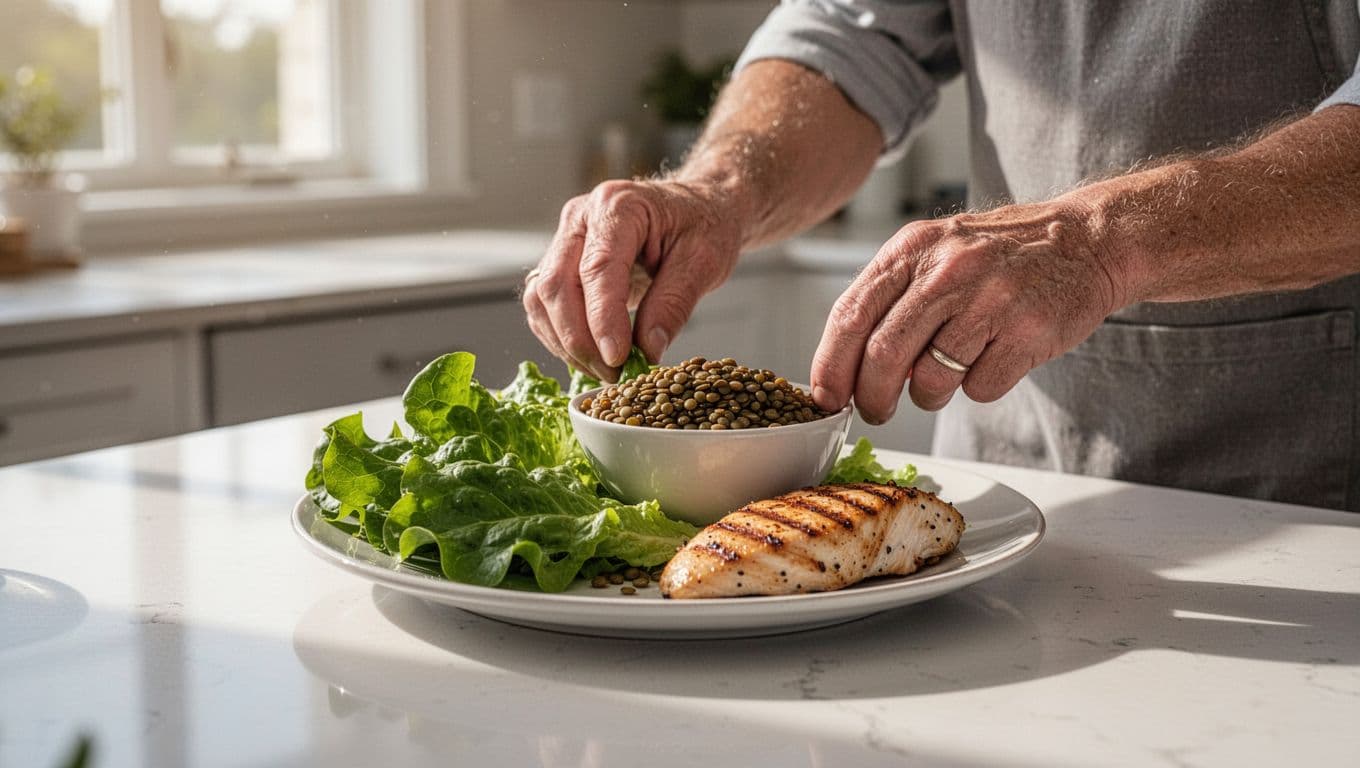
Think of each meal as a small chance to support digestion. You do not need to track every gram. Just try to combine fiber, protein, healthy fats, and plant variety on the same plate.
That might look like oatmeal with berries and nut butter, eggs with spinach and whole-grain toast, or chicken with brown rice, roasted carrots, and beans. The pattern matters more than perfection, and even one better meal can move you in the right direction.
A few easy ways to build that plate:
- Add a fiber food like beans, oats, berries, broccoli, or whole grains.
- Include a protein source such as eggs, yogurt, chicken, tofu, fish, or lentils.
- Bring in healthy fats from avocado, olive oil, nuts, seeds, or tahini.
- Mix in plants for variety, even if it’s just two vegetables instead of one.
Harvard Health recommends simple habits like adding fruits or vegetables to meals, which is an easy place to start if your diet has been light on produce. Harvard Health’s fiber tips are also useful if you want a plain-language refresher.
A good starter rule is this, add one high-fiber food each day for a week. That could be a banana with breakfast, a side salad at lunch, or beans in dinner soup. Small, steady changes are easier on your gut than one big jump.
Make changes slowly so your body can adjust
More fiber is helpful, but too much too fast can backfire. Gas, bloating, and cramps can show up if your gut is not used to the extra load.
That is why a slow pace works better. Start with one change, notice how you feel, then add the next one only if things are going well.
A calmer gut usually likes gradual changes, not a sudden surprise.
Here is a simple week-long approach:
- Add one fiber-rich food to one meal each day.
- Drink a little more water with those meals.
- Swap one refined grain for a whole-grain version.
- Add a fruit or vegetable to your snacks.
- If your stomach feels fine, add another serving the next week.
Keep an eye on your own signals. If you feel more bloated or uncomfortable, slow down and hold steady for a few days. If you use fiber supplements, start small and do not assume more is better.
The goal is not to force your gut into a new routine overnight. It’s to give it better fuel in a way it can actually handle. If you have persistent digestive symptoms, food intolerances, IBS, IBD, or another medical condition, check in with a qualified healthcare professional before making bigger changes.
Conclusion
The simplest way to improve gut health naturally is to keep it steady. More fiber, more plant variety, a few fermented foods, enough water, regular movement, better sleep, and less ultra-processed food when you can manage it, those are the habits that add up.
You do not need a perfect diet or a complicated routine. Start small, stay consistent, and let your body respond over time, because that’s where the real progress happens.
If you want to keep building on the basics, the next step is learning how healthy aging starts with the habits you use every day.
If you have ongoing digestive symptoms, food intolerances, IBS, IBD, or another medical concern, speak with a qualified healthcare professional.