

Foods for brain health matter more than most people expect. Your brain doesn’t run on crossword puzzles alone. It runs on food, sleep, movement, and time. What you eat won’t turn you into a genius by Friday, but the right foods for brain health can help support focus, memory, and healthier ageing over the long haul.
Food is one part of a bigger picture, which our guide to brain health sets out in full.
That’s the useful middle ground. No single food can prevent memory loss or wipe out the effects of stress, poor sleep, or untreated health problems. Still, daily eating patterns matter. They help shape blood flow, blood sugar, inflammation, and the raw materials your brain uses to do its job.
The good news is you don’t need a strict plan or expensive powders. The best foods for brain health are familiar, practical, and easy to work into real meals. Think fish, berries, greens, eggs, beans, oats, nuts, olive oil, and yoghurt. Start there, and the rest gets simpler.
- Foods for Brain Health: Which Nutrients Matter?
- Fatty fish, berries, and leafy greens that stand out
- Nuts, seeds, eggs, beans, and whole grains for steady fuel
- Healthy fats and fermented foods round out the picture
- Simple meal and snack ideas that make this easier
- What these foods can do, and what they cannot do alone
- A practical way to eat for a healthier brain
- FAQ: common questions about foods that support brain health and memory
Foods for Brain Health: Which Nutrients Matter?
Think of your brain like a busy city. It needs structure, fuel, repair crews, and traffic control. Omega-3 fats, especially DHA, help build brain cell membranes. That’s one reason fatty fish keeps showing up in conversations about memory and learning.
Antioxidants from berries and greens help protect cells from normal wear and tear. B vitamins, including B6, B12, and folate, help with nerve function and energy use. Choline, found in eggs, helps your brain make acetylcholine, a chemical tied to memory. Vitamin E, common in nuts and seeds, helps protect cell membranes. Protein and vitamin D matter too, but most people do better by fixing the whole plate instead of chasing one nutrient. For a longer treatment of how these nutrients fit together, the 2024 Elsevier book chapter “Fruits and foods to improve kids brain health”, in Nutraceutical Fruits and Foods for Neurodegenerative Disorders, walks through the same territory. It’s a textbook chapter rather than a clinical trial, so treat it as background reading, not proof.
Why overall eating patterns matter more than one magic food
A salmon dinner once a month won’t do much. A steady pattern does. Your brain responds better to repeated support than random healthy meals between stretches of ultra-processed food.
That’s why the best approach is boring in the best way. Eat a mix of fish, plants, beans, whole grains, and healthy fats most days. Not perfect. Just consistent.
Fatty fish, berries, and leafy greens that stand out
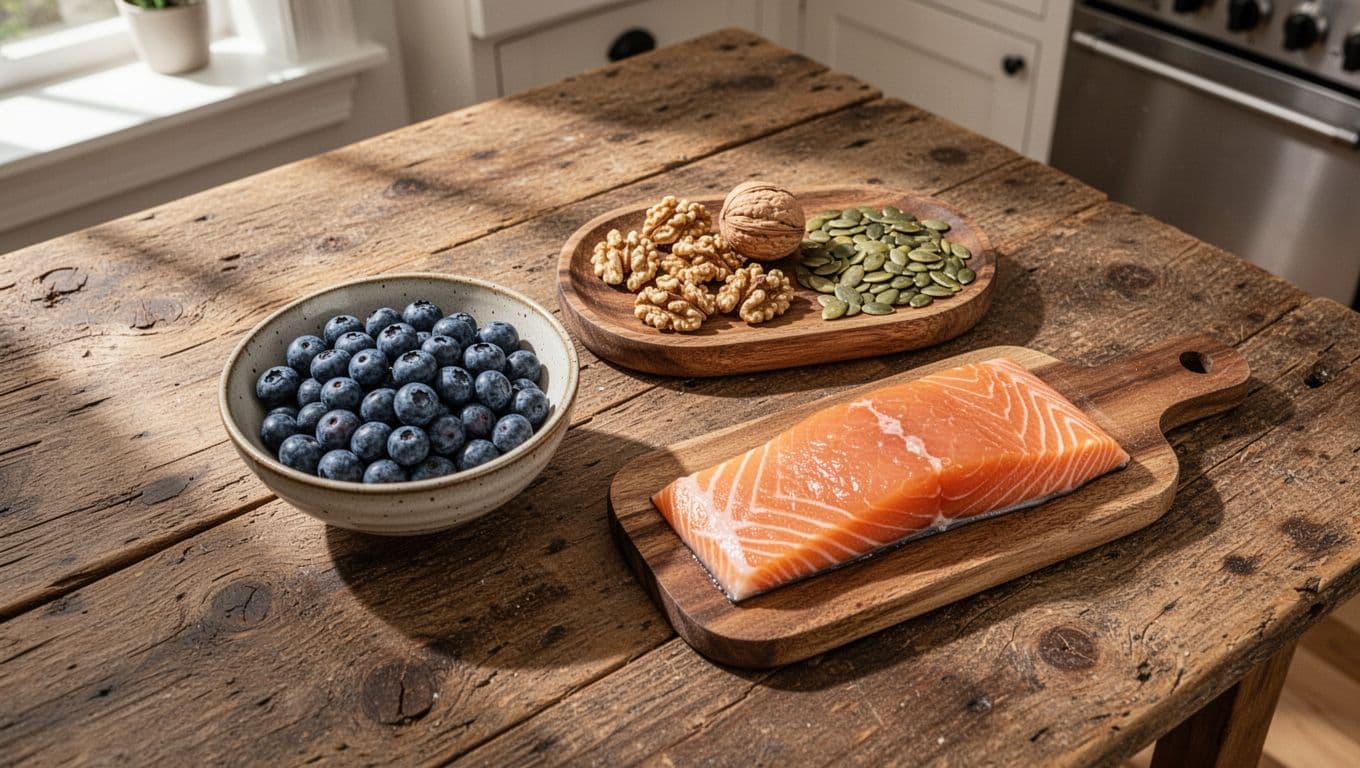
If one food group gets top billing, it’s fatty fish. Salmon, sardines, trout, mackerel, and tuna bring omega-3 fats that help support brain cell structure and communication. They also fit the bigger heart-brain picture, because what helps blood vessels usually helps the brain too. The omega-3 case has been made for a long time, including in the CRC Press book chapter “Omega-3s and Their Impact on Brain Health”, though that one dates to 2007 and is a book chapter rather than new trial evidence.
Keep it easy. Try canned salmon on toast, tuna salad with olive oil, or baked trout with potatoes and vegetables.
Berries and antioxidants that help protect brain cells
Blueberries get most of the fame, but strawberries and blackberries count too. Their colour comes from plant compounds called polyphenols, which are linked with cell protection and better ageing in the brain. That doesn’t mean berries are magic. It means they’re a smart repeat food.
Frozen berries work well here. Add them to yoghurt, oatmeal, or a smoothie and move on with your day.
Leafy greens and why they belong on the plate often
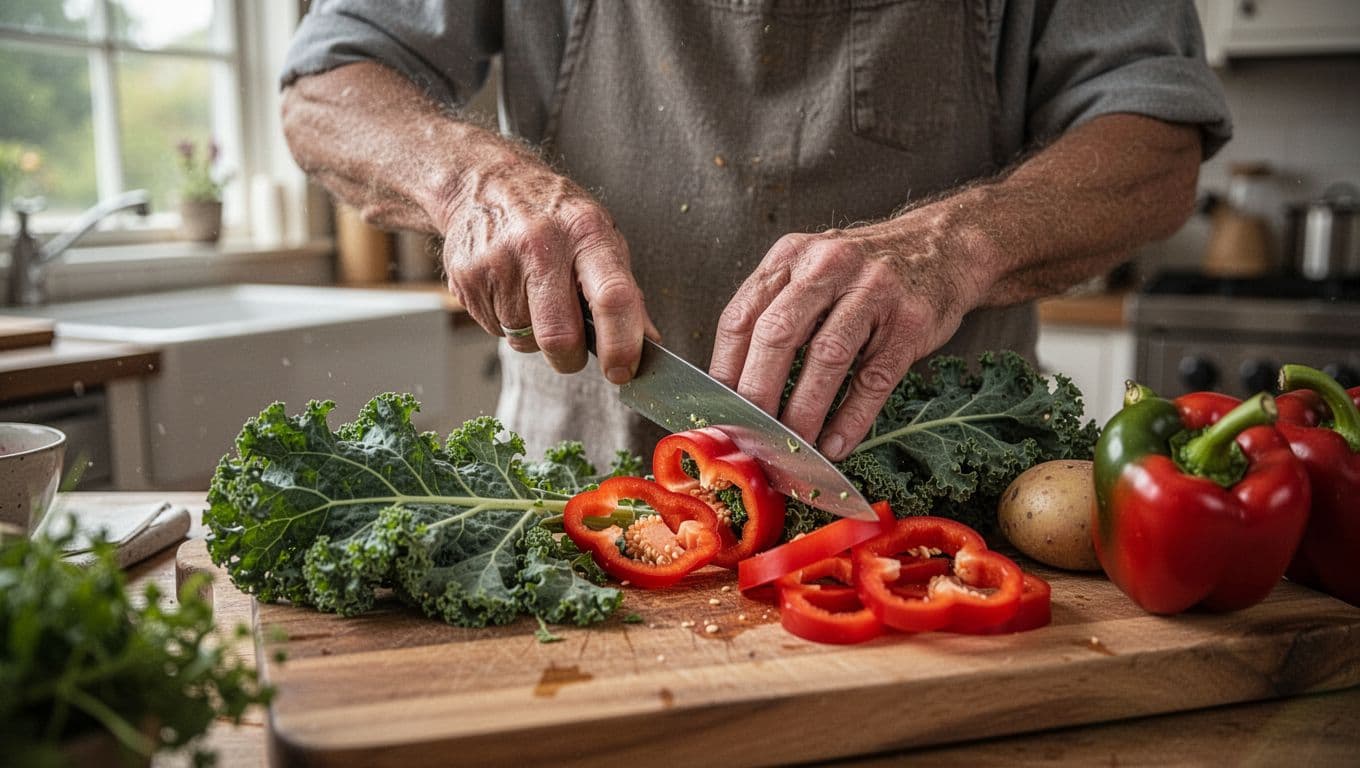
Spinach, kale, collards, and other greens bring folate, vitamin K, carotenoids, and fibre. Raw salads help, but cooked greens count just as much. Put them in soups, omelets, pasta, grain bowls, or a quick saute.
Harvard Health’s roundup “Foods linked to better brainpower” lines up with this pattern, naming leafy greens, fatty fish, berries, tea and coffee, and walnuts, while stressing that the dietary pattern matters more than any single food.
Nuts, seeds, eggs, beans, and whole grains for steady fuel
Nuts and seeds for vitamin E and easy snacking
Walnuts, almonds, sunflower seeds, chia seeds, and pumpkin seeds are small foods with a solid payoff. They bring healthy fats, minerals, and vitamin E, which helps protect cells. A small handful is enough. Pair walnuts with fruit, or scatter pumpkin seeds over yoghurt.
Eggs, beans, and lentils for choline, protein, and steady energy
Eggs are one of the easiest foods for brain health because they bring choline, protein, and B vitamins in a compact package. Beans and lentils help in a different way. Their fibre slows digestion, which can help keep blood sugar steadier and reduce the foggy crash that follows a high-sugar meal.
Use eggs with sauteed greens at breakfast. Use beans in soups, tacos, or grain bowls. Lentils are cheap, filling, and easy to batch cook.
Whole grains that help avoid energy dips
Your brain uses a lot of energy, and it likes a steady supply. Oats, brown rice, quinoa, and barley digest more slowly than refined grains, which can help support focus through the afternoon.
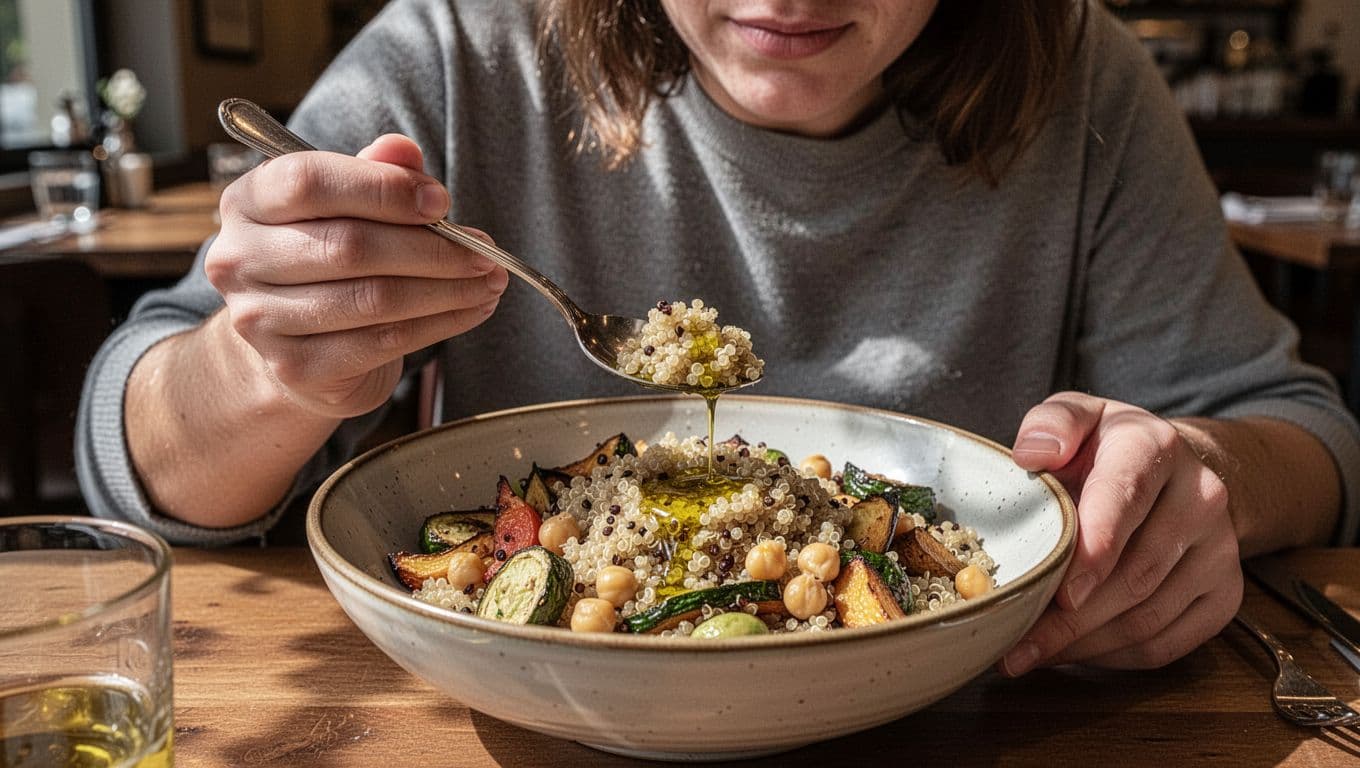
What does that look like on a Tuesday? Oatmeal instead of pastries. Brown rice instead of white when you can. Quinoa with roasted vegetables and chickpeas for lunch.
Healthy fats and fermented foods round out the picture
Olive oil and avocado won’t make your memory perfect, but they are smart swaps. They add unsaturated fats, and they fit eating patterns tied to better heart and brain health. Drizzle olive oil on vegetables, use it in salad dressing, or mash avocado onto toast with eggs.
Fermented foods and the gut-brain connection
The gut-brain link gets a lot of attention now, and some of it is deserved. Yoghurt, kefir, sauerkraut, and other fermented foods may help support gut health, which may influence brain health too. The research is still growing, so keep the claims modest.
A plain yoghurt with berries and nuts is enough. You don’t need a fridge full of trendy tonics.
Simple meal and snack ideas that make this easier
A good brain-friendly meal doesn’t need ten ingredients. Eggs with spinach and whole-grain toast works. So does oatmeal with chia seeds, walnuts, and blueberries. Greek yoghurt with berries and pumpkin seeds is fast, cheap, and easy to chew, which matters for many older adults.
Simple lunch and dinner ideas
For lunch, try a grain bowl with quinoa, chickpeas, greens, and olive oil. For dinner, baked salmon with roasted vegetables and brown rice is hard to beat. Bean soup with a side salad works on a budget. A vegetable omelet with toast works when you’re tired.
Small changes stick better than a food personality transplant. Add berries to breakfast. Eat fish twice a week. Put greens in one meal a day. Northwestern Medicine’s guide to the best brain-boosting foods includes many of the same everyday choices, and points toward the MIND and Mediterranean patterns rather than any single superfood.
What these foods can do, and what they cannot do alone
Common mistakes when you chase one food
The biggest mistake is treating one food like a shortcut. A daily blueberry smoothie can’t cancel out fast food, heavy drinking, or five hours of sleep. The second mistake is overdoing supplements while ignoring meals. Pills can help in some cases, but they don’t replace a strong eating pattern.
Think patterns, not miracles.
The habits that make a brain-friendly diet work better
Food helps, but it doesn’t work alone. Sleep is where memory gets sorted and stored. Exercise supports blood flow. Hydration helps concentration. Managing blood pressure, diabetes, hearing loss, and depression also matters because brain changes rarely come from one cause.
That should feel encouraging, not grim. You don’t need perfection. You need consistency across a few habits that keep showing up.
A practical way to eat for a healthier brain
The best foods for brain health are the ones you’ll eat often enough for them to matter. Fatty fish, berries, leafy greens, nuts, seeds, eggs, beans, whole grains, olive oil, and yoghurt all make sense because they support the brain from different angles.
No food can promise perfect memory. What it can do is stack the odds a little more in your favour, meal by meal. Build plates around a few of these foods most days, then back them up with sleep, movement, and good medical care. That’s the part that holds.
FAQ: common questions about foods that support brain health and memory
Which food is best for brain health?
There isn’t one winner. Fatty fish is often the strongest single pick because of omega-3 fats, but the real answer is a pattern. Fish, berries, greens, nuts, eggs, beans, and whole grains do more together than any one food can do alone.
How often should I eat fish for memory support?
A practical goal is two fish meals a week. Salmon, sardines, and trout are useful picks because they’re rich in omega-3s. If you don’t eat fish, talk with a clinician or dietitian about other ways to cover that gap.
Are eggs good for memory?
Eggs can be a smart choice because they provide choline, protein, and B vitamins. They aren’t a cure for forgetfulness, but they fit well in meals that support memory and steady energy, especially with greens or whole-grain toast.
Can coffee help focus?
Coffee can help alertness in the short term, and many people notice sharper focus after a moderate amount. The catch is simple: too much caffeine can hurt sleep, and poor sleep hurts memory. Use coffee as a tool, not a crutch.
Is a brain-healthy diet enough to protect memory?
No. Diet matters, but it isn’t the whole story. Sleep, exercise, social connection, hearing, stress, blood pressure, diabetes care, and depression treatment all affect memory too. Food is one strong pillar, not the entire house.