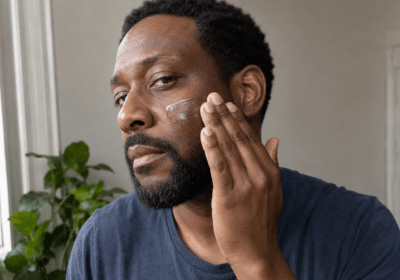

Your skin doesn’t live in a vacuum. If you’ve been dealing with breakouts, flushing, itching, or irritation that won’t settle down, it’s fair to wonder whether the problem starts deeper than your moisturiser.
The gut side of this connection is covered in full in our guide to gut health.
The short answer is yes, gut health can affect skin, but not in a neat, one-cause, one-cure way. Your skin and digestive system are connected through the immune system, inflammation, hormones, and the microbes that live on and inside you. That’s where the gut-skin axis comes in.
Acne is where most of this conversation lands, so it’s worth being precise. The research on gut health and acne is real but partial. Some of it is solid enough to act on, some of it is early, and a good deal of what circulates online is a small finding stretched into a promise.
- How the gut and skin talk to each other
- What the evidence shows, and where it still falls short
- Gut health and acne: where the popular claims came from
- What actually helps your gut, and may help your skin too
- Why stress and sleep can show up on your face
- When probiotics may help, and when you need real medical advice
- A sensible order to work through this
- Conclusion
How the gut and skin talk to each other
The gut-skin axis is the name for the back-and-forth between your digestive tract and your skin. It sounds technical, but the idea is simple. What happens in your gut can shape inflammation in the body, and inflammation can show up on the skin.
Your gut is home to trillions of microbes. Many help break down food, produce useful compounds, and support the gut lining. When that system is in decent shape, it helps regulate immune activity. When it’s off balance, sometimes called dysbiosis, the immune system can become more reactive.
Think of the gut lining like a filter. It should let nutrients through and keep other things out. If that barrier is irritated, immune signals can shift. For some people, that may add to redness, itching, or acne flares.
A review on the gut-skin axis describes this link through microbiome changes, immune responses, and inflammatory pathways. That’s a solid starting point. Still, it doesn’t mean every skin problem is a gut problem.
Skin issues have many causes. Hormones, genetics, skin-care products, allergens, weather, medications, infection, and stress can all play a part. If your face is acting up, your gut might be one piece of the puzzle, not the whole puzzle.
What the evidence shows, and where it still falls short
This is where people often get oversold. The biology behind gut health and skin makes sense. The clinical proof is stronger in some areas than others.
Here’s the cleanest way to look at it:
| Better established | Still emerging |
|---|---|
| The gut microbiome affects immune function | Which probiotic strains help which skin conditions |
| Diet patterns can influence inflammation | Whether changing the microbiome alone clears acne |
| Stress and poor sleep can affect both gut and skin | How much gut treatment changes rosacea long-term |
| Some skin conditions are linked with digestive symptoms | The best supplement plan for most adults |
For acne, the link is plausible, but mixed. Some people notice flares with highly processed diets, low-fibre eating patterns, or digestive symptoms. That doesn’t mean acne is caused by “bad gut health” across the board. Oil production, hormones, genetics, and skin bacteria still matter a lot.
Eczema, or atopic dermatitis, has a clearer immune connection. Gut microbes seem to play a role in how the immune system behaves, especially early in life. In adults, the picture is less clean, but gut health may still matter for some people with chronic inflammation.
Rosacea is trickier. Some studies have found overlap between rosacea and digestive issues, but overlap isn’t proof of cause. A helpful gut-skin axis overview makes that point well: the connection is real, but treatment answers are still being worked out.
The gut can influence the skin, but it usually isn’t the only driver.
That’s the balanced take. If someone promises that healing your gut will clear your skin in two weeks, keep your wallet closed.
Gut health and acne: where the popular claims came from
Almost every gut-skin claim you’ll meet online started with a real study. What went wrong happened in the retelling. Here’s where five of the most repeated ones came from, and how far each has drifted from its source.
| The popular claim | What the research actually found | Where the claim overreaches |
|---|---|---|
| “Dairy causes acne” | The American Academy of Dermatology cites research in which women drinking two or more glasses of skim milk a day were more likely to have acne, and notes no studies have found that yoghurt or cheese lead to more breakouts. A 2022 systematic review in JAAD International found the dairy link showed up mainly in populations eating a Western diet. | An association isn’t a demonstrated cause, the signal sits with milk rather than dairy as a category, and it doesn’t hold evenly across populations. |
| “A leaky gut causes breakouts” | Intestinal permeability is real and measurable. Cleveland Clinic describes leaky gut syndrome as a hypothetical condition that isn’t currently recognised as a medical diagnosis, and notes that where permeability appears in known gut diseases, it’s generally considered a symptom rather than a cause. | The acne step is missing. That source is about the gut, not the skin, and the jump from a permeable barrier to a breakout hasn’t been established. |
| “Probiotics clear skin” | A 2025 meta-analysis of three double-blind randomized trials, 231 people in total, found a modest reduction in inflammatory lesion counts, with certainty rated low to moderate. | Three small trials using different strains, and the authors’ own prediction interval leaves room for no meaningful effect. “Modest reduction” is a long way from “clear.” |
| “Sugar and high-glycemic diets drive acne” | The strongest of the five. The JAAD International review concluded that high glycemic index, glycemic load and carbohydrate intake have a “modest yet significant” pro-acne effect, supported by randomized trials, and the AAD says a low-glycemic diet may reduce the amount of acne you have. | Modest is the operative word. This is a reduction in some people, not clearance, and the AAD is explicit that diet change alone isn’t enough. |
| “Cutting out food groups fixes skin” | Nothing here tested banning a food group. The AAD’s advice is to notice how your own skin responds, and it states that keeping skin clear takes acne-friendly skin care and acne medication as well. | A single-nutrient association gets scaled up into a whole-category ban. The cost is real: less fibre, less variety, and usually no clearer answer. |
Read down that middle column and a pattern shows up. The dietary pattern findings are the sturdiest of the group, and even those describe a modest improvement in some people. So if you want to act on any of this, start at the glycemic end, because that’s the piece with randomized trials behind it and it overlaps with ordinary decent eating anyway. Probiotics and permeability protocols are the parts being sold hardest and evidenced least, which is not a coincidence.
None of this is a substitute for treatment. Acne that’s persistent, painful, scarring, or getting worse deserves a dermatologist or another qualified clinician rather than another six weeks of dietary experiments. At best, diet works alongside acne treatment, not instead of it.
What actually helps your gut, and may help your skin too
You don’t need a cleanse, a 14-supplement stack, or a fridge full of trendy powders. The basics still do the heavy lifting.
Start with diet quality. A gut-friendly eating pattern usually looks like the same advice that supports general health: more plants, more fibre, fewer ultra-processed foods, and enough protein. Fibre feeds helpful gut microbes, and most adults don’t get enough of it.
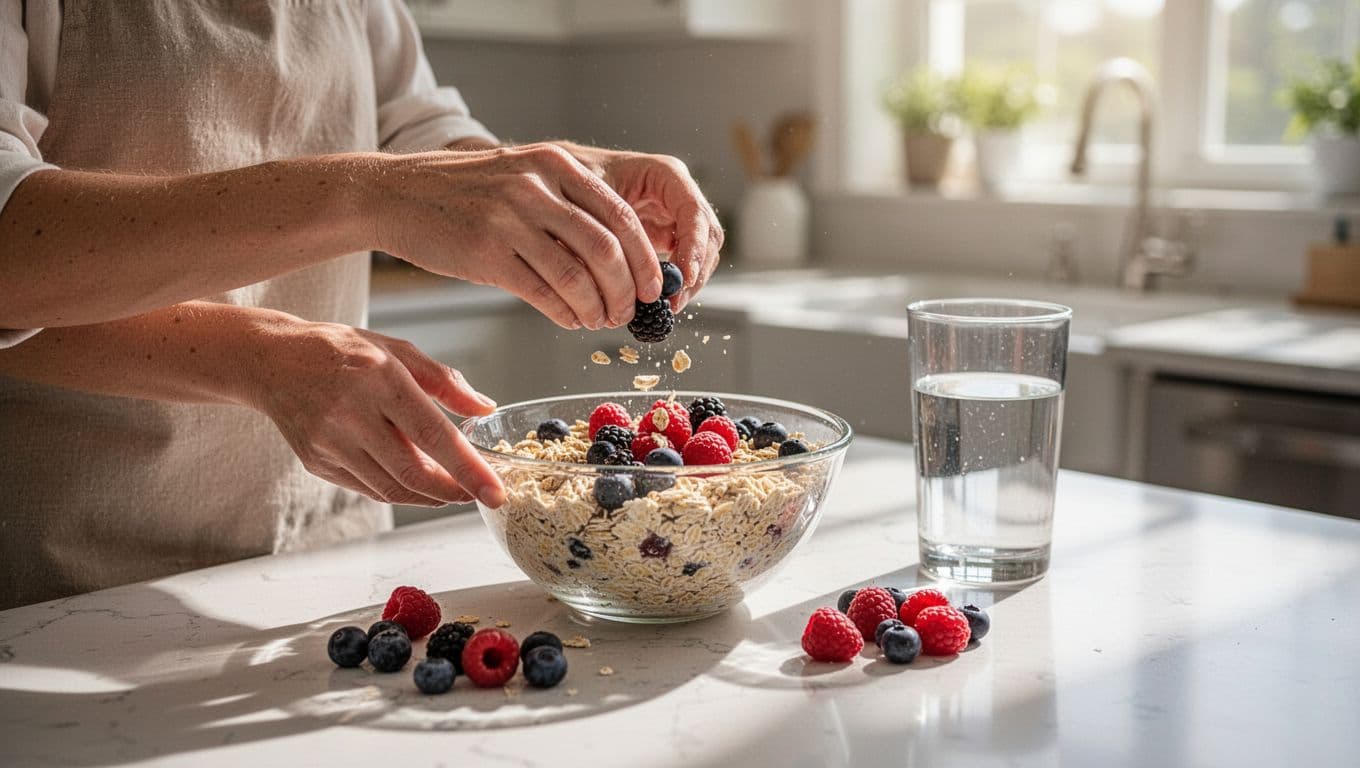
Good options include oats, beans, lentils, berries, apples, nuts, seeds, vegetables, and whole grains. If your digestion is touchy, increase fibre slowly. Going from almost none to a mountain of raw kale overnight is a rough plan.
Fermented foods may help too, if you tolerate them. Yoghurt with live cultures, kefir, kimchi, sauerkraut, and miso can add useful microbes or fermentation byproducts to the diet. They aren’t magic, and more isn’t always better. A small daily serving is a reasonable place to start.
Hydration matters, but it gets hyped. Drinking enough water supports digestion and the skin barrier. It won’t erase acne on its own, but it helps your body do normal maintenance. That’s worth something.
Simple habits tend to beat dramatic ones:
- Eat a wider range of plant foods each week.
- Include fibre at most meals.
- Add fermented foods if they agree with you.
- Go easy on heavy alcohol use, which can aggravate both gut and skin issues in some people.
If you’re also thinking about long-term wellness, broader habits still count. Regular movement, solid nutrition, and recovery all work together, which is why topics like nutrition strategies for healthy ageing and Sleep and Longevity: Why Rest Shapes Healthy Ageing often overlap with skin concerns.
Why stress and sleep can show up on your face
Ever had a bad week and your skin told on you? That’s not your imagination.
Stress can change digestion, appetite, gut motility, and immune signalling. It can also worsen skin inflammation. For acne, stress may push oil production and picking behaviours. For eczema and rosacea, it can turn up itching, flushing, or flare frequency.
Poor sleep adds to the mess. When sleep is off, the body gets worse at repair. Inflammation can climb. Food choices often get worse the next day, and stress feels louder. Your gut and skin both notice.
That doesn’t mean you need a perfect routine. It means boring habits help. Try a steady sleep window, morning daylight, less late-night alcohol, and one stress tool you can repeat, like a walk, breathing practice, journaling, or gentle stretching.
The gut-skin connection isn’t only about food. Sometimes it’s about the whole pattern of how you live.
When probiotics may help, and when you need real medical advice
Probiotics are where the hype gets loud. Some products may help some people, for some conditions. That’s the honest version.
The problem is that probiotics aren’t one thing. Different strains do different jobs, and many haven’t been tested well for acne, eczema, or rosacea in adults. The 2025 meta-analysis discussed above is based on only three trials, so it does not settle which products will help an individual.
For acne in particular, the 2025 meta-analysis in the table above pooled three double-blind randomized trials covering 231 people and found a modest reduction in inflammatory lesions with oral probiotics. The authors rated the certainty low to moderate, flagged how much the formulations varied between trials, and concluded that larger, standardised studies are needed before firm recommendations can be made. That’s genuinely encouraging and genuinely thin at the same time.
So when might probiotics make sense? If you want to try one, it’s best to match it to a goal, use a product with named strains, and give it a fair trial instead of buying whatever says “gut health” on the label. For many people, starting with food and overall routine makes more sense than starting with pills.
See a qualified healthcare professional if your symptoms are persistent, severe, or changing fast. That includes painful cystic acne, widespread eczema, frequent hives, unexplained weight loss, blood in the stool, chronic diarrhoea, severe abdominal pain, or signs of skin infection. A dermatologist, primary care clinician, or gastroenterologist can help sort out what’s going on.
A sensible order to work through this
If the gut is one piece of the puzzle rather than the whole thing, the practical question becomes which piece to check first. Most people start at the wrong end, usually because that is where the marketing is. A cheaper and faster order looks like this.
- Whatever you put on your face. A new product, a fragrance, a change in laundry detergent, or simple over-exfoliation. This is the fastest thing to test and the cheapest thing to fix, and it explains a great deal of stubborn irritation. Two weeks of a stripped-back routine will tell you more than any supplement.
- Sleep and stress. Free, powerful, and usually the thing that changed in the weeks before the skin did. Worth an honest look before spending anything.
- Overall diet quality. More fibre, more plant variety, fewer ultra-processed foods. Broad changes rather than banning specific items. Give it six to eight weeks, because skin turnover is slow and nothing here works in days.
- Specific foods, but only with a genuine pattern. A food that reliably produces a flare within a predictable window, noticed more than once, is worth investigating. A vague suspicion is not.
- Probiotics last. Matched to a goal, with named strains, given a fair trial. Not as the opening move.
Medical assessment sits outside this order, not at the end of it. If symptoms are severe, spreading, painful or changing quickly, that comes first regardless of where you are in the list.
The reason to resist jumping to step four is that elimination diets are much easier to start than to finish. People cut dairy, then gluten, then nightshades, then anything else the internet suggests, and end up months later with a narrower diet, no clearer answer, and less fibre than they started with. That last part matters, because a restricted diet is often worse for the gut than the one it replaced.
The other reason is timing. Because several of these steps take weeks to show anything, changing three at once leaves you unable to tell which helped. If the skin does settle after you overhauled your routine, your sleep and your diet simultaneously, you have a better face and no idea why, which is a problem the next time it flares.
That’s the key point. Skin issues can come from many directions. Gut health may be one contributor, but it isn’t the only one, and it isn’t always the main one.
Conclusion
If your skin has been unpredictable, your gut is worth paying attention to. Not because it’s a secret root cause for everything, but because the link between gut health and skin is real enough to matter.
The most useful path is usually the least flashy one: better diet quality, more fibre, fermented foods if they suit you, enough water, better sleep, and lower stress where you can manage it. If that helps, great. If symptoms keep going, get medical advice and treat the whole picture, not a trend.