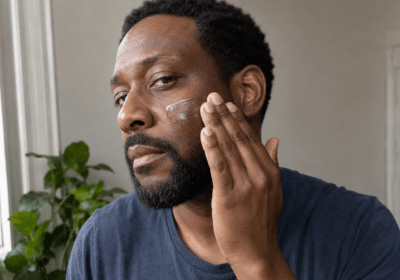

Skin aging rarely shows up all at once. It sneaks in, a little more dryness, lines that stay put, skin that bruises faster, spots that seem darker than they used to.
That can feel frustrating, but most of these changes are normal. The good news is that simple habits still matter, and they matter a lot. This guide is for general information, not a substitute for medical advice, diagnosis, or treatment.
What happens to your skin as you get older
Your skin changes because the body changes with age. It makes less collagen and elastin, which are the proteins that help skin stay firm and springy. It also produces less oil, so skin often feels drier and rougher.
Cell turnover slows down too. Dead skin cells don’t shed as quickly, which can make skin look dull. Wounds may take longer to heal. Even small cuts and scrapes can hang around longer than they used to.
Sun exposure adds another layer. Years of ultraviolet light can show up later as fine lines, uneven tone, rough patches, and age spots. Sunlight is just one of many sources, and our breakdown of how much everyday radiation actually adds up puts UV exposure next to air travel and medical imaging. That is why two people the same age can have skin that looks quite different.
According to MedlinePlus’s overview of ageing skin, older skin often becomes thinner, drier, and more fragile. It may also look more translucent, especially in areas where the skin is already delicate.
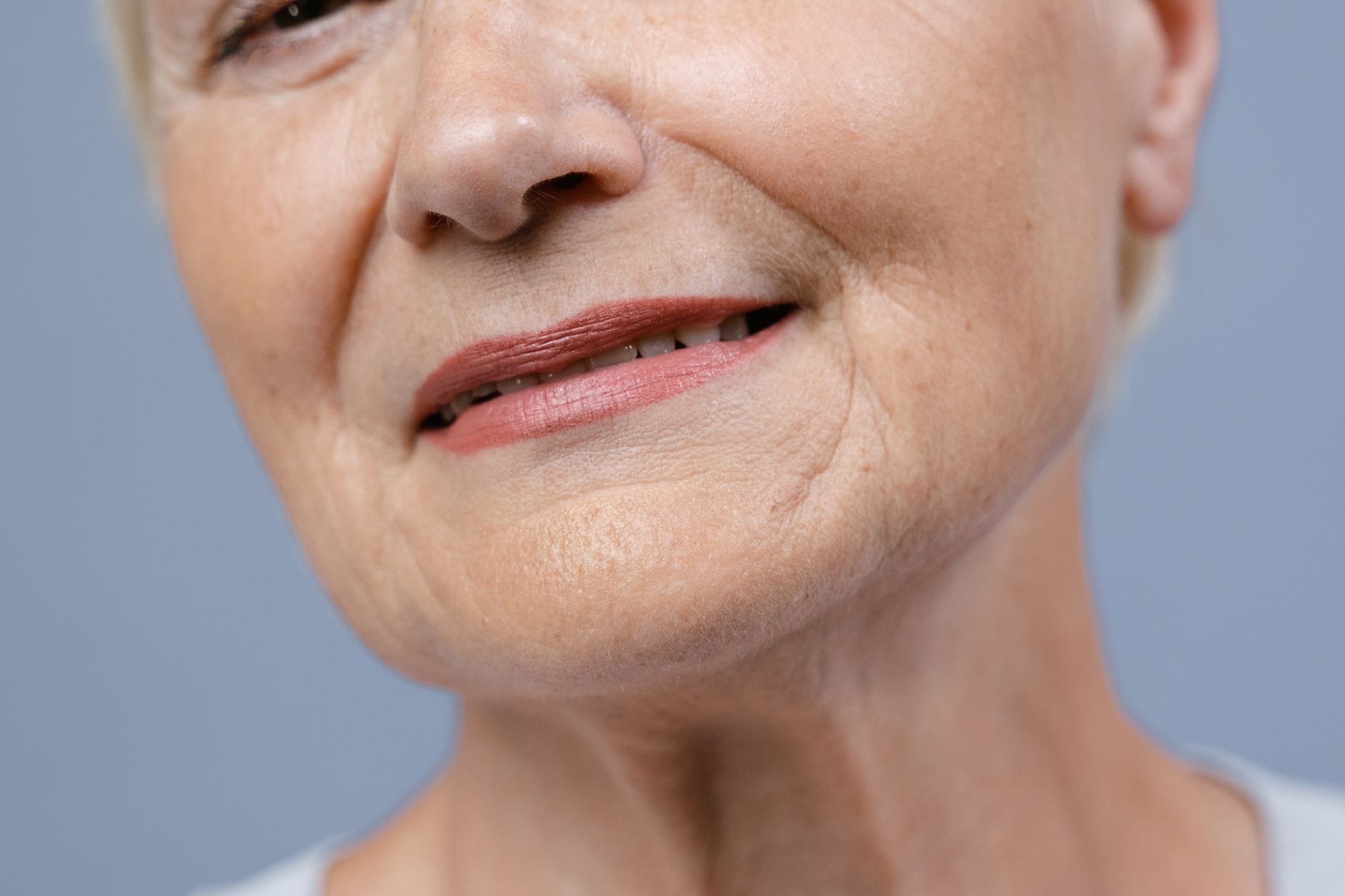
You might notice a few common signs:
- Fine lines and deeper wrinkles
- Dryness, flaking, or itchiness
- Thinner skin that tears or bruises more easily
- Age spots on the face, chest, shoulders, and hands
- Less firmness around the jawline, eyes, and cheeks
None of that means your skin is failing. It means it has been doing its job for decades.
Some changes come from time alone. Others come from what skin has been exposed to, especially sun and smoking. Think of it like fabric. A shirt stored carefully and a shirt left in bright sunlight won’t wear the same way, even if both are the same age.
Two different kinds of skin aging
It helps to separate what is happening on your face into two processes that look similar from a distance but are not the same thing. The first is intrinsic ageing, which is simply the passage of time. It happens everywhere on the body, in everyone, regardless of how carefully you have lived. The second is photoaging, which is damage accumulated from ultraviolet light. Photoaging only happens where light has landed, and it is largely optional.
Most of what people dislike about how their skin looks with age is actually the second one. Intrinsic ageing is gentle and fairly even. Photoaging is what makes skin look weathered rather than simply older. The two overlap on the same face, which is why they get lumped together, but they leave different marks.
| Intrinsic ageing, from time | Photoaging, from ultraviolet light |
|---|---|
| Fine, shallow lines | Deep, coarse wrinkles and furrows |
| Skin that is thinner and more delicate | Skin that is thickened and leathery in patches |
| Fairly even colour | Mottled colour, brown spots, blotchy patches |
| Smooth texture, just drier | Rough or scaly patches that keep coming back |
| Gentle loss of firmness | Visible small broken blood vessels and persistent redness |
| Happens all over the body | Happens only where light reaches |
How to tell them apart on your own skin
Comparing usually covered and exposed areas can make skin changes easier to notice, but body sites naturally differ in thickness, pigmentation and wear. This is not a test that measures your personal UV damage.
For most adults past their forties the difference is obvious once you look for it. The covered skin is paler, more even in colour, and smoother in texture, with lines that are shallow rather than carved. The exposed skin has spots, blotchiness, a coarser surface, and deeper creases. That gap is a fair estimate of your own accumulated sun damage, and it tends to be wider in people who worked outdoors, tanned deliberately, or spent years living somewhere with strong sun.
This is not meant to make anyone feel bad about the sun they already got. The useful part is what it implies about the future. The intrinsic half of skin aging is not negotiable. The photoaging half is, and it is still accumulating today. That is the whole reason the advice in the next section leans so heavily on one habit rather than a shelf full of products.
The daily habits that protect ageing skin
If you do one thing for ageing skin, make it sunscreen. No fancy serum comes close. Daily sun protection helps prevent new damage from piling on top of what is already there.
Broad-spectrum sunscreen protects against both UVA and UVB rays. For most adults, SPF 30 or higher is a solid baseline. Put it on exposed skin every morning, even on cloudy days, and don’t forget the ears, neck, chest, and hands. If you’re outside for long stretches, reapply as directed.
Sunscreen doesn’t erase old damage. It does help slow the next round.
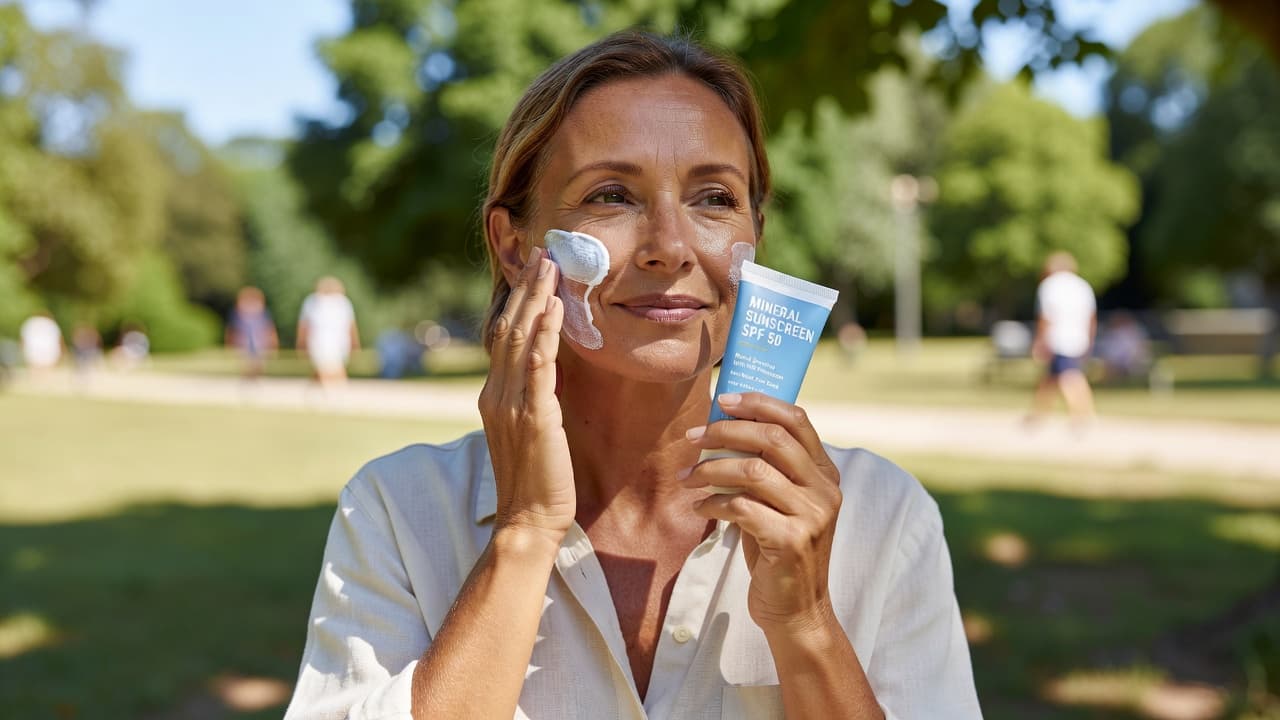
The National Institute on Aging’s skin care guidance also recommends limiting time in strong sun, wearing protective clothing, and avoiding tanning. Tanning beds count as UV exposure too, and they speed up visible skin aging.
Moisturiser is the second big habit. Ageing skin loses water more easily, and a good moisturiser helps hold it in. Creams or ointments usually work better than thin lotions for dry skin. Ingredients like glycerin, hyaluronic acid, ceramides, petrolatum, and dimethicone can help support the skin barrier.
A simple routine often works better than a crowded shelf:
- Wash with a mild cleanser and lukewarm water.
- Pat skin dry, don’t scrub it.
- Apply moisturiser while skin is still slightly damp.
- Use sunscreen every morning.
Gentle cleansing matters more than many people think. Harsh soaps, rough washcloths, strong scrubs, and hot showers can strip away what little oil older skin still makes. If your face feels tight after washing, your cleanser may be too harsh. Washing less aggressively also protects the mix of bacteria living on the surface, and microbiome friendly skincare explains why that matters for skin that reddens easily.
Fragrance can also be a problem, especially if your skin stings or reddens easily. “More active” does not always mean “better.” With skin aging, steady and gentle usually beats aggressive and irritating.
If you’re thinking beyond skin care products alone, the next step is looking at the rest of your routine in a wider way. Healthy Ageing Explained: What Actually Changes Over Time? picks up that bigger picture.
What you eat and how you live shows up on your skin
Skin is on the outside, but it responds to what happens inside the body. Food, sleep, smoking, hydration, and stress all leave fingerprints.
Start with smoking. It reduces blood flow to the skin and speeds up collagen breakdown. Over time, that can deepen wrinkles and slow healing. Quitting won’t turn skin back to age 25, but it can lower ongoing damage and support overall health.
Hydration matters too, though it helps in a modest way. Drinking water won’t erase wrinkles, but dehydration can make skin feel tighter, look duller, and itch more. Water, soups, fruit, and vegetables all count toward fluid intake.
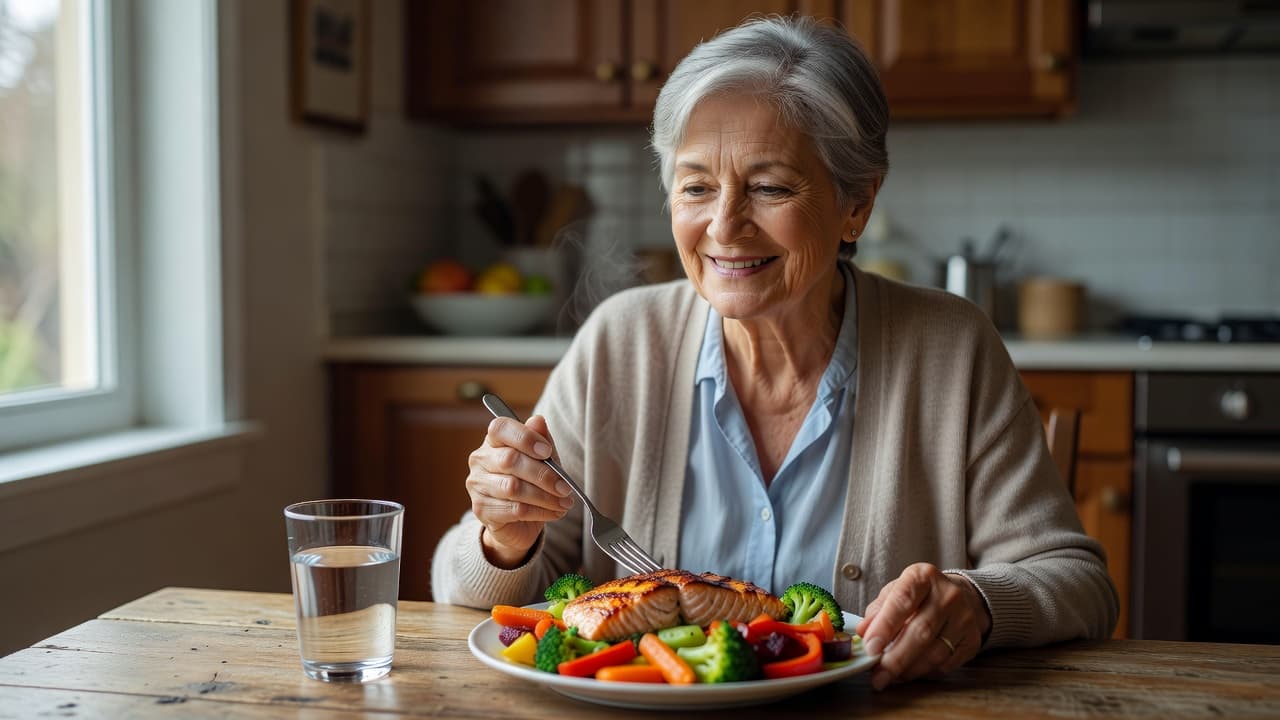
A skin-friendly diet does not need to be trendy. Aim for regular meals that include protein, healthy fats, and produce. Protein supports repair. Foods rich in vitamin C help the body make collagen. Nuts, seeds, olive oil, beans, fish, yoghurt, eggs, berries, tomatoes, leafy greens, and orange vegetables all fit well here.
There is also a strong case for keeping sun protection and tobacco avoidance at the centre.
Sleep matters because skin repairs itself while you rest. Poor sleep won’t cause wrinkles overnight, but it can worsen dullness, puffiness, and irritation. Movement helps too. Better circulation supports the whole body, including the skin.
This is where people often get disappointed. They want one product to fix everything. Skin doesn’t work like that. It behaves more like a savings account. Small habits, repeated often, add up. Missed habits add up too.
What’s normal, and what needs a skin check
Normal skin aging is common. New danger signs should still get attention.
Here is a simple way to tell the difference:
| Usually normal with age | Worth getting checked |
|---|---|
| Fine lines and deeper wrinkles | A new mole or a spot that changes shape, colour, or size |
| Dryness and mild flaking | A sore that does not heal |
| Age spots in sun-exposed areas | Bleeding, crusting, or oozing without a clear reason |
| Thinner skin and easy bruising | A painful, itchy, or rapidly growing bump |
| Mild sagging and loss of firmness | A rough patch that keeps returning in the same place |
The main takeaway is simple. Gradual change is often normal. A spot that is new, changing, bleeding, or not healing deserves medical attention.

A regular self-check can help you notice what is new. Look at the face, scalp, ears, chest, back, arms, hands, legs, feet, and nails. Use a mirror, or ask for help with hard-to-see areas. If you have a personal or family history of skin cancer, lots of moles, heavy past sun exposure, or a history of tanning bed use, ask a clinician how often you should have a professional skin exam.
Itching that won’t settle, persistent rash, frequent cracking, or signs of infection also deserve a closer look. So does skin that becomes painful or suddenly much more fragile. Some changes are caused by medication, circulation issues, eczema, or other health conditions, not age alone.
This is also a good place for a reality check. No cream can stop time. What good care can do is improve comfort, support the skin barrier, reduce some visible damage, and help you catch problems early. That’s a win worth having.
Use the UV forecast and understand SPF
Check the local UV Index when planning time outdoors. At 3 or above, use sun protection; a value of 0–2 means lower risk, not unlimited safe exposure. Duration, altitude, reflected light, photosensitizing medicines and personal history still matter. The EPA UV Index scale explains the categories.
SPF measures protection against sunburn under test conditions; it is not a timer that multiplies how long you can stay outside. Broad-spectrum labelling adds UVA protection. Mineral and other sunscreens both primarily absorb UV; “mineral” does not mean a perfectly reflective shield. The AAD sunscreen FAQ recommends broad-spectrum, water-resistant SPF 30 or higher alongside shade and clothing. Reapply outdoors about every two hours and after swimming or sweating as directed.
Conclusion
Skin aging is normal, but neglect doesn’t have to be. The biggest wins are still the basics: daily sunscreen, gentle cleansing, regular moisturiser, no tanning, no smoking, and paying attention to new or changing spots.
If your skin feels different now than it did 10 years ago, that makes sense. Treat it a little more gently, protect it a little more consistently, and get it checked when something looks off.
If you’re ready to zoom out from skin care and think about the whole picture, The Healthy Ageing After 50 Toolkit is the natural next read.