
Intermittent fasting can work for women over 40, but it is not a magic fix. Results depend on sleep, stress, food quality, activity, and how many calories you actually eat. For some women, perimenopause and menopause make fasting feel easier. For others, the same schedule brings headaches, cravings, or worse sleep.
The real question is whether intermittent fasting women over 40 can use in a way that supports energy, hormones, and healthy weight. The answer depends on the plan, the timing, and how your body responds.
- Does intermittent fasting for women over 40 actually work?
- How perimenopause and menopause can change the way fasting feels
- The safest fasting schedules to try first
- How to combine fasting with protein, strength training, sleep, and stress care
- Possible downsides, side effects, and who should be careful
- Myth versus fact: common questions women ask about fasting after 40
- Conclusion
Does intermittent fasting for women over 40 actually work?
Yes, it can work for some women over 40. It often helps when it creates a clear structure, cuts down late-night snacking, and makes calorie intake easier to manage. It can also support better blood sugar control, especially when meals are built around protein, fiber, and healthy fats.
Research summaries and clinical guides show that intermittent fasting can improve insulin sensitivity and may help with blood pressure and cholesterol. For a clear medical overview, see Johns Hopkins’ guide to intermittent fasting. Still, the best results usually come when fasting sits inside an overall healthy routine, not when it replaces one.
What benefits women may notice first
The first changes are usually practical, not dramatic. Many women notice steadier appetite, fewer random snacks, and less mental noise around meals. Some also feel less bloated or find meal planning easier because the day has a clear food window.
A few women see better energy once their blood sugar feels more stable. Others find that cravings ease when they stop eating late at night. A review from Harvard also notes that intermittent fasting may support metabolic health, though results vary by person and eating pattern. See Harvard’s overview of intermittent fasting.
If a fasting plan makes you shaky, obsessed with food, or wiped out, the plan needs to change.
Why results can be different after 40
After 40, hormone shifts can change how hunger feels and how much stress your body can handle. Estrogen and progesterone do not stay as steady as they once did. Sleep can also get lighter, and that alone can make fasting feel harder.
Metabolism often slows a bit too, but usually because muscle mass drops and daily movement changes. That means the fasting window is only one piece of the picture. Protein intake and total food intake matter a lot. A meal pattern built around healthy eating strategies after 50 is usually more useful than a long fast followed by a string of snacks.
How perimenopause and menopause can change the way fasting feels
Perimenopause can make some women more sensitive to long fasts. Skipped meals may lead to stronger hunger, mood swings, low energy, or poor sleep. When calories get too low, the body can push back fast.
After menopause, some women handle fasting more comfortably. The monthly hormone swings are gone, so the routine may feel more stable. Even then, it still depends on stress, sleep, and how much you eat during your window.
A recent review on intermittent fasting in PubMed Central points out both the possible benefits and the main risks, including under-eating, dehydration, and low protein intake. That balance matters more than the trend itself.
Hormone shifts, hunger, and energy swings
Changing estrogen and progesterone can affect hunger, mood, and sleep. That can make delayed eating feel fine one week and terrible the next. Cycle changes, hot flashes, and stressful weeks can all make the same fasting plan feel very different. Managing hormonal changes with lifestyle medicine can help create a steadier foundation for women navigating these shifts.
This is why rigid rules backfire for many women. A schedule that fits your life should also fit your energy. If it does not, the problem is often the plan, not your willpower.
Signs your body may not like a fast right now
Your body usually gives clear signals when fasting is too aggressive. Watch for these signs:
- Shakiness or dizziness
- Headaches
- Irritability or mood dips
- Poor sleep
- Strong cravings later in the day
- Low energy during workouts
- Feeling fixated on food
If these show up often, shorten the fast, eat earlier, or stop fasting for now. A gentler routine is better than a plan that leaves you depleted.
The safest fasting schedules to try first
Start small. A gentle fasting window is easier to stick with, and it gives you a better sense of how your body reacts. The best plan is the one that leaves you steady, not drained.
| Schedule | Best for | What it looks like |
|---|---|---|
| 12-hour overnight fast | Most beginners | Finish dinner at 7 p.m., eat breakfast at 7 a.m. |
| 14:10 | Women who feel good on 12 hours | Dinner at 7 p.m., first meal at 9 a.m. |
| 16:8 | Women who already sleep well and eat enough protein | Eat within 8 hours, often earlier in the day |
A 12-hour fast is often enough to build structure without pushing your body too hard. If that feels easy, move to 14 hours and see how you feel. Some women do better with an earlier eating window, such as 8 a.m. to 4 p.m., than with a late one.
How to combine fasting with protein, strength training, sleep, and stress care
Fasting alone does not do much if the rest of your routine is shaky. Protein, movement, sleep, and stress control all affect how well fasting works. This matters even more when you want to keep muscle and stay strong with age.
Why protein matters more after 40
Protein helps preserve muscle, keeps meals filling, and lowers the chance that you under-eat. It also makes it easier to go longer between meals without feeling flat or ravenous. When you eat, build meals around a solid protein source, then add fiber-rich carbs and healthy fats.
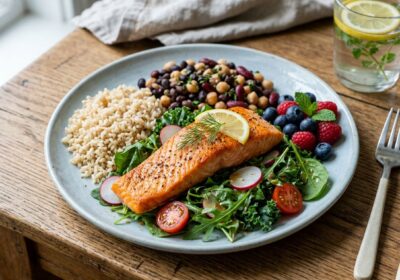
That could look like eggs and fruit, Greek yogurt and berries, chicken and vegetables, tofu and rice, or salmon and beans. Small meals made mostly of crackers, fruit, or snacks usually do not hold up well during fasting.
Strength training helps protect muscle
Regular resistance work is one of the best supports for healthy aging. That can mean weights, bands, bodyweight moves, or simple home routines. The goal is to tell your body to keep muscle instead of burning it off.

If you fast but never train your muscles, the plan can work against your body composition goals. A little resistance work goes a long way.
Sleep and stress can make or break your results
Poor sleep raises hunger and makes cravings louder the next day. High stress can do the same. If your schedule already feels heavy, a long fast may add more strain than benefit.
This is where managing stress hormones for metabolism can matter just as much as meal timing. Earlier bedtimes, less alcohol, and a calm evening routine all help. On stressful days, a shorter fasting window is often the smarter choice.
Possible downsides, side effects, and who should be careful
Intermittent fasting is not harmless just because it is popular. Some women feel worse on it. Common side effects include low energy, dizziness, headaches, irritability, overeating later, and a strained relationship with food.
It can also become a problem if it pushes calories too low for too long. That is especially risky when your eating window is short and your meals are light.
Who should avoid fasting or get medical advice first
Get medical advice before trying fasting if you are pregnant or breastfeeding. You should also check in first if you have diabetes, blood sugar problems, thyroid concerns, or take medications that need food.
Be extra cautious if you have:
- A history of disordered eating
- Frequent fainting or very low blood pressure
- Shift work or a schedule that changes often
- Medications that can cause low blood sugar
These situations can make fasting unsafe or hard to manage without help.
How to tell if you are under-eating
Under-eating is easy to miss at first. The body often signals it through fatigue, poor workouts, hair shedding, mood changes, disrupted sleep, and constant thoughts about food.
If your weight stalls, your workouts feel worse, and your evenings turn into rebound eating, you may be eating too little during the day. A shorter eating window should still support real nourishment.
Myth versus fact: common questions women ask about fasting after 40
A lot of confusion comes from treating fasting like a one-size-fits-all fix. It is not. It can be useful, but only when it fits your body and your life.
Does fasting slow your metabolism?
Short-term fasting does not automatically slow metabolism. The trouble starts when fasting turns into chronic under-eating. Then the body may adapt by lowering energy use, increasing hunger, and making you feel tired.
That is the difference between a steady routine and a crash diet. One supports consistency. The other usually backfires.
Will fasting cause muscle loss or worsen menopause symptoms?
Muscle loss is more likely when protein is low, calories are too low, or strength training is missing. Fasting alone does not force muscle loss. The bigger risk is poor overall intake.
Menopause symptoms are personal too. Some women feel better with structure and fewer late meals. Others feel hotter, more wired, or more hungry. The response is individual, not universal.
Conclusion
Intermittent fasting can work for women over 40, but it works best as a gentle tool, not an extreme fix. For many women, the sweet spot is a short fasting window, enough protein, regular strength training, and better sleep.
If fasting leaves you shaky, tired, or preoccupied with food, your body is telling you something useful. Listen to that signal, adjust the plan, and get medical advice if you have a health condition or warning signs that fasting is not a good fit.