Retatrutide is getting attention for one simple reason, the early weight loss numbers are bigger than most people expect from a medicine. But it’s still experimental, which means the hype is running ahead of what’s actually proven.
That matters if you’re trying to understand whether retatrutide could become a real option, or if it’s still too early to take the results at face value. The early studies are encouraging, especially when compared with current weight loss drugs, but there are also clear limits around safety, side effects, and availability.
Here’s what the research suggests so far, how retatrutide stacks up against what’s already on the market, and where the evidence still falls short.
What Retatrutide is and how it works in the body
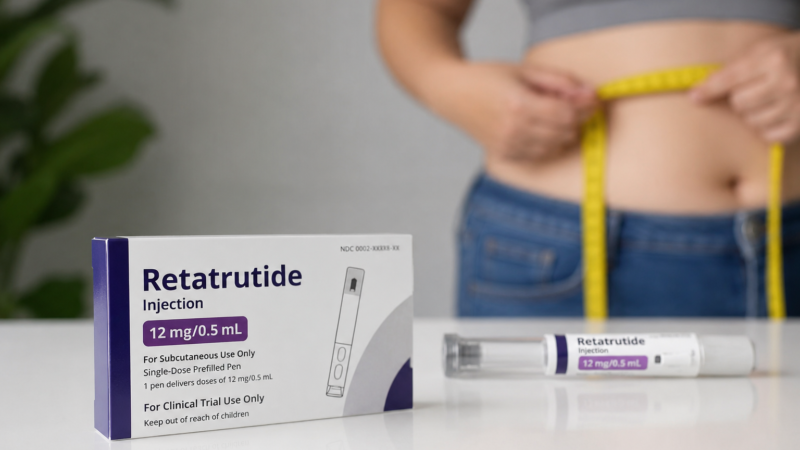
Retatrutide is an experimental Eli Lilly drug being studied for obesity and related conditions. It is not approved yet, so it is still in the testing phase, but the idea behind it is easy to grasp: instead of nudging one hormone pathway, it targets three at once.
That triple-action design is what has people paying attention. Retatrutide is built to act on GIP, GLP-1, and glucagon, three signals that help shape hunger, blood sugar, and how the body burns energy.

Why a triple-acting drug is getting so much attention
Older weight loss drugs usually work on one pathway, or at most two. That matters because the body does not control appetite with a single switch. It uses a whole web of signals, and retatrutide is trying to press more than one button at the same time.
In simple terms, each target has a different job:
- GLP-1 helps reduce appetite and slows how quickly food leaves the stomach.
- GIP also helps with appetite control and supports insulin release.
- Glucagon can increase energy use, which may help the body burn more stored fat.
That mix is why scientists think retatrutide may do more than older medicines. If one signal tells you to eat less and another helps your body use energy better, the effect can be stronger than relying on just one pathway.
The big idea is not magic, it’s combination. Retatrutide tries to reduce hunger and raise energy burn at the same time.
How retatrutide is different from GLP-1 drugs people already know
A lot of people already know names like semaglutide and tirzepatide. Semaglutide works on GLP-1 alone, while tirzepatide acts on GLP-1 and GIP. Retatrutide goes a step further by adding glucagon into the mix.
That extra target is the reason it stands out. In trial settings, the results have looked promising, and some early reports suggest larger weight loss than older drugs. But that does not mean it has proven itself in everyday use yet. Early trial data is not the same as long-term real-world proof.
The simplest way to think about it is this:
| Drug type | Hormone targets | Main idea |
|---|---|---|
| GLP-1 drug | 1 pathway | Helps curb appetite |
| Dual-acting drug | 2 pathways | Helps curb appetite and improve blood sugar control |
| Triple-acting retatrutide | 3 pathways | May curb appetite and increase energy use |
Retatrutide is still being studied, so the promise is real, but the final story is not written yet. The science says it could be stronger. The data still has to prove how far that goes.
What early retatrutide research suggests about weight loss
The early data on retatrutide is strong enough to make people stop and look twice. In the biggest trial results so far, the highest-dose group lost an average of 28.3% of body weight, or about 70 pounds, over roughly 80 weeks.
That is not a small shift. For someone starting around 248 pounds, that kind of loss can mean moving out of a high-risk range and into a very different daily reality. Clothes fit differently, movement gets easier, and the body has less strain to carry around.
How much weight people have lost in the strongest studies so far
The headline number is simple: people in the highest-dose group lost 28.3% of their starting weight after about 80 weeks. In plain English, that means someone who weighed 250 pounds could lose close to 70 pounds if their response matched the trial average.
The lower-dose groups still did well, but the gap is clear:
| Dose group | Average weight loss | What that looks like |
|---|---|---|
| 12 mg | 28.3% | About 70 pounds |
| 9 mg | 25.9% | About 64 pounds |
| 4 mg | 19.0% | About 47 pounds |
| Placebo | 2.2% | About 5 pounds |
Even more striking, 45.3% of people on the 12 mg dose lost 30% or more of their body weight. That is the sort of number that gets attention because it starts to look closer to what some people see after bariatric surgery. The New England Journal of Medicine report on retatrutide captures why researchers are watching this drug so closely.
For a lot of readers, the easiest way to think about it is this, retatrutide is not trimming weight, it is changing the whole scale of the problem.
What else improved besides weight
Weight loss was the biggest result, but it was not the only one. Early studies also showed better blood sugar, blood pressure, and cholesterol numbers.
That matters because obesity is not just about body size. It is tied to metabolic health, heart risk, and the way the body handles sugar and fat. In the trial data, those markers moved in the right direction, which is part of the reason retatrutide got so much attention in the first place.
The research so far suggests:
- Blood sugar improved, with A1C dropping in people with type 2 diabetes.
- Blood pressure went down, which matters for heart strain.
- Cholesterol levels improved, which may help lower cardiovascular risk.
The key point is simple, the drug is not only affecting the number on the scale. The early trial results suggest it may also help the body work better overall. A review in PubMed Central lays out those metabolic changes in more detail.
Why researchers think the results are so strong
Retatrutide’s appeal comes from its triple-hormone design. It acts on GLP-1, GIP, and glucagon, which may give it a wider reach than older weight loss drugs that hit fewer pathways.
That matters because appetite is only part of the story. The drug may also affect how much energy the body uses, not just how much a person wants to eat. That combo is one reason scientists think the weight loss has been so large in early trials.
In simple terms, retatrutide may work like a two-sided push:
- It helps people feel less hungry.
- It may also help the body burn more energy.
That is why the results feel different from a standard diet study. The drug is not asking the body to cooperate in one small way, it is nudging several systems at once. Still, the big caution stays the same, these are trial results, not proof of long-term real-world outcomes.
Where retatrutide still has real limits
Retatrutide looks impressive on paper, but that does not make it ready for everyday use. The drug is still in the testing stage, and the biggest questions are the ones people care about most: who it helps, how safe it stays over time, and whether the weight stays off once treatment becomes routine.
That gap matters. Early trial numbers can turn heads, but they do not erase the hard parts of obesity treatment, especially when access is narrow and long-term data are still being built.
Why you cannot get retatrutide outside a trial right now
As of June 2026, retatrutide is not available as a routine prescription drug in the US or the UK. It has not been approved by the FDA or the UK regulator, so doctors cannot prescribe the real drug for standard use and pharmacies cannot sell it.
For now, the only legal path is through a clinical trial. If you want to understand what that means in practice, the retatrutide access picture in 2026 is simple, it is still a study drug, not a pharmacy drug.
That also means access is limited by trial rules. Participants usually have to meet strict entry criteria, and even then, they may not receive the drug itself. In many studies, some people get placebo instead, which is part of why trial results can’t be treated like guaranteed real-world access.
What we still do not know about side effects and long-term safety
Retatrutide’s early results are strong, but stronger weight loss drugs can still bring side effects. The real issue is not just whether people lose weight, it’s whether they can stay on the drug long enough to keep those results without running into problems.
Right now, long-term safety data are still being built. That leaves a few big unknowns:
- How people tolerate it over years, not just weeks or months.
- Who does best on it, since trial participants are a selected group.
- Whether the benefits hold up when dosing, diet, and follow-up are less controlled.
Early success is not the same as long-term proof.
That is the part worth watching. A medicine can look excellent in a trial and still leave questions once it has to fit into real lives, with real schedules, side effects, and missed doses.
Why trial results may look better than real-world results
Clinical trials are a controlled setup. People are watched closely, supported often, and chosen using strict rules. That means the numbers you see in a study are often the best-case version of how a drug performs.
Daily life is messier. People miss doses, lose access, run into insurance walls, or stop because side effects become hard to live with. Even the best weight loss drug can look different once it leaves the tidy trial setting.
A few common differences stand out:
- Trial participants get close follow-up, while everyday patients may go weeks or months between check-ins.
- Study rules are strict, so the people enrolled may not reflect everyone who wants treatment.
- Insurance and cost barriers can interrupt use long before a drug reaches full potential.
- Side effects can change adherence, and missed doses can change results fast.
That is why retatrutide’s early numbers should be treated as promising, not final. The drug may still prove powerful, but until broader access and longer follow-up arrive, the real ceiling is still unknown.
What happens next for retatrutide research and approval
Retatrutide is moving into the part of development that matters most, the part where early excitement has to survive longer follow-up, broader testing, and regulator scrutiny. The early weight loss numbers are hard to ignore, but approval will depend on whether the drug keeps working, stays tolerable, and shows value in real patient groups, not just in tightly controlled trials.

The long-term studies that will matter most
The biggest question is not whether retatrutide can help people lose weight early on. It already can. The real test is whether that loss stays off when studies run for two and a half years or longer.
That kind of follow-up matters because weight loss drugs often look strongest in the first stretch. After that, the picture can change. Researchers want to know whether the drug keeps pushing weight down, whether the effect levels off, and whether people can stay on treatment long enough to hold the gains. Lilly has already reported extension data showing weight loss can continue past 80 weeks, which is encouraging, but longer studies will show whether that pattern holds.
Long-term data will also help answer the questions that matter to patients:
- Durability: does the weight loss keep going, or does it stall?
- Tolerability: do side effects stay manageable over time?
- Function: does better weight loss translate into better movement, less pain, and better daily life?
- Safety: do rare problems show up only after months or years?
Early results can tell you what a drug does. Longer studies tell you what it does to a life.
For a closer look at how the late-stage trial program is structured, this TRIUMPH trial design summary lays out the longer view researchers are working from.

### Who may benefit most if the drug is approved
If retatrutide reaches the market, the first people likely to benefit are those with obesity and related health risks, especially when weight loss has been hard to maintain with diet, exercise, or older medicines. That includes people who also have insulin resistance, type 2 diabetes, sleep apnea, high blood pressure, or joint strain tied to extra weight.
Researchers are also watching groups with more specific needs. Lilly has studied retatrutide in people with knee osteoarthritis, where weight loss could ease joint load and improve pain. It is also being tested in people with established cardiovascular disease, because obesity treatment is not just about the scale, it’s about lowering risk across the body.
That said, no one should expect a perfect fit for everyone. A drug that works very well in one group may be harder to tolerate in another. Dose, side effects, medical history, and other medications will all matter.
The most likely candidates are people who need more than modest weight loss, but that still leaves a broad range of patients:
- Adults with obesity and metabolic risk
- People with obesity-related knee pain or osteoarthritis
- Patients with prediabetes or type 2 diabetes
- Some people with heart disease or sleep-related breathing problems
The real question is not “who wants it?” It is “who can benefit from it safely and consistently?”
What to watch before 2027 and beyond
Lilly is moving toward a possible regulatory filing, and the company has pointed to a late-2026 submission window. If that happens, the next step would be review by the FDA, which still takes time. Even with a priority review, approval would likely come later, and timelines can shift if regulators want more data.
That means the market probably will not get the full picture until larger, longer studies are finished. The drug already looks strong in obesity trials, but approval decisions will depend on the broader file, not just the headline weight loss number. Researchers still need to show how retatrutide performs in people with heart disease, diabetes, and joint disease, and whether the benefits stay steady over time.
Here is the timeline to watch:
- More late-stage results on long-term weight loss and safety.
- Regulatory filing if Lilly submits the application as planned.
- FDA review, which could take months and may include requests for more information.
- Broader data readouts on conditions like cardiovascular disease and knee osteoarthritis.
The smartest way to read the next wave of retatrutide news is to keep one eye on efficacy and the other on durability. Early numbers matter, but the final answer will come from the longer studies, the bigger populations, and the conditions people actually live with every day.
Conclusion
Retatrutide is one of the most promising weight loss drugs in development, and the early numbers explain why it got so much attention. The strongest trial results point to major weight loss, better metabolic markers, and a mechanism that goes beyond what older obesity drugs do.
The limit is just as clear, though. It is still experimental, it is not ready for general use, and the biggest questions are still safety, access, and whether those results hold up outside a tightly controlled trial.
That is the real takeaway here. Retatrutide may end up being a major step forward, but for now, the smart view is simple, exciting early research, unfinished story.