
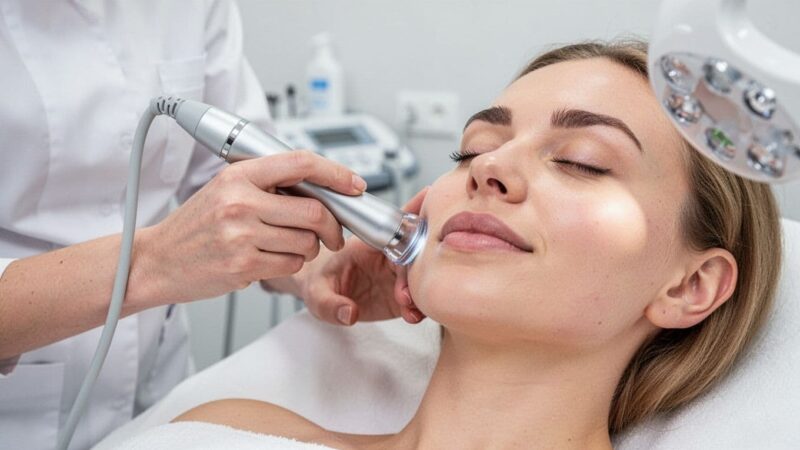
A Hydrafacial is a gentle, noninvasive skin treatment that cleans, exfoliates, extracts, and hydrates in one session. It’s trending because people want results that show up fast, without the redness, peeling, or downtime that can throw off a busy week.
That mix of quick payoff and low hassle is a big reason it keeps showing up on skincare lists and social feeds. If you’ve been wondering whether it can help with dullness, clogged pores, dryness, or fine lines, the answer is yes, but the details matter.
Here’s what it does, what it can help with, what risks to keep in mind, and how to choose a place that’s worth your time.
How a Hydrafacial Treatment Works Step by Step
A Hydrafacial is built around a simple idea, clear the skin, clean out the pores, then put moisture back in. The treatment uses a special wand with suction and serum infusion, so it skips the rough scrubbing and gritty crystals that older facials often rely on.
The cleanse and peel phase clears away buildup
The first step is a deep cleanse that removes makeup, oil, and surface debris. After that, the provider usually applies a mild acid solution, often glycolic acid or salicylic acid, to loosen dead skin and help clear away what’s stuck on top.
This part does the heavy lifting without feeling harsh. Instead of scraping or sanding the skin, the treatment softens buildup and lifts it away gently, which is one reason so many people find it more comfortable than a traditional facial.
Extraction uses gentle suction instead of squeezing
Once the skin is prepped, the wand uses suction to pull dirt, oil, and clogged debris out of the pores. Think of it like a controlled vacuum for the skin, not a painful squeeze from fingers or metal tools.
That matters because manual extractions can feel uncomfortable fast, especially around the nose and chin. With Hydrafacial, many people notice their skin looks cleaner right away, with less gunk sitting in the pores and a smoother surface overall.
The goal here is simple, clear the pores without beating up the skin.
Hydration and serum infusion give skin a finished glow
The final step puts moisture back into the skin with serums that often include hyaluronic acid, peptides, and antioxidants. This is where the treatment shifts from cleansing to finishing, leaving skin looking fresh instead of stripped.
Some providers also add booster serums for concerns like dullness, fine lines, or dark spots. That extra layer can make the treatment feel more customized, and it’s a big reason people leave with that plump, dewy look they want from a Hydrafacial.
Hydrafacial benefits people notice right away and over time
The appeal of a Hydrafacial is pretty simple, you can often see the difference fast, and some of the benefits build with regular sessions. Most people are after the same few things: smoother texture, a brighter look, cleaner pores, and skin that feels less dry or dull.

Why it can make skin look brighter and smoother fast
One of the biggest short-term benefits is simple surface cleanup. When dead skin cells are removed, fresher skin is exposed underneath, and that alone can make your face look more even and awake.
That immediate change is part of why people like this treatment before events, photos, or travel. After one session, many leave with skin that feels softer and looks more polished, almost like they swapped a dusty window for a clean one.
You usually notice:
- A brighter look
- A smoother feel
- Less rough texture
- A more even surface
The quick payoff is mostly cosmetic, but it can still make a big difference in how your skin looks that day.
How it may help with pores, breakouts, and oil buildup
Hydrafacial also helps when skin feels congested. The deep cleansing step, plus gentle suction, can pull out oil and debris that sit inside pores and make them look larger or more noticeable.
That can be useful for acne-prone skin, especially if clogged pores are a constant issue. It is not the same as acne treatment from a doctor, but it may help keep pores cleaner and reduce the buildup that can lead to more congestion later.
For a broader look at how this treatment is used across skin types, Franciscan Health’s overview of Hydrafacial treatments gives a useful snapshot of the appeal. The main point is easy to see, cleaner pores usually mean skin looks less crowded and feels fresher.
The added hydration and antioxidant support can help skin feel healthier
Hydrafacial is not only about exfoliation. It also puts moisture back into the skin, which matters if your face feels tight, tired, or flat. That hydration can make skin feel softer and look plumper right away.
The serums often include ingredients like antioxidants and peptides, which help support that fresh, dewy finish people want from the treatment. This is a big reason it gets so much attention for dull or worn-out skin, it does the cleanup, then follows it with a drink of water for the face.
Over time, regular sessions may help skin look more balanced, with better texture and a steadier glow. The results are not permanent, but they can hold up well when the treatment becomes part of a routine.
Who is a good candidate, and who should be careful
Hydrafacial fits a lot of people well, which is part of why it gets so much attention. It’s often chosen by people who want a treatment that feels gentler than stronger exfoliation options, but still leaves the skin looking cleaner and smoother.
Most skin types can usually tolerate it well
Many people like Hydrafacial because it is easier on the skin than treatments that rely on heavy scrubbing, strong peeling, or aggressive resurfacing. That makes it appealing if your skin gets irritated easily, or if you want results without the post-facial drama of redness and peeling.
A provider can also adjust the session based on what your skin needs that day. They may change the strength of the exfoliation, choose different serums, or skip certain steps if your skin is more reactive. That flexibility is a big part of the treatment’s appeal, since one size does not fit every face.
For many people, it works well as a maintenance treatment, not just a special-occasion facial. If your skin tends to feel dull, clogged, or dehydrated, it may be a solid fit.
When you should get medical advice before booking
Some skin issues need a pause, not a treatment room. If you have an active rosacea flare-up, open wounds, severe sunburn, cold sores, or a known sensitivity to skincare ingredients, talk to a provider before you book.
It also makes sense to review any products or medications first. Retinoids, acne treatments, antibiotics, blood thinners, recent peels, or recent cosmetic procedures can change how your skin reacts. A good provider should ask about all of that before moving ahead.
If your skin feels inflamed, broken, or unusually reactive, get it checked first.
That same caution applies if you’ve recently had fillers, Botox, laser work, or waxing. For a quick reference on common restrictions, HydraFacial contraindications and warnings lays out some of the usual reasons providers delay treatment. When in doubt, ask before you book, not after your skin is already on the table.
Hydrafacial risks, side effects, and how to lower them
Hydrafacial is usually a low-risk treatment, but “low-risk” does not mean “no risk.” Most side effects are mild and short-lived, and the bigger issues usually come from using the wrong products, treating skin that is already irritated, or skipping aftercare.
The good news is that most people bounce back quickly. If you know what is normal, what is not, and what to ask before you sit down, you can keep the odds of a bad reaction pretty low.
Common side effects are usually mild and short-lived
A little redness after a Hydrafacial is common, especially right after the exfoliation and suction steps. Your skin may also feel tight, dry, tingly, or mildly irritated, almost like it just had a strong wind on it.
That usually settles on its own within hours, sometimes by the next day. Some people feel a small sting while the skin is being exfoliated, and that can happen without anything being wrong.
A few normal after-effects can include:
- Redness that fades fairly quickly
- Tightness or a dry, fresh-from-the-wash feeling
- Temporary sensitivity when you touch or wash your face
- Mild stinging during exfoliation
- Light breakouts if your skin is already prone to congestion
If the skin just feels a little warm or looks pink, that usually fits within the normal range. If it turns painful, swollen, or itchy, that is a different story.
Mild irritation is common, lasting pain is not.
For a quick look at the kinds of short-term reactions people report, Franciscan Health’s Hydrafacial overview is helpful and easy to scan.
Rare issues to watch for with serums or sensitive skin
The more serious problems are uncommon, but they can happen, especially if your skin reacts easily. Some people may have an allergic reaction or extra irritation from a serum, booster, or active ingredient used during the session.
That is why it helps to ask what will go on your skin before the treatment starts. If you know you are sensitive to fragrance, acids, or specific skincare ingredients, speak up early. A good provider should be able to explain the formula list and adjust the session if needed.
This matters even more if your skin is highly reactive, acne-prone, or prone to eczema or rosacea flare-ups. If a clinic cannot tell you which serums they plan to use, that is a red flag.
You may want to ask:
- Which serums are included in this treatment?
- Are any boosters being added?
- Do any of the ingredients contain known irritants for sensitive skin?
For a broader safety check, Verywell Health’s Hydrafacial guide notes that treatment is not a great idea when skin is already compromised by a rash, open wound, or sunburn.
How to reduce your chances of a bad reaction
The easiest way to avoid trouble is to give your provider a full picture before the treatment begins. Share your skin history, your current routine, any allergies, and anything that has made your skin react before.
It also helps to skip treatment if your face is already sunburned, broken out in open spots, or irritated from recent exfoliation. A Hydrafacial works best on skin that is calm enough to handle it.
A good provider should ask about your goals and what you use at home. If they do not ask about your cleanser, retinoid, acne products, or recent procedures, they are not gathering enough info.
A few simple habits can lower your risk:
- Be honest about your skin history before the session
- Avoid sunburned, broken, or inflamed skin
- Follow aftercare closely, especially with sunscreen and gentle cleansing
- Pause strong actives like retinoids or scrubs if your provider tells you to
- Ask questions if anything about the serum plan feels unclear
The safest Hydrafacial is the one that fits your skin, not the one that copies someone else’s routine.
Where to get a Hydrafacial and how to choose a trusted provider
Hydrafacial is widely available now, but the place you book still matters. A good machine in the wrong hands can leave you underwhelmed, while a solid provider can make the whole visit feel easy, calm, and worth it.
Most people find the treatment at a medical spa, a dermatologist’s office, or a larger wellness clinic that offers skin services. In 2026, a lot of shoppers start with local search, then double-check the provider on the official locator, which is a smart move when you want the real thing and not a menu item with a similar name.
Common places that offer the treatment
The most common place to book is a medical spa, since many med spas build Hydrafacial into their regular facial menu. You will also find it in dermatology offices, where the treatment may sit alongside acne care, anti-aging visits, or other skin-focused services.
Some larger health and wellness centers also offer it, especially in cities where med spa services are bundled into broader self-care or cosmetic offerings. Availability can vary a lot by location, so what is common in one city may be hard to find in another.
That is also where the menu details matter. Not every place that says “hydrafacial” is using the official device or the full branded system, so it helps to look past the headline and check what they actually provide.
If you want the official route, the Hydrafacial provider locator is a solid place to start. It saves time when you want a local provider without sorting through every facial menu in town.
Questions to ask before you book your appointment
A quick call or message can tell you a lot before you spend a dime. Keep the questions plain and direct, because a trustworthy provider should answer them without circling around.
Ask these before you book:
- Do you use the official HydraFacial device?
- Which boosters do you offer?
- Who performs the treatment?
- How do you handle sensitive skin?
- What does the price include?
- Do you offer package pricing or membership deals?
- What results should I expect after one visit?
Those answers help you compare places without guessing. They also tell you whether the staff understands the treatment or just sells it off a menu.
Price matters, but it should not be the only filter. A lower rate is less appealing if the provider cannot explain the steps, the serums, or how they adjust treatment for different skin types.
If a provider dodges basic questions, keep looking.
What a good first visit should feel like
A strong first visit starts with a real skin check, not a rushed handshake and a quick sit-down. The provider should ask about your concerns, your routine, and anything that makes your skin react.
Then they should explain each step before they begin. You should know what they are cleansing, what they are extracting, and what serums or boosters they plan to use, especially if your skin is sensitive or acne-prone.
The room should feel clean, professional, and unhurried. If the visit feels chaotic or the provider is talking over you, that is a bad sign, even if the device itself is top-notch.
Clear communication matters just as much as the machine. A good provider listens first, then tailors the treatment to your skin, not the other way around.
Conclusion
A Hydrafacial is a gentle, low-downtime treatment that can leave skin looking cleaner, brighter, and more hydrated after just one visit. It fits people who want a fresh, polished look without the redness and peeling that come with harsher facials.
It may be a good option for dull skin, clogged pores, dryness, and mild congestion. The main cautions are simple, though, skin that is already irritated, sunburned, or reacting to products may need to wait.
If you’re thinking about booking one, choose a trusted provider and ask questions before you sit down. The treatment works best when the person doing it knows your skin and tailors it to what it actually needs.