
Legionnaires’ disease is a serious lung infection caused by Legionella bacteria, and people catch it by breathing in tiny droplets of contaminated water, not by drinking a glass of it and not, in almost all cases, from another person. Most healthy people who are exposed never become ill, but for older adults, smokers and people with weakened immunity, it can be life-threatening, and early treatment makes a real difference. This article explains the main Legionnaires’ disease causes: where the bacteria grow, how exposure happens, which symptoms should prompt a call to a doctor, and what individuals can and cannot control. If you manage a building’s water system, our separate guide to Legionella water systems for facility managers covers the technical side.
- Legionnaires' disease causes: where Legionella grows
- How people become infected
- Early symptoms of Legionnaires' disease
- Who is most at risk of Legionnaires' disease
- What you can control, and what you cannot
- How doctors confirm it
- A short checklist for travel and hospital stays
- When a case is linked to your building
- Questions people ask
- Sources
Legionnaires’ disease causes: where Legionella grows
Legionella lives naturally in lakes and rivers at low levels, where it rarely causes trouble, but the problem begins when it gets into human-made water systems and finds conditions it likes: warm water, roughly between room temperature and hot-tap temperature; water that sits still; sediment and scale; and biofilm, the slimy layer that forms inside pipes and tanks and shelters bacteria from disinfectant. Large, complex buildings offer more of those conditions than a typical home, since long pipe runs, storage tanks, little-used outlets and “dead legs” where water stagnates all give the bacteria a chance to multiply. That is why hotels, hospitals, care homes, cruise ships and office blocks feature so often in outbreak reports.
How people become infected
Growth alone does not cause Legionnaires’ disease, because the bacteria have to reach the deep parts of the lungs, and that requires water to be turned into a fine mist that can be breathed in. According to the CDC’s overview of Legionnaires’ disease, breathing in mist containing Legionella is the main route of infection, and the disease is generally not spread from person to person. A second, less common route is aspiration, where water accidentally goes down the wrong way into the lungs while drinking, and this matters mainly for people who have difficulty swallowing, for example after a stroke or with some neurological conditions.
| Source | How the mist forms | Who mainly controls the risk |
|---|---|---|
| Hot tubs and spas | Jets and bubbles in warm water | Owner or operator: disinfectant levels, cleaning, filter care |
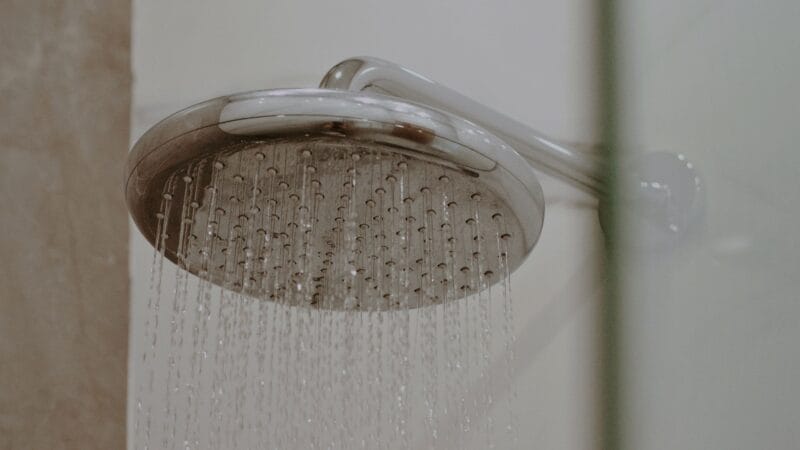
| Showers and taps | Spray from the shower head, especially after water has sat unused | Building manager; householders can flush unused outlets |
| Cooling towers | Drift carried on air from large building cooling systems | Building operator under a water management programme |
| Decorative fountains | Spray in indoor and outdoor water features | Venue operator |
| Humidifiers and respiratory devices | Fine mist delivered close to the face | User: follow cleaning instructions and use the recommended water |
| Hospital and care settings | Complex plumbing and vulnerable patients | Facility infection control teams |
Early symptoms of Legionnaires’ disease
The CDC notes that symptoms usually appear 2 to 14 days after exposure, and sometimes later. Legionnaires’ disease looks like other forms of pneumonia, so the clue is often the combination of symptoms with a recent possible exposure.
- cough, which may be dry at first
- fever, often high, with chills
- shortness of breath or chest discomfort
- muscle aches and headache
- diarrhoea, nausea or vomiting, which are more common than in many other pneumonias
- confusion, particularly in older adults
If you develop these symptoms within two weeks of a hotel stay, cruise, hospital visit, spa or hot tub use, tell the clinician about it. Legionnaires’ disease needs a specific test, usually a urine antigen test or a sample from the lungs, and it is treated with particular antibiotics, though doctors only look for it if something prompts them to; the CDC’s page on clinical features explains why the exposure history matters so much. Seek emergency care for severe breathlessness, new confusion, blue or grey lips, chest pain, fainting or difficulty staying awake. The CDC reports that about 1 in 10 people with Legionnaires’ disease die from complications, and about 1 in 4 of those who catch it during a stay in a healthcare facility, so do not start leftover antibiotics yourself, since the wrong drug may not work.
Pontiac fever, the milder relative
The same bacteria can cause Pontiac fever, a flu-like illness with fever, headache and muscle aches but no pneumonia. It usually settles on its own within days. Symptoms alone cannot reliably tell the two apart, so anyone in a higher-risk group with breathing symptoms should be assessed rather than assuming the milder form.
Who is most at risk of Legionnaires’ disease
Whether exposure leads to illness depends heavily on the person. Groups with a higher risk of becoming seriously ill include:
- Adults aged 50 and over, with risk climbing further with age.
- Current and former smokers, because smoking damages the lungs’ ability to clear bacteria, and that damage persists after quitting.
- People with chronic lung disease, such as COPD.
- People with weakened immunity, including those taking immune-suppressing medicines after a transplant, some cancer treatments or long-term steroids.
- People with other long-term conditions such as diabetes, kidney failure, liver disease or cancer.
Belonging to one of these groups does not mean you will catch Legionnaires’ disease. It means that if symptoms appear after a possible exposure, you should seek advice sooner rather than later. The World Health Organization’s legionellosis fact sheet describes the same pattern worldwide.
What you can control, and what you cannot
Most prevention sits with the people who run water systems. Building owners are expected to have a water management programme that controls temperature, keeps water moving, maintains disinfectant levels and cleans equipment, following resources such as the CDC’s water management toolkit, and as a guest or patient, you cannot inspect that. There are still useful habits at home and when travelling:
- Flush after time away. Run showers and taps that have not been used for a week or more, letting the water flow for a few minutes before you stand in the spray.
- Keep hot water hot. Follow local advice on water heater temperature, balancing Legionella control against scalding, which is a real risk for children and older adults.
- Clean shower heads and descale them periodically.
- Look after hot tubs. If you own one, keep disinfectant and pH within the manufacturer’s range and follow the cleaning schedule. Avoid public hot tubs that look cloudy or smell unusual.
- Clean humidifiers and CPAP equipment exactly as instructed, using the recommended water.
- Tell your doctor about travel. If you fall ill after a trip, mention where you stayed. It can also help public health teams find a source before others are affected.
Staying well at busy events and while travelling involves many of the same principles; our guide to avoiding illness at crowded events covers the wider picture.
How doctors confirm it
Pneumonia caused by Legionella looks much like pneumonia caused by other bacteria on a chest X-ray, so the diagnosis rests on specific tests. The most widely used is a urine antigen test, which is quick and does not need a sample from the lungs. Its limitation is important to understand: it detects only the most common type of Legionella, L. pneumophila serogroup 1. A negative urine test therefore does not completely rule the disease out.
For that reason, the CDC’s clinical guidance encourages collecting a lower respiratory sample, such as sputum, for culture or molecular testing alongside the urine test where possible. A culture has a second advantage that matters beyond the individual patient, since when bacteria grown from a patient can be matched to bacteria found in a building’s water, public health teams can confirm the source of an outbreak and stop others being exposed. Treatment then uses antibiotics that reach bacteria living inside cells, and many people with Legionnaires’ disease need hospital care, with recovery sometimes taking weeks and fatigue or weakness lasting longer, especially in older adults.
A short checklist for travel and hospital stays
If you belong to a higher-risk group, a few habits reduce the chance of exposure and speed up diagnosis if something does go wrong:
- On arrival in a hotel room or holiday let, run the shower on hot for a few minutes with the door closed and step out of the bathroom while it runs, especially if the room may have been empty for a while.
- Think twice before using a public hot tub that looks crowded, cloudy or neglected.
- Keep a note of where you stayed and when, including cruise cabins and hospital wards.
- If you receive a letter from a hotel, cruise line or health department about possible exposure, read it carefully and follow its advice even if you feel well.
- If you develop a fever, cough or breathlessness within two weeks, seek care and say, “I may have been exposed to Legionella.” That one sentence can change which tests are ordered.
When a case is linked to your building
Being told that someone in your workplace, apartment block or care home has Legionnaires’ disease is unsettling. A single case does not always mean the building is the source, because people are exposed in many places. Public health teams usually investigate by reviewing the person’s movements, sampling water where exposure is plausible and checking how the water system is managed. Occupants are typically asked to watch for symptoms for the following two weeks. If the building is implicated, operators may flush and disinfect the system, restrict showers or hot tubs, or fit filters while the problem is fixed. Follow the instructions you are given; they are designed around how the bacteria actually spread.
Questions people ask
Can I catch Legionnaires’ disease from someone who has it?
In general, no. Visiting or caring for someone with the infection does not usually put you at risk.
Can I get it from drinking tap water?
Drinking water is not the usual route. The risk comes from inhaling mist, or from aspiration in people with swallowing difficulties.
Is it treatable?
Yes. It is treated with specific antibiotics, and outcomes are better when treatment starts early, which is why mentioning a possible exposure matters.
Sources
- CDC: About Legionnaires’ disease
- CDC: Clinical features of Legionnaires’ disease and Pontiac fever
- CDC: Water management program toolkit
- WHO: Legionellosis fact sheet
Sources checked 21 September 2026. This article is general education, not a diagnosis. See our editorial policy and medical disclaimer.