A rinse under the faucet can remove dirt and some germs, but it can’t make contaminated produce safe. That distinction matters when Cyclospora outbreaks are linked to fresh fruits and vegetables. Check the CDC Cyclospora outbreak updates for current notices.
Cyclospora is a parasite that can cause prolonged, watery diarrhoea. Proper handling lowers risk, while recall notices and outbreak warnings tell you when washing isn’t enough. Here’s how to wash fruits and vegetables safely, and what to do when contamination is suspected.
- Why Produce Safety Goes Beyond a Quick Rinse
- How to wash fruits and vegetables properly
- What washing can and cannot remove
- Where washing reaches, and where it stops
- Read recalls before you reach for the faucet
- Keep produce safe after washing
- When diarrhoea after produce exposure needs medical care
- The Safe Bottom Line for Produce
- Frequently Asked Questions
Why Produce Safety Goes Beyond a Quick Rinse
Cyclospora cayetanensis is a parasite spread by swallowing food or water contaminated with feces, as a 2010 review of Cyclospora cayetanensis and cyclosporiasis describes. Fresh produce can become contaminated during growing, harvesting, processing, transport, or preparation.
The parasite forms a hardy stage called an oocyst. It needs time outside the body before it can infect someone, which makes direct person-to-person spread uncommon. That doesn’t make produce handling unimportant. A contaminated item can pass through many hands before it reaches your kitchen.
Cyclospora infections often cause frequent, watery diarrhoea, stomach cramps, nausea, fatigue, loss of appetite, and weight loss. Symptoms may last for weeks and can return after seeming to improve. The CDC’s Cyclospora information explains why outbreaks can be difficult to trace: the food is often eaten days before symptoms begin.
Outbreak investigations may identify leafy greens, herbs, berries, or other produce. The implicated food changes, so there isn’t one fruit or vegetable that always carries the risk. When the CDC or FDA names a product, brand, growing region, date, or lot, follow that notice rather than relying on appearance or smell.
Washing is a routine safety step, not a recall workaround. If an official notice identifies your produce, don’t eat it.
How to wash fruits and vegetables properly
Washing works best when your hands, sink, tools, and countertops are clean. Otherwise, you can move germs onto produce after rinsing it.
The FDA‘s produce cleaning guidance recommends plain running water. You don’t need special products.
- Wash your hands first. Use soap and water for at least 20 seconds. Wash before handling produce and again after touching raw meat, poultry, seafood, eggs, pets, or a dirty trash bin. That same habit matters just as much away from home, and our guide to staying healthy at crowded events covers how to keep it up on a busy trip.
- Clean the preparation area. Rinse and clean the sink, cutting board, colander, knife, and counters. A clean produce item can become contaminated by a cutting board that held raw chicken.
- Check the produce. Remove bruised or damaged portions. Throw away fruits and vegetables that are mouldy, slimy, leaking, or badly spoiled. Washing won’t repair damaged food.
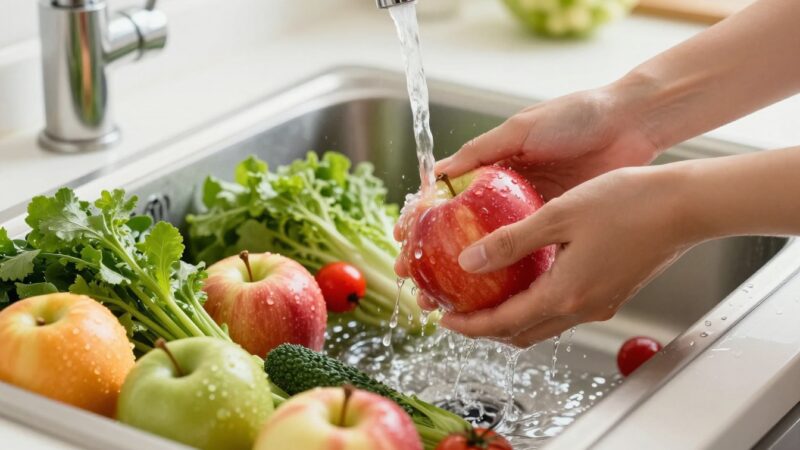
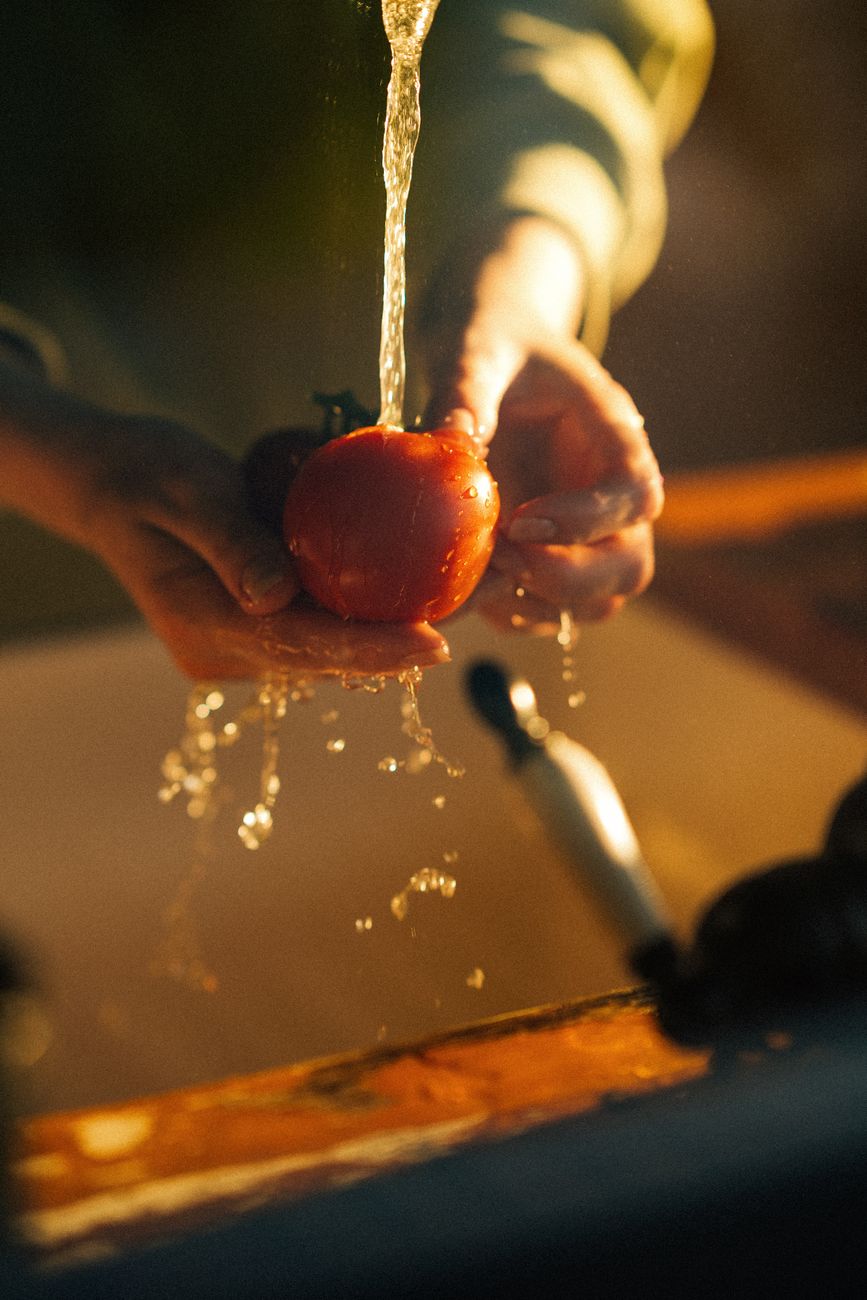
- Rinse under running water. Hold the produce beneath a steady stream of cool or lukewarm tap water. Rub the surface with clean hands to loosen soil and residue.
- Scrub firm produce. Use a clean produce brush for melons, apples, cucumbers, potatoes, carrots, and similar foods. Clean and dry the brush after use.
- Separate leafy greens. Remove the outer leaves of lettuce or cabbage, then separate the remaining leaves and rinse them under running water. Let them drain in a clean colander.
- Dry the surface. Pat produce with a clean paper towel or clean cloth. Drying can remove some remaining microbes and reduces excess moisture that speeds spoilage.
Wash produce even when you plan to peel it. A knife can carry contamination from the skin into the flesh. This matters with melons, avocados, mangoes, cucumbers, and other foods with a thick rind.
Berries need a gentle touch. Rinse them under running water shortly before eating, rather than soaking them for a long time. Excess moisture can make berries spoil faster, so drain and dry them carefully.
What washing can and cannot remove
Running water helps remove soil, some surface bacteria, and other contaminants. Rubbing adds friction, which is why a quick splash is less useful than a thorough rinse.
Washing does not sterilise produce. Germs can remain in cracks, folds, stem ends, or microscopic damage. Contamination may also be difficult to remove from irregular surfaces. No home washing method can guarantee that raw produce is free of Cyclospora.
Soap and dish detergent aren’t safer choices. Produce has porous surfaces, and soap residue can remain or irritate your stomach. Bleach, disinfectants, and household cleaners can make you sick. The FDA’s guidance on selecting and serving produce safely also says the effectiveness of commercial produce washes hasn’t been tested, so plain running water stays the recommendation.
Vinegar, lemon juice, salt water, and baking soda may be popular kitchen tips, but they aren’t reliable treatments for Cyclospora. Don’t use them as a reason to ignore a recall or eat food named in an outbreak notice.
Cooking can reduce some foodborne hazards, but many fruits and vegetables are eaten raw. If an item is under recall, don’t try to rescue it by washing, peeling, freezing, or cooking it. Follow the disposal or return instructions from the agency or store.
Where washing reaches, and where it stops
It helps to sort the things people hope washing will handle into three groups, because washing performs very differently on each one.
What a rinse genuinely removes
Soil, sand, grit, dust, and a meaningful share of the microbes sitting loose on the outside of the item. This is the part washing is good at, and most of the work is done by friction and flowing water rather than by the water alone. Rubbing a cucumber under the tap removes far more than holding it under the stream. Water carries away what your hands loosen.
What comes off only partly
Pesticide residue sits in this middle group. Rinsing and rubbing take off some of what is on the skin, and peeling removes more, but many pesticides are systemic, meaning the plant takes them up and carries them in the flesh. Nothing you do at the sink reaches those. This is less alarming than it sounds. Residue limits on produce sold in regulated markets are set by law and enforced through testing, and the case for eating plenty of fruits and vegetables is not seriously in doubt. Wash your produce, but do not eat less of it out of residue worry.
What washing cannot touch at all
Contamination that has moved inside the plant tissue is beyond the reach of any home method. Organisms can get in through a cut stem, a split, a bruise, or damaged skin, and produce can draw water inward when a warm item is dropped into colder water, which is one more reason a long soak is not an upgrade on a good rinse. Contamination that happened in the field or in processing water may also be inside rather than on the surface. This is precisely the category that recalls exist for, and it is why a recall notice always outranks anything you can do at the sink.
Why washing is still worth the seconds
Given all of that, it would be easy to conclude that washing is theatre. It is not. Most contamination on most produce most of the time is on the surface, which is exactly where washing works, and how much of an organism you swallow influences whether you get sick at all. Reducing the amount is worth something even when eliminating it is impossible. Washing also removes grit, improves how food tastes, and takes seconds. Treat it as what it is: a routine step that lowers risk, sitting alongside clean hands, clean surfaces, prompt refrigeration, and paying attention to recalls.
Read recalls before you reach for the faucet
A recall notice is based on information consumers can’t see at home. The produce may look fresh, smell normal, and have no visible dirt. Washing only addresses surface handling. It can’t reverse contamination that occurred before the food reached your kitchen.
The FDA recall and safety-alert list can help you check current notices. The CDC Cyclospora outbreak page also posts updates when public-health investigators identify a possible source.
If you have a recalled item, keep it away from other food. Don’t taste it, serve it, donate it, or feed it to pets. Discard or return it according to the notice. Wash your hands, clean the refrigerator shelf or drawer, and sanitise surfaces that the package touched.
Some notices identify a precise lot, date, store, or region. Others cover a wider group of products. If you can’t tell whether your item matches the description, don’t guess. Follow the notice or contact the store or health department for clarification.
Keep produce safe after washing
Washing is only one part of food safety. Storage and preparation can add new risks after the produce leaves the sink.
Keep raw produce separate from raw meat, poultry, seafood, and eggs. Use different cutting boards when possible, or wash the board and knife with hot, soapy water before using them for ready-to-eat foods.
Refrigerate cut, peeled, or cooked produce within two hours. Put it in the refrigerator within one hour when the temperature is above 90 F. Keep the refrigerator at 40 F or below, and discard food that has been left out too long.
Prewashed greens and packaged produce labelled “ready to eat” don’t need to be washed again. Rewashing can expose them to a dirty sink, hands, or colander. Open the package with clean hands and keep it refrigerated.
The same care applies to produce you grow yourself. Rinse garden vegetables under running water, remove soil, and keep harvest tools clean. Homegrown food isn’t automatically free from contamination.
When diarrhoea after produce exposure needs medical care
Cyclospora may not be obvious from symptoms alone. A healthcare professional may order stool testing, especially when diarrhoea lasts, returns, or follows a known outbreak.
Contact a clinician if you have ongoing watery diarrhoea, significant weight loss, severe cramps, or symptoms of dehydration. Seek prompt care for dizziness, confusion, very little urine, a dry mouth, or trouble keeping fluids down. Older adults, young children, pregnant people, and those with weakened immune systems may become dehydrated faster. Our guide to dehydration symptoms and treatment sets out the warning signs in more detail.
Treatment for cyclosporiasis usually requires a prescription. Don’t assume an over-the-counter anti-diarrhoeal will address the infection. A clinician can decide whether testing and treatment are needed.
This article provides general food-safety information and doesn’t replace medical advice. If you think you ate recalled produce or developed symptoms after a suspected exposure, contact a healthcare professional and mention the possible exposure.
The Safe Bottom Line for Produce
To wash fruits and vegetables safely, use clean hands, running water, gentle rubbing, and a clean towel. Scrub firm produce, separate leafy greens, and wash items before cutting or peeling them.
The larger lesson from Cyclospora outbreaks is simple: washing reduces risk, but it doesn’t erase contamination. When the CDC, FDA, or a store issues a recall, leave the faucet off and follow the notice.
Frequently Asked Questions
Does washing produce remove Cyclospora?
Washing can reduce surface contamination, but it can’t reliably remove or kill all Cyclospora. No home rinse makes recalled produce safe to eat.
Should I use soap or bleach on fruits and vegetables?
No. Use clean running water only. Soap, bleach, detergent, and household disinfectants can leave harmful residues or cause illness.
Should I wash bagged salad marked “prewashed”?
No additional washing is needed when the package says “prewashed,” “ready to eat,” or similar wording. Rewashing can expose the greens to contamination in your sink.
Can I eat produce that was named in a recall after cooking it?
Don’t assume cooking makes recalled food safe. Follow the recall instructions and discard or return the product as directed.
How long can Cyclospora symptoms last?
Symptoms can continue for weeks and may return after improving. Persistent or recurring watery diarrhoea needs medical attention because testing and prescription treatment may be necessary.