
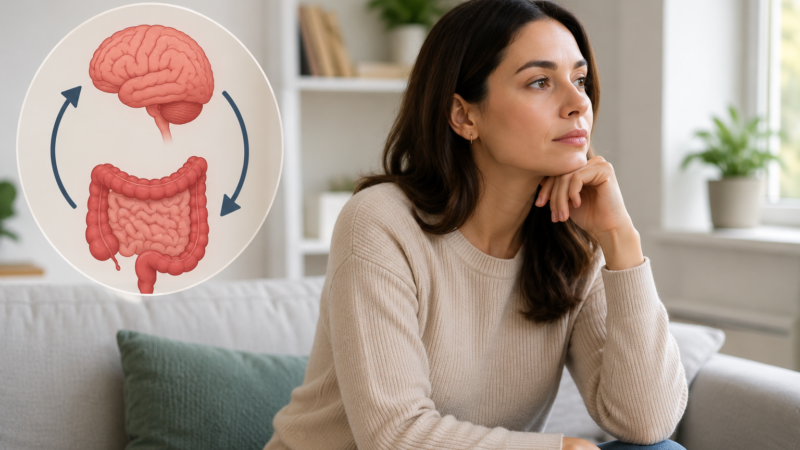
Your stomach and your mood are talking more often than most people think. In 2026, the gut-brain connection is one of the busiest areas in mental health research.
That does not mean depression starts in your digestive tract, and it does not mean a probiotic can replace care. It does mean the mix of bacteria in your gut may shape inflammation, stress signals, and the chemistry your brain relies on.
If you have noticed bloating, poor sleep, brain fog, and a low mood showing up together, the pattern is worth understanding. The link is real, and the details matter.
How the gut-brain axis talks to your mood
The gut-brain axis is the two-way communication line between your digestive system and your brain. It includes nerves, hormones, immune signals, and the microbes living in your intestines.
Think of it like a crowded switchboard. When the lines are calm, messages move cleanly. When the system is irritated, the noise goes up.
A 2026 UT Health review points to three big routes, inflammation, neurotransmission, and stress regulation. Neurotransmission is just a fancy word for the chemical messages your brain cells use to talk to each other.
That is where gut health and depression start to overlap. Gut microbes help break down food, especially fiber, and turn it into compounds that affect the gut lining and immune system. Those compounds can change how stress feels in the body. They can also influence the signals that move between the gut and the brain.
The brain does not get one direct message from the gut. It gets a steady stream of them. Some are chemical. Some are immune-based. Some travel through the vagus nerve, a major nerve that acts like a private line between the gut and the brain.
When that system gets noisy, mood can shift. Sleep can shift too. So can appetite, energy, and how much stress you can carry before it spills over.
Why depression and gut symptoms often travel together
Depression is not a stomach disorder. Still, gut symptoms and depression show up together often enough that researchers keep looking at both at once.
Stress can change digestion fast. It can slow the gut down, speed it up, or make it feel more reactive. Depression can do the same through sleep loss, lower activity, appetite changes, and shifts in daily routine. Then the gut changes push back, and the loop gets tighter.
That is one reason researchers keep seeing dysbiosis in studies. Dysbiosis means the balance of gut microbes is off. Some studies show less microbial diversity in people with depression, especially in harder-to-treat cases. Others point to more inflammation and changes in specific bacteria.
A NIH review on probiotics and the gut-brain axis sums up the pattern well. The gut ecosystem, immune system, and brain seem to affect each other, not one at a time, but all at once.
The pattern matters more than any single microbe. Depression is too complex for a single-bacteria story.
Recent studies have also linked depressive symptoms with shifts in bacteria such as higher Eggerthella and lower Subdoligranulum. Those names are useful to researchers, but they are not a diagnosis. They are clues. They help scientists see what kind of gut environment is showing up alongside mood symptoms.
That matters because it takes the conversation out of guesswork. Depression is real. So is the gut-brain link. Both can be true at the same time.
What food can do for the microbiome
Food is not a cure, but it is one of the most direct ways to influence the gut ecosystem. If the microbes are the garden, food is what feeds the soil.
A 2026 psychobiotics review describes why this topic keeps getting attention. Human trials are still mixed, but the early signal is enough to keep researchers interested.
The labels can get confusing fast, so here is the plain version.
| Term | Plain-English meaning | Common examples |
|---|---|---|
| Prebiotics | Fiber that feeds helpful bacteria | Beans, oats, onions, garlic, apples |
| Probiotics | Live microbes found in some foods or supplements | Yogurt, kefir, some capsules |
| Psychobiotics | Probiotics being studied for mental health effects | Specific strains, not all probiotics |
| Postbiotics | Helpful compounds made by microbes | Studied more than sold, still an active area |
The big takeaway is simple. Not all gut-supporting foods do the same job. Prebiotics feed the microbes you already have. Probiotics add live organisms. Psychobiotics are a narrower idea, aimed at mental health research. Postbiotics are the useful byproducts those microbes make.
A review of the gut-brain axis in anxiety and depression makes the same point in different words. The details matter. Strain, dose, and study design all matter too.
That is why a Mediterranean-style pattern keeps showing up in the conversation. It is not one magic food. It is the mix, more plants, more fiber, more variety, and fewer ultra-processed meals crowding out the basics.
If you want to support your microbiome through food, think boring in the best way. Aim for steadiness. Eat a wider range of plants across the week. Add fermented foods if they sit well with you. Keep the changes small enough to repeat.
Where the hype outruns the science
This is where the market gets loud. The science is promising, but the sales pitch often runs ahead of it.
A spoonful of kimchi is not a depression treatment. A capsule with a clean label is not a mood reset. And a post that says “fix your gut, fix your mind” is selling you a shortcut.
The UCLA Health summary gets the balance right. The connection is real, but it is not simple, and it is not the whole story.
A product can only help if the strain matches the question being studied. That is why one probiotic may look helpful in a trial and another does nothing. Same category, different biology.
The Nature collection on microbiome and mental health shows how broad the field has become. That breadth is a clue in itself. Researchers are still sorting signal from noise.
If you are dealing with depression, do not trade treatment for supplements. Keep therapy, medication, or both in place if they are part of your plan. Gut support can sit beside care. It cannot replace it.
Gut support is part of the picture, not the whole picture.
The safest way to read the research is this. Gut health may nudge mood, stress, and inflammation in the right direction. It does not erase depression on its own.
Small changes worth trying
If you want to support both gut health and mood, keep it simple enough to live with. Fancy plans fall apart. Repeated basics stick.
- Add one fiber-rich food most days. Beans, lentils, oats, berries, and chia seeds are easy places to start.
- Try more plant variety over the week. Different plants feed different microbes.
- Add a fermented food if you tolerate it. Yogurt, kefir, sauerkraut, and miso can fit into regular meals.
- Watch what makes symptoms worse. For some people, large alcohol intake, poor sleep, or a very irregular meal pattern makes both mood and digestion harder.
- Keep a short symptom note for two weeks. Write down sleep, mood, stomach symptoms, and what you ate before a flare.
If your gut is sensitive, go slow. More fiber is not always better on day one. If a food causes pain or major bloating, back off and retry later.
The same is true for supplements. More is not better. Some people do fine with a probiotic. Others feel no change. A few feel worse. That does not mean the gut-brain link is fake. It means people are different.
What helps most is a pattern you can repeat without stress. That sounds plain, but it is the part that usually survives real life.
When to bring this up with a clinician
If your mood and your digestion seem linked, bring both up at the same visit. Do not wait until one issue gets “bad enough” to count.
Tell your clinician when the symptoms started, what changed before they started, and whether food, stress, antibiotics, sleep, or a new medication seems to affect them. If you take an antidepressant and your stomach changed afterward, say that too. Some meds can affect nausea, constipation, or appetite.
A primary care clinician, psychiatrist, or GI specialist can help sort out what belongs to the gut, what belongs to the mood, and what overlaps. Sometimes the answer is IBS. Sometimes it is medication side effects. Sometimes it is a nutrient issue, a sleep problem, or something else that needs a closer look.
If you have blood in your stool, unexplained weight loss, fever, severe pain, or persistent vomiting, get medical care promptly. Those are not things to watch and wait on.
It also helps to be honest about diet changes. If you have cut out food groups because your stomach feels unpredictable, say so. A registered dietitian can help you avoid getting stuck in a cycle of fear, restriction, and more symptoms.
The best conversations are specific. “My mood drops when my stomach flares.” “I feel worse after certain meals.” “My sleep and digestion changed after this medication.” Those details give your clinician something useful to work with.
Conclusion
The connection between gut health and depression is real, but it is not neat. The gut and brain trade signals all day, and the mix can affect mood, stress, sleep, and inflammation.
That does not make gut health a cure for depression. It makes it one piece of the picture, worth paying attention to without turning it into a miracle story.
If your stomach and your mood seem to move together, that is not in your head. It is a clue, and it is worth bringing into the conversation with a doctor or mental health professional.