
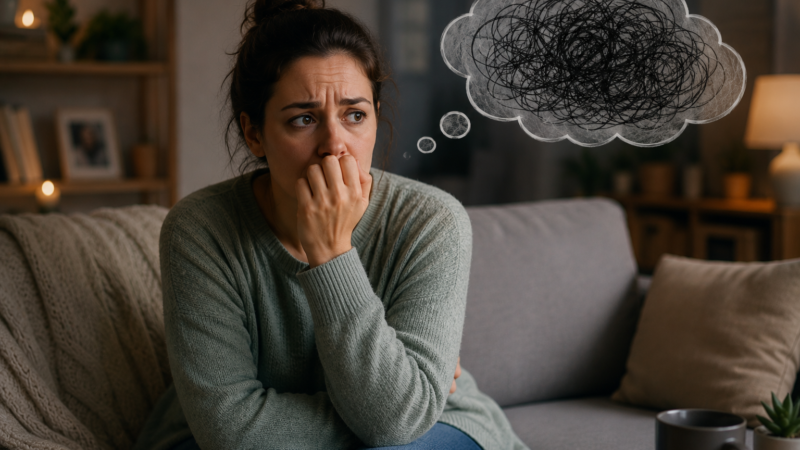
You can be fine one minute, then your chest tightens, your thoughts speed up, and your body acts like something is wrong. No obvious threat. No dramatic event. Just anxiety for no reason, showing up like an uninvited guest.
That feeling is frustrating, and it can make you doubt yourself. But anxiety does not need a visible trigger to be real.
The good news is this: hidden causes are still causes. Once you spot what is feeding the alarm, you can start turning the volume down.
Why anxiety feels random even when it isn’t
A lot of people say, “I feel anxious for no reason,” when the real problem is that the reason is not obvious yet. Your nervous system does not care whether the stress came from a big crisis or a pile of small things. It just reacts.
Sometimes the trigger is emotional. A rough conversation, a deadline, money stress, or family tension can sit in the background long after the moment passes. You might think you handled it, but your body kept score.
Past experiences can do the same thing. If you’ve lived through trauma, chaos, or long stretches of stress, your brain can stay on guard even when life looks calm on the outside. That does not mean you are broken. It means your system learned to scan for danger.
Family history matters too. Some people are more sensitive to stress from the start. That sensitivity can show up as racing thoughts, tight muscles, or a stomach that never quite settles.
If the trigger is hidden, the feeling still counts.
Overthinking can also make anxiety feel random. One worry leads to another, then another, until your body is flooded and you cannot point to one neat reason. The alarm is real, even if the story behind it is messy.
The point is simple. “No reason” usually means “no obvious reason yet.” Once you stop treating the feeling like a mystery, it gets easier to respond instead of panic about the panic.
Your body can send the same alarm
Not every anxious feeling starts in your thoughts. Sometimes your body fires first.
Sleep loss is a common one. One bad night can leave you jumpy, irritable, and more sensitive to stress the next day. A week of poor sleep can make ordinary problems feel huge. Your brain is not as steady when it is running on fumes.
Caffeine can do the same thing. Coffee, energy drinks, and pre-workout can all mimic anxiety. Shaky hands, a fast heartbeat, and a restless mind can all be caffeine talking. If your anxiety seems worse after your first cup, that is worth paying attention to.
Blood sugar swings can also make you feel off. Skipping meals, going too long without food, or eating in a way that leaves you crashing later can bring on the same uneasy, jittery feeling. It can feel emotional, but the body is often part of it.
Hormones and medical issues matter too. Thyroid problems, medication side effects, illness, dehydration, and hormone shifts can all feel like anxiety. If the feeling started after a new medicine, a health change, or a long stretch of poor sleep, bring it up with a clinician.
That is why “anxious for no reason” is often better translated as “anxious for a reason I have not named yet.” The body is not trying to trick you. It is sending signals.
What to do when the wave hits
When anxiety spikes, the goal is not to force calm. The goal is to tell your body it is safe enough to come down a notch.
A simple reset can help in the moment:
- Plant both feet on the floor and look around the room. Name five things you can see.
- Breathe out longer than you breathe in. Try a slow count of 4 in, 6 out.
- Unclench your jaw, drop your shoulders, and loosen your hands.
- Say one plain sentence to yourself, like “This is anxiety, and it will pass.”
That kind of grounding works because it pulls attention out of the spiral and back into the room. The NIH overview of relaxation techniques explains how simple exercises can lower tension and calm the body. You do not need a perfect setup. A chair, a wall, or even a bathroom stall can be enough.
If the surge feels more like a panic attack, breathing and grounding still help. These panic attack relief methods include a few practical options people can test right away, like paced breathing and light movement. Pick one or two. Don’t try to do everything at once.
It also helps to stop arguing with the feeling. The more you tell yourself, “I should not feel this way,” the more fuel you give it. Try this instead: “My body is loud right now. I don’t need to solve my whole life in this minute.”
That shift sounds small. It is not. A nervous system in alarm mode responds better to steady cues than to a fight.
How to lower the baseline before the next wave
If anxiety keeps returning, the fix is not one perfect trick. It is usually a few steady habits that make your system less jumpy over time.
Sleep is the first place to look. Keep a similar bedtime and wake time, even on weekends. Make the room darker. Put the phone farther away. If your sleep is choppy, that alone can raise anxiety the next day.
Caffeine is next. You do not need to quit forever to learn something useful. Try cutting back for a week, or move your first cup later in the morning. If your heart races less and your thoughts slow down, you found part of the problem.
Journaling can help more than people expect, but it works best when it stays simple. Write down what happened, what you felt in your body, what you ate, how much sleep you got, and whether you had caffeine. Patterns show up faster on paper than in your head.
If mornings are the hardest part of the day, a small routine can soften the edge. The article on morning anxiety habits points to practical moves like grounding, journaling, and a steadier wake-up rhythm. None of it needs to be fancy. The habit just needs to be repeatable.
Movement helps too. A short walk, stretching, or a few minutes of slow-paced activity can burn off some of the physical charge that anxiety leaves behind. You are not trying to train for a race. You are trying to give your body a way to discharge pressure.
Food matters in a plain, unglamorous way. Long gaps without eating, lots of sugar, or too little water can all make anxiety feel sharper. A snack with protein and water can sometimes help more than another round of worrying.
When occasional anxiety turns into a bigger pattern
Everyone feels anxious sometimes. That part is normal. The question is whether it comes and goes, or whether it starts taking over.
This quick comparison can help you sort a rough day from a pattern that needs support.
| Occasional anxiety | Possible anxiety disorder |
|---|---|
| Shows up around a stressful event | Shows up often, even when life looks calm |
| Fades when the moment passes | Lingers, circles back, or sticks around most days |
| Feels uncomfortable but manageable | Gets in the way of work, sleep, driving, or relationships |
| Improves with basic coping | Keeps coming back despite your efforts |
| Comes with mild physical tension | Comes with strong physical symptoms or panic-like episodes |
If your anxiety is frequent, severe, or getting worse, it is time to talk with a professional. A therapist, primary care clinician, or psychiatrist can help you sort out whether this is a stress response, a medical issue, or an anxiety disorder such as generalized anxiety disorder.
You do not need to wait until you are falling apart. Get help sooner if you are avoiding normal life, having repeated panic attacks, losing sleep often, or feeling stuck in fear most days. And if you ever feel unsafe or think about harming yourself, seek immediate help right away.
Conclusion
That shaky, out-of-nowhere feeling is usually not random. It is often your body, brain, or daily stress load asking for attention.
The fastest way to calm it is not to shame yourself for having it. Start with grounding, slower breathing, better sleep, less caffeine, and a simple journal so the pattern becomes easier to see.
If the anxiety keeps showing up, gets stronger, or starts running your day, get support. You do not have to wait for a perfect reason to take it seriously.