


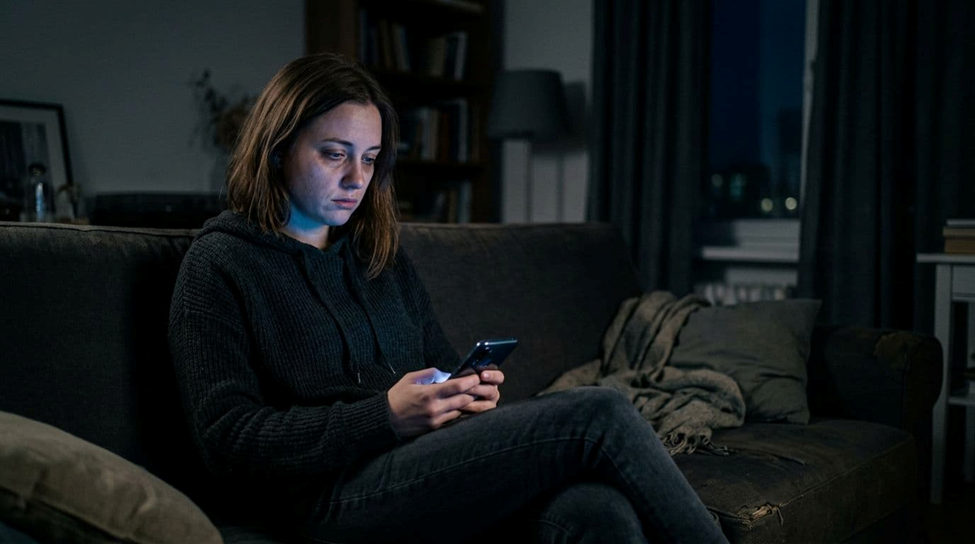
Late-night scrolling can feel calming, but it often leaves you heavier than before.
You open your phone for one minute. Then you look up and realize 25 minutes are gone, and your mood is worse. Sound familiar?
Social media and mood are tightly linked because your feed isn’t neutral. It’s a mix of people’s highlight reels, bad news, and prompts that keep you checking. The goal isn’t to quit forever. It’s to use social media in a way that protects your head and your sleep.
The current numbers help explain why this feels so common. About 1 in 5 teens say social media hurts their mental health, and nearly half say it hurts sleep. Research also links 3 or more hours a day with higher depression and anxiety risk. If you’ve felt the drag lately, you’re not “too sensitive.” You’re human.
The mood traps social media sets, and why they work so well
Social apps are built around attention. Attention drives clicks, and clicks drive more content. That design matters because attention also drives emotion. If your brain keeps getting tiny hits of excitement, stress, envy, or anger, your baseline mood can shift.
Most traps work because they copy patterns your brain already has. You scan for social status, threats, and belonging. You crave rewards, like messages and likes. Platforms stack those instincts together, then add frictionless scrolling.
If an app makes you check it “just to feel okay,” it’s no longer a tool, it’s a mood regulator.
Comparison, likes, and the “everyone is doing better than me” feeling
Comparison is fast, automatic, and usually unfair. You see someone’s best photo, best night, or best body angle. Then your brain quietly asks, “Why not me?” Over time, that question chips at confidence.
That’s why self-image gets pulled into the loop. Around 21% of teens report social media hurts their self-image, and girls report higher risk on mental health and confidence than boys. Likes add fuel because they turn connection into a scoreboard. If you find yourself posting, then refreshing to see reactions, your mood starts swinging with other people’s taps. For deeper context on these teen-reported impacts, see Pew’s report on teens, social media, and mental health.
FOMO and the pressure to stay online just in case
FOMO is the feeling that something good is happening without you. It sounds small, yet it creates low-level stress that sits in the body. You keep checking because you don’t want to miss the invite, the joke, the news, or the moment.
About 19% of teens say social media makes them feel anxious about missing out. That anxiety can turn into constant interruptions. You glance at your phone during homework, meals, and even conversations. Then you feel less connected in real life, even while seeing “connection” on a screen. On a rough day, it can also sharpen loneliness, especially when your life doesn’t match what you’re seeing.
Doomscrolling, outrage, and the endless bad-news loop
Doomscrolling isn’t just “reading the news.” It’s getting stuck in a stream of conflict, tragedy, and hot takes that never resolves. Your brain treats it like threat scanning. It stays on alert because the next post might matter.
In the teen data, 37% say they feel anxious about politics news, and 27% say they feel overwhelmed by bad news cycles. That stress can show up as irritability, a short fuse, or a flat, hopeless feeling. Even if you aren’t “doomscrolling” on purpose, algorithms can nudge you there by serving what keeps you engaged. If you want research context on how doomscrolling connects with anxiety and pessimism, see this study on doomscrolling and existential anxiety.
Too much time, not enough sleep, and the next-day crash
Sleep is where your brain clears the day and resets. Social media steals that reset in two ways: it pushes bedtime later, and it keeps your nervous system activated.
Nearly 45% of teens say social media hurts their sleep, and about one-third report using screens past midnight. Add the “just one more video” effect, and you get fewer hours plus worse quality. Then the next day feels harder. Focus slips, stress feels bigger, and emotions hit faster. That’s one reason researchers flag 3 or more hours a day as a risk marker for higher depression and anxiety. Time isn’t the only factor, but it’s a big one you can change.
How to tell social media is draining you (before it gets really bad)
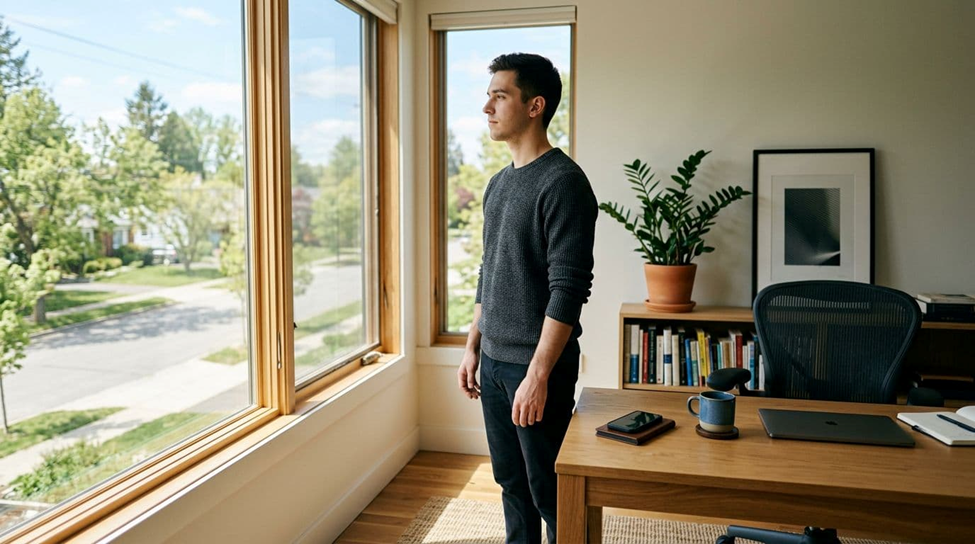
Taking a pause makes patterns easier to spot.
You don’t need a diagnosis to notice a pattern. Instead, treat this like a one-week experiment. Watch what happens after you scroll, not what you “should” do.
Some people feel the effects faster. Teens often do, because social life runs through apps. People with anxiety, ADHD, or a trauma history may also notice stronger swings. That doesn’t mean social media is “bad” for you, it means your system might react sooner.
A simple 5-sign check: mood, sleep, focus, body, and self-talk
- Mood: your mood dips within minutes after scrolling.
- Sleep: bedtime keeps sliding later, and you wake up tired.
- Focus: you can’t stick with a task without checking.
- Body: your shoulders stay tense, or your jaw stays tight.
- Self-talk: you compare more and feel “less than” more often.
Checking “almost constantly” is a red flag behavior. It usually means the app is running your attention, not the other way around.
The “swap test”: what did scrolling replace today?
Here’s a fast reflection: what did scrolling push out today? Maybe it replaced a walk, homework, a hobby, or a real talk with someone you trust. When you see the trade, the problem gets clearer.
This matters because 45% of teens say they spend too much time on social media. Plenty of adults feel the same, even if they don’t say it out loud. Awareness beats guilt. Once you name the swap, you can choose a better one tomorrow.
Quick fixes you can start today to protect your wellbeing

Small offline resets can lift mood faster than you’d expect.
You don’t need perfect habits. You need a few moves that reduce the biggest mood hits: comparison, FOMO, doomscrolling, and sleep loss. If social media is tied to serious depression or anxiety, talk to a trusted adult, your doctor, or a mental health professional.
Set boundaries that actually work (time, place, and purpose)
Pick boundaries you can follow on a bad day:
- Time: set a daily cap, and use app timers to enforce it.
- Place: keep your phone out of bed, charge it across the room.
- Purpose: open the app for one reason (message a friend), then close it.
Protect sleep first. Try a 30 to 60-minute no-scroll buffer before bed. If doomscrolling is part of your night routine, it can also disrupt sleep quality. This overview of doomscrolling and sleep disruption can help you understand why it’s so hard to “just stop.”
Change your feed so it stops changing your mood
Your feed is trainable. Every mute, unfollow, and “not interested” click is a mental health tool.
Start with accounts that trigger body image stress, status comparisons, or constant outrage. Then add content that supports real goals: learning a skill, getting stronger, cooking, art, or close friends who make you feel steady. If you only follow “perfect lives,” your brain will treat perfection as normal. Fix the input, and the output changes.
A calmer feed doesn’t make you uninformed, it helps you stay functional.
Replace the scroll with a 2-minute reset
When you feel the pull to keep scrolling, interrupt it with something short. Two minutes is enough to exit a spiral.
Try one of these:
- Step outside for daylight and look at something far away.
- Drink water, then stretch your neck and shoulders.
- Text one person you trust, even a simple “How’s your day?” helps.
Add a breathing reset if you’re keyed up: inhale 4 seconds, exhale 6 seconds, repeat for 5 rounds. It’s quick, and it tells your body the “threat” is over.
Conclusion
Comparison, FOMO, doomscrolling, and sleep loss are the biggest social media mood traps right now, and they work because they match how your brain already runs. The good news is that small changes can protect your mood fast, especially when you start with sleep and feed cleanup. Pick one trap you relate to most, choose one fix, and try it for seven days. Then notice what shifts, your mornings, your self-talk, and how often you feel pulled back to the screen.
