


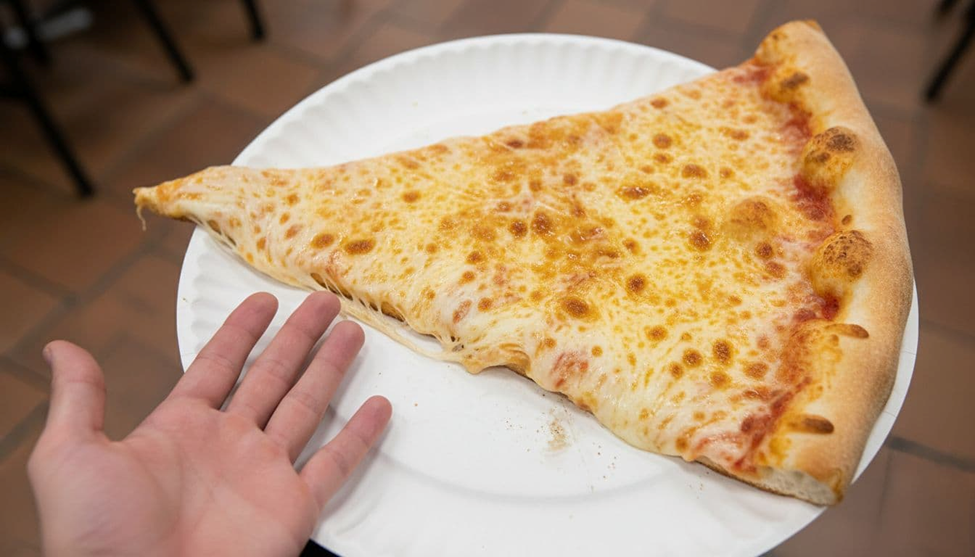
Costco food court pizza is cheap, huge, and hits the spot. That’s also why people underestimate the nutrition. It doesn’t “feel” like a 700-calorie decision when you’re holding it on a flimsy paper plate.
This no-shame breakdown covers what’s in a slice of cheese vs. pepperoni, what those numbers mean for weight, heart health, and energy, and how to enjoy it without wrecking your day. Exact values can vary by location and how the pie is cut, and Costco doesn’t always post a consistent label. Still, estimates pulled from widely cited 2024 to 2025 sources remain plenty useful for smart choices in 2026.
Costco pizza nutrition facts, why the slice size changes everything
Most pizza nutrition confusion comes down to one thing: Costco slices are massive. A typical food court slice is roughly 9 to 10 ounces, closer to a small personal pizza at other places. In other words, the “per slice” label feels like snack math, but it’s really meal math.
Another reason the numbers bounce around online is portion differences. A slice sold individually can be larger than a slice cut from a whole pizza you take home. Small changes in cheese, pepperoni, and bake time also shift calories and sodium. That’s why you’ll see ranges instead of one perfect number. Databases such as SnapCalorie’s Costco pizza entries often list multiple serving sizes, which matches what customers notice in real life.
Here’s the practical takeaway: if you’re deciding between one slice and two, you’re not debating “a little more pizza.” You’re choosing between one full meal and two full meals.
Cheese vs pepperoni: calories, protein, carbs, fat, and sodium in real terms
Use these per-slice estimates as your baseline (food court slice, not a smaller at-home cut):
| Slice type | Calories | Protein | Carbs | Total fat | Saturated fat | Sugar | Sodium |
|---|---|---|---|---|---|---|---|
| Cheese | ~699 to 710 | ~33 to 44 g | ~70 to 77 g | ~28 g | ~14 g | ~7 g | ~1,370 mg |
| Pepperoni | ~620 to 650 (sometimes higher) | ~34 g | ~68 to 82 g | ~24 g | ~11 g | ~7 g | ~1,290 mg |
Two big gotchas stand out.
First, sodium. One slice can land around 1,300 mg, which is over half of the commonly cited 2,300 mg daily limit. If you’re salt-sensitive, you may feel puffy or thirsty later.
Second, saturated fat. Cheese is the heavy hitter here, often around 14 g saturated fat in a slice. That adds up fast if pizza is a weekly habit.
If you remember only one thing, remember this: one Costco slice eats like a full fast-food meal, not a quick snack.
How Costco compares to Domino’s, Pizza Hut, and Little Caesars (and why it can look “worse” on paper)
On paper, Costco can look “worse” than the big chains. That’s usually a portion illusion. Many large pizzas at Domino’s, Pizza Hut, and Little Caesars are 14 inches and cut into 8 slices, while Costco’s is 18 inches and typically cut into 12. The chain slice you picture is often smaller, so it might show 200 to 350 calories. Costco’s slice can be double that because it’s simply bigger.
This is why “per slice” comparisons can mislead. A better comparison is per ounce or per meal. Costco often wins on value and even “protein per dollar,” which helps explain why people find it filling. Taste testers also point out how Costco stacks up against the big names, but nutrition still comes back to portion size (see Costco vs. major pizza chains for context).
The health problem isn’t that Costco pizza is uniquely “toxic.” It’s that it’s easy to treat a giant slice like it’s normal-sized.
Is Costco pizza unhealthy, it depends on your body and how often you eat it
Calling a food “healthy” or “unhealthy” sounds neat, but real life isn’t neat. Costco pizza can fit if it’s occasional and you plan around it. It can also push your diet off track if it turns into a routine lunch, plus a soda, plus a cookie on the way out.
For weight goals, the math is simple. If you’re trying to stay in a calorie range, one slice may take up a big chunk of your day. Two slices can quietly crowd out protein, produce, and fiber you’d otherwise eat.
For heart health and blood pressure, sodium and saturated fat matter more than the calorie number. If you already watch those, pizza nights can stack the deck against you, especially when the rest of the day is also salty (deli meats, chips, fast food).
For blood sugar and energy, the crust counts. A slice has a lot of refined carbs. Some people feel fine, while others get hungry again soon. Your response depends on your body, your activity, and what else you ate.
The main health concerns: sodium, saturated fat, and refined carbs
Sodium is the quickest way pizza can blow up your day. With roughly 1,300 mg per slice, you can go from “fine” to “over” before dinner even happens. Public health guidance keeps sodium conservative for a reason, and you can read more about why chain pizzas get flagged in “healthiest slice” roundups like Delish’s chain pizza nutrition guide.
Saturated fat is the slow-burn issue. A cheese slice can bring most of the day’s saturated fat in one go, depending on your targets. If you’re also eating burgers, ice cream, or buttery snacks, that pile gets tall fast.
Refined carbs aren’t “bad” by default, but they can act like kindling. Some people feel a quick energy pop, then a dip. Pairing pizza with fiber-rich foods helps.
Treat vs. habit is the real line. A treat is planned and occasional. A habit is automatic and frequent.
People who may want extra caution include anyone managing blood pressure, cholesterol, blood sugar, or an active weight-loss plan.
The not-so-bad side: it is filling, high in protein, and can fit sometimes
Costco pizza isn’t empty air. Protein sits around 33 to 44 grams per slice depending on the source and cut. That’s a lot for one piece of food court food, and it helps explain why one slice can hold you over.
You’ll also get some fiber (often a few grams) and calcium from the cheese. No, it’s not a “health food,” but it’s also not “zero nutrition.” Context matters. If the rest of your day includes lean protein, veggies, fruit, and plenty of water, pizza doesn’t automatically ruin anything.
The bigger win is behavior. When you treat one slice like the main event, you stop chasing more food after it.
How to enjoy Costco pizza without feeling gross after, simple swaps that work
Costco pizza hits hardest when you stack it with other classics. The slice, soda refill, and a hot dog combo can turn a fun stop into a nap-inducing event. A few small moves keep it enjoyable.
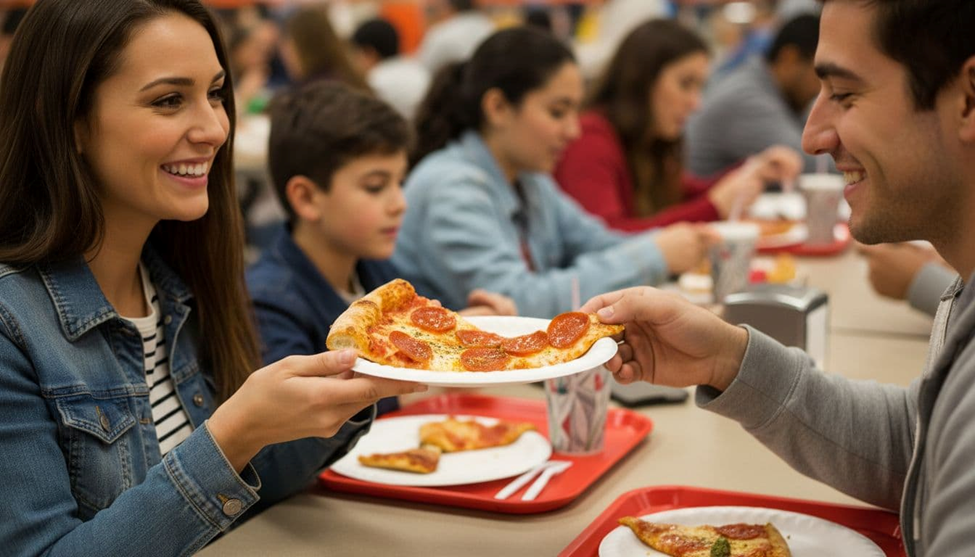
Portion and pairing tricks that cut calories and sodium fast
A handful of realistic options work well without turning lunch into homework:
- Split a slice with a friend or kid, then add fruit at home.
- Eat half now, save half for later. It reheats fine in an air fryer.
- Skip soda and choose water. You’ll feel the difference with all that sodium.
- Add volume with a simple salad, baby carrots, or an apple, either before or after.
- Don’t double up with a hot dog or dessert on the same trip.
That first tip does more than cut calories. Splitting a slice also cuts sodium in half, which is the hidden win most people miss.
If you track macros or calories, here is the easiest way to log it accurately
Don’t hunt for one “perfect” entry. Costco slice size varies, and databases disagree. Instead, log with a range mindset.
If you want a simple method, pick a consistent entry like “Costco cheese slice 710” or “Costco pepperoni slice 650,” then stick with it. Over time, consistency beats precision. If fat loss is the goal, you can also log slightly high to stay conservative.
Most importantly, zoom out. One meal rarely changes results. Your weekly pattern does.
Conclusion
Costco pizza nutrition is simple once you see the real issue: the slice is huge. One piece can run around 700 calories, with a lot of sodium and saturated fat. At the same time, it’s filling and surprisingly high in protein, so it can fit as an occasional treat.
Use a clear rule of thumb: think of one slice as a full meal, add water and something produce-heavy, and keep it occasional if weight or heart health is a priority. Next time you’re in the food court, decide first, is this lunch, or is this extra?

1 Comment
Pingback: Is Costco Pizza Good for Weight Loss? Calories & Truth - Health Beyond Age