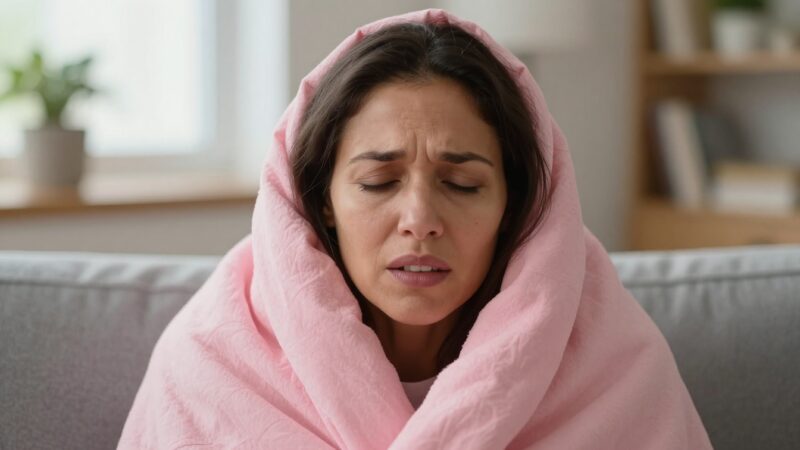
You can feel fine one minute and start shivering under a blanket the next. Chills often feel intense, but they don’t always mean something is seriously wrong.
If you’re wondering what causes chills, context matters more than the sensation alone. Fever, infection, cold air, anxiety, low blood sugar, and medication reactions can all trigger the same shaky, cold feeling. A closer look at timing, other symptoms, and how long it lasts usually tells you more.
Why your body gets chills

Chills are your body’s way of trying to make heat. Muscles tighten and relax quickly, which causes shivering. At the same time, blood vessels near the skin can narrow, so less heat escapes.
This can happen because you’re in a cold place. It can also happen when your brain decides your body temperature should be higher, which is common with fever. In that case, you may feel cold even when your temperature is rising.
According to Cleveland Clinic’s overview of chills, chills are part of the body’s effort to raise its core temperature. That helps explain why they often show up right before or during a fever.
The feeling isn’t the same for everyone. Some people get mild shaking and goose bumps. Others have strong, repeated shivers that make it hard to hold still. Those stronger episodes are sometimes called rigors.
Chills can happen with or without a fever. That detail matters, but it doesn’t tell the whole story. A person who has skipped meals may shake from low blood sugar. Someone who is anxious may feel cold, trembly, and sweaty without being sick at all.
Common causes of chills
Many everyday problems can trigger chills. Some are short-lived and harmless. Others need more attention because they point to an illness or a reaction your body isn’t handling well.
Infections and fever
A fever is one of the most common reasons people get chills. Viral illnesses such as the flu or COVID-19 can cause them. So can bacterial infections, including pneumonia, strep throat, urinary tract infections, and kidney infections.
Your immune system releases chemicals that tell the brain to raise body temperature. While your body catches up, you may shiver hard. WebMD’s review of common reasons for chills notes that chills can appear with or without a measured fever, especially early in an illness.
Cold exposure
Being outside in wind, rain, or low temperatures can bring on chills fast. Wet clothes make heat loss worse. Even indoor air conditioning can trigger shaking in some people, especially if they are older, thin, or already tired.

Photo by ᴀᴀᴢɪʙ ꜱʏᴇᴅ ʙᴜᴋʜᴀʀɪ 𝕾
If the cause is simple cold exposure, chills should ease once you get warm and dry. However, ongoing confusion, slurred speech, clumsiness, or extreme sleepiness after being cold can be warning signs of hypothermia and need urgent care.
Anxiety and stress
Anxiety can make the body act as if danger is near. Adrenaline rises, breathing may get faster, and muscles tense. As a result, some people feel shaky, sweaty, flushed, or chilled all at once.
These chills often come with racing thoughts, a pounding heart, chest tightness, or tingling in the hands. They tend to settle as the stress response calms down, although they can feel frightening in the moment.
Low blood sugar
When blood sugar drops, the body reacts fast. You may feel shaky, cold, sweaty, hungry, weak, or lightheaded. This is more likely if you haven’t eaten, exercised hard, drank alcohol without food, or take insulin or certain diabetes medicines.
If low blood sugar is possible, eating or drinking a quick source of carbohydrate may help. People with diabetes should follow the plan their clinician gave them.
Medication reactions and other triggers
Some medicines can cause chills as a side effect. Reactions are also possible after vaccines, anesthesia, or medical infusions. In some cases, chills come with body aches or a low fever. In others, they happen without fever at all.
Health’s summary of chills without fever also points to low blood sugar, intense exercise, and medications as possible triggers. If chills start soon after a new medicine, contact a pharmacist or clinician for advice. Get urgent help right away if you also have hives, swelling, wheezing, or trouble breathing.
When chills are usually harmless, and what helps at home

Chills are often manageable at home when the cause is clear and symptoms improve within a short time. That may be the case after being out in the cold, missing a meal, having a mild viral illness, or going through a stressful spell.
Start with the basics. Put on dry layers, move to a warmer room, and drink fluids. If you haven’t eaten for several hours, have a snack. Rest also helps, especially if you’re fighting off an infection.
Checking your temperature can add useful context. A fever plus cough, sore throat, or body aches often points to a viral illness. No fever, paired with hunger and sweating, may fit low blood sugar better. Anxiety-related chills often improve when breathing slows and the body relaxes.
If you do have a fever, comfort matters. Light layers, fluids, and rest are often enough while you monitor symptoms. Piling on heavy blankets for hours may make you feel worse if your temperature is already high.
Most importantly, watch the trend. Mild chills that fade with warmth, food, or rest are usually less concerning than chills that keep returning, wake you from sleep, or come with worsening pain or weakness.
Signs chills may mean more than feeling cold

Chills deserve more attention when they come with symptoms that suggest a serious infection, dehydration, or a body-wide reaction. Older adults, infants, pregnant people, and anyone with a weakened immune system should be more cautious, because illness can worsen faster in these groups.
The safest way to judge chills is to look at the full picture, temperature, breathing, alertness, pain, and how long symptoms last.
This quick guide can help with next steps:
| Situation | What usually makes sense |
|---|---|
| Chills after cold weather, better once warm and dry | Monitor at home |
| Chills with a mild viral illness, able to drink fluids, symptoms improving | Home care and observation |
| Repeated chills, fever lasting more than 3 days, painful urination, bad cough, or increasing weakness | Contact a clinician soon |
| Chills with trouble breathing, confusion, chest pain, stiff neck, blue lips, severe dehydration, or a person who looks acutely ill | Seek urgent medical care |
The main idea is simple. Chills alone are not the whole story. The danger level rises when they come with breathing trouble, confusion, a new rash, severe pain, fainting, repeated vomiting, or signs that someone is not thinking clearly.
Prompt medical care also matters when chills follow a new medication and the person looks unwell, or when an older adult has chills with sudden confusion or weakness. In those settings, it’s better to get checked than to wait it out.
Conclusion
A sudden wave of chills can feel alarming, but the feeling itself is only one clue. Most cases come from fever, infection, cold exposure, anxiety, low blood sugar, or a medication effect.
What matters most is the pattern around them. When chills ease with warmth, food, fluids, or rest, home care is often enough. When they keep returning or arrive with breathing trouble, confusion, or persistent fever, medical care is the safer next step.